
Bridges Rebuilt: A True Story of Forgiveness and Healing
Years of silence, pain, and resentment—but one choice changed everything. A real journey of reconnection, growth, and the power of letting go.


For the better part of a decade, I told myself I was fine with never speaking to my father again.
We hadn't spoken in nine years. Not a phone call. Not a holiday text. Nothing. I had built my life around his absence, convincing myself that distance was better than disappointment.
But the truth was heavier than I let on. It clung to me quietly, in family gatherings where his name floated like smoke. In Father's Day commercials that made me turn off the TV. In the mirror, where I saw more of him than I cared to admit.
Ours was a classic story of friction, but it wasn’t always this way.
Growing up, my dad was a man of few words and strong expectations. He worked long hours, provided well, and assumed love was best shown through discipline. I, on the other hand, was a dreamer. Sensitive, artistic, questioning everything. Our differences weren't just personal; they were philosophical.
I remember the day everything really cracked. I was 19, halfway through my second year of college. I'd decided to switch majors from business to fine arts. It felt right. It felt like me.
He didn’t see it that way.
We had a shouting match that night—a loud, fiery clash of worlds. He called me irresponsible. I called him heartless. I stormed out of the house, slammed the door behind me, and said the words I would live with for years :"I don't need you anymore."

That was the last conversation we had.
The years that followed were busy. I graduated, got a job at a design studio, moved to another city. Life moved forward, but something always felt unfinished. When people asked about my family, I talked about my mom, my siblings. I skipped over him like a skipped track.
Sometimes I rehearsed what I would say if I saw him again. But the script was always laced with bitterness. Forgiveness wasn't even in the vocabulary. Not then.
Then came the phone call.
It was a Tuesday. I was sitting at my desk when my brother called. I could hear the weight in his voice before he even said it:"Dad's in the hospital. Heart attack. It was serious. He's stable now, but... you should come."
My first instinct was to freeze. Part of me wanted to say, "So what?" Another part—the part that remembered bedtime stories, fishing trips, and the way he laughed when we watched old cartoons—told me to go.
I packed a bag that night and took the 6 a.m. train home.
Walking into that hospital room was one of the hardest things I’ve ever done. He looked smaller than I remembered. Frailer. His eyes fluttered open and met mine, and for a moment, neither of us spoke.
Then he said, "You came."
Three words. Soft. Unsteady. But they broke through something I didn’t even realize I was still holding onto.
We didn’t talk about the past right away. At first, we spoke about the present. His surgery. My job. The weather. But each conversation loosened the knot just a little.
Two days in, while peeling an orange by his bedside, he finally said it:
"I didn’t know how to be a good father to someone like you. I thought I was helping you by pushing you. But I think I pushed you away."
I didn’t cry. Not then. But I felt something shift.
I replied, "I thought walking away would protect me. But it just left both of us hurt."
That was our truce. Not a grand apology, not a perfect resolution. Just two men admitting they were wrong, and that they missed each other more than they hated what had happened.
The real work began after he left the hospital.
Forgiveness isn’t a single act. It’s a series of choices. To listen. To be patient. To accept the past without letting it control the future.
We started meeting once a week. Coffee at the local diner. Slow walks in the park. Short conversations that grew into longer ones. Sometimes we laughed. Sometimes we argued. Sometimes we sat in silence.
But we kept showing up.
One day, he brought an old photo album. Inside were pictures I hadn’t seen in years—birthdays, vacations, messy backyard barbecues. In one, I was five years old, wearing a pirate costume he made for Halloween.
"You insisted on wearing that for a week straight," he chuckled.
I smiled. "You made the sword out of cardboard."
"And aluminum foil," he added.
That moment felt like balm on a wound I didn’t know was still open.
It’s been four years since that hospital visit.
Today, my dad and I talk every week. He comes to my art shows. I helped him set up email so we can trade photos. We still argue sometimes. But now, we argue with love. We disagree and then go grab lunch.
He’ll never be the warmest person. And I’ll never be the most conventional son. But we’ve found a rhythm. One built not on pretending the past didn’t happen, but on deciding it didn’t have to define our future.
Moral of the Story:
Forgiveness isn’t weakness. It’s the strength to choose healing over hurting.
We often think that letting go means condoning what was done to us. But more often, forgiveness is a gift we give ourselves. A chance to stop carrying the burden. A way to say, "That pain mattered, but it doesn’t get to write the ending."
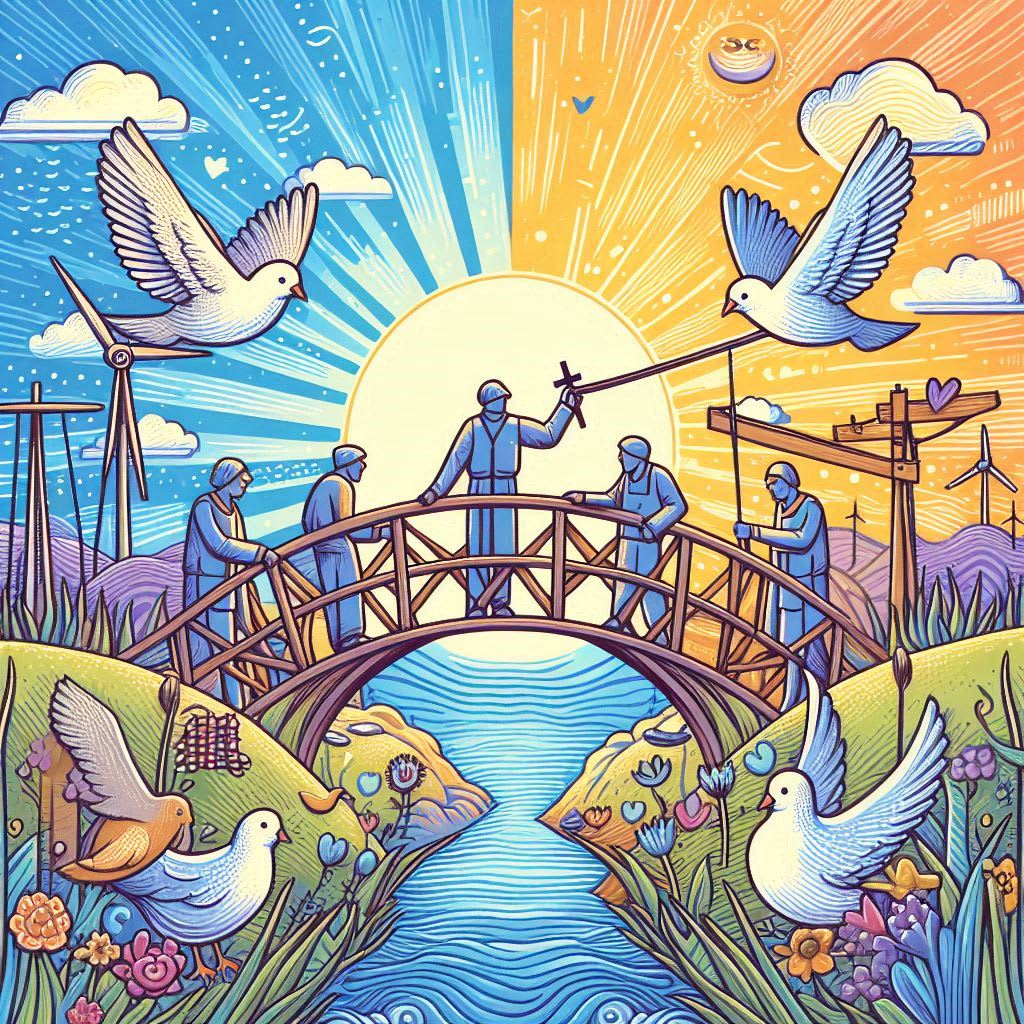
Not every strained relationship can be fixed. And not everyone deserves a place back in your life. But sometimes, with time, honesty, and mutual effort, broken bridges can be rebuilt.
And in those moments, you don’t just recover a relationship.You recover a piece of yourself.

Thank you for reading...
Regards: FAzal Hadi
About the Creator
Fazal Hadi
Hello, I’m Fazal Hadi, a motivational storyteller who writes honest, human stories that inspire growth, hope, and inner strength.
Keep reading
More stories from Fazal Hadi and writers in Families and other communities.
The Last Dinosaur in My Backyard
I was eight when I first met him. It was the summer after second grade, one of those lazy, golden stretches of time when school felt like a distant memory, and the future was nothing more than bedtime and bike rides. Our backyard wasn't much—just a patch of grass, a creaky swing set, and an old oak tree that split the sunlight into dancing shadows.
By Fazal Hadi8 months ago in Families
Wise~Guys
— Look Behind what's in Front of You ~ Make Good Choices — Hey, So how you Doin'..! Made~Men — Mobster Movies romanticise a distinctive, elegant appearance, impeccable attire style, along with the 'Families' expressive lingo. Making their 'Bones' gave them Panache — with vintage fedoras, tailored pin-striped suits, mirror-polished wing-tip shoes adorned with tassels; with their 'Gun Moll' gorgeous dates on their arms.
By Jay Kantor18 days ago in Families
Becoming a sleeve snake
The Treacherous Minister A long time ago, in the land of Greece, there was a wise and just king who ruled his kingdom with fairness. The king trusted all of his ministers and often consulted them on matters of governance. Among all his ministers, there was one whom the king favored above the others—a man named Faisal. The king valued Faisal’s advice and often sought his counsel for important decisions.
By Sudais Zakwan5 days ago in Families




Comments (2)
Wonderful story 💙🙏💙
This story hits close to home. I've had my share of family friction. It's tough to let go of grudges, but sometimes life forces you to confront things you've been avoiding. Hope you find some peace.