
Blood Is Thicker Than Water
How It Relates to Soul Families

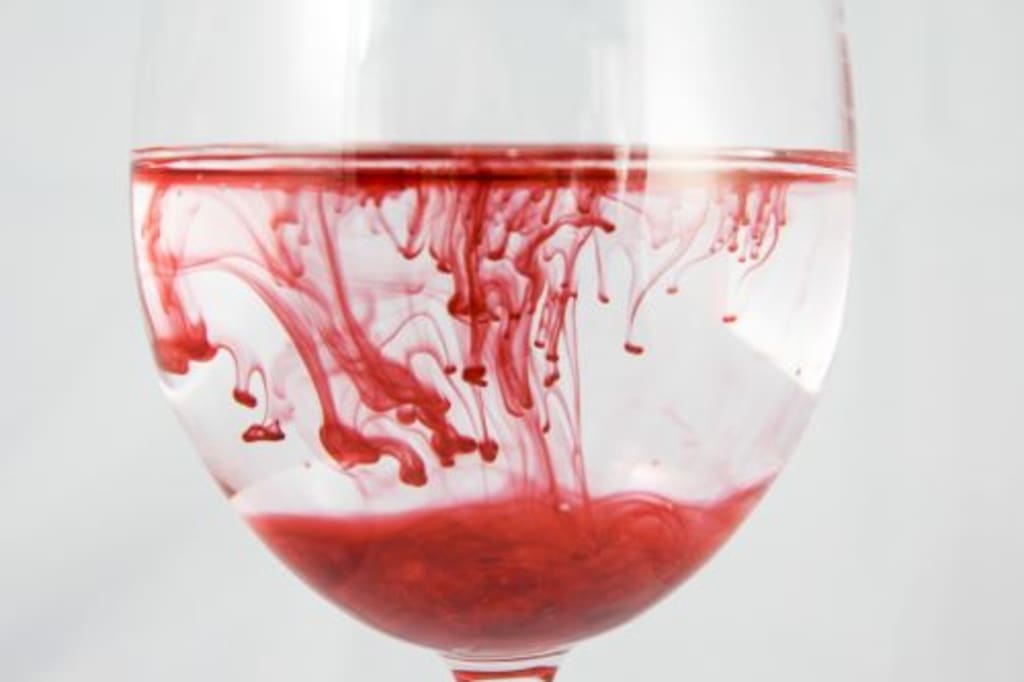
I saw a video today of a woman explaining the meaning of “Blood is Thicker Than Water” and I decided to research this a little bit more. I wanted to discover the true history of this saying and where it originated. And I wanted to determine how it relates to “soul families." Oftentimes our “soul family” members are not related by blood, but in many instances, they are more important than our blood/biological relatives who may or may not be members of our soul family.
Contrary to what many people think, this saying is not in the Bible. But the religious implications behind the saying are vast. And the Bible does allude to the sentiment many times which I will discuss later.
As with many things, this concept is complicated. I am going to refer to the two primary interpretations as “Family” or “Ally”. Family will relate to biological/bloodlines and “Ally” will relate to the bond of deep friendship forged through adversity.
Ally Interpretation
In the instance of the ally interpretation, people interpret the meaning to be “The covenant of the blood is thicker than the water of the womb.” Meaning that relationships forged through adversity are stronger than family relationships. Of course, family relationships can be made stronger through adversity, but the meaning some attribute this to is: “People who have your back are more important than the ones that birthed you.” Coming from a very toxic and abusive family, I resonate strongly with this. Throughout my life, my “soul family” has saved me and been there for me more often than my family.
Often this is a sentiment many soldiers in battle feel strongly about. The person next to you in the trenches is there for you, when maybe your parents, and other family are not. I grew up in a military family on Air Force bases in the early 60’s and it was an entirely different experience than I have heard from my non-military friends who grew up in civilian household On base, we did not deal with segregation. In school, we did not deal with the issue of bussing because we all went to the same school, we all went to the same movie theatre, we played sports together. It was different. And yes, of course, there was a hierarchy (officers versus enlisted men), and there was subtle racism and sexism, but I remember my father (who was very racist as only an East Texas country boy can be) said to me that on base, there was no color because in the battlefield, there was no color. You protected and watched out for your buddy and vice versa.
Family Interpretation
On the other hand, history the term “blood is thicker than water” historically comes from an English proverb meaning that familial bonds will always be stronger than other relationships. The oldest record of this saying can be traced back in the 12th century in German, appearing in the epic Reynard the Fox by Reinhart Fuchs c. 1180 reading in part "ouch hoer ich sagen, das sippe blůt von wazzere niht verdirbet" (lines 265–66). In English it reads, "I also hear it said that kin-blood is not spoiled by water." Implying that the bonds of family blood are not erased by the waters of baptism, and so the raven Diezelin will have inherited his father's outlook despite having been christened.
Also, In 1412, the English priest John Lydgate observed in Troy Book, "For naturelly blod wil ay of kynde / Draw unto blod, wher he may it fynde."
The first recorded instance of this actual statement in print in English is in Allan Ramsay's Collected Scots Proverbs, 1737:
“Blude's thicker than water.”
And then in this instance, William Jenkyn referenced the proverb in its modern form in a 1652 sermon: "Blood is thicker (we say) then [sic] water; and truly the blood of Christ beautifying any of our friends and children, should make us prefer them before those, between whom and us there’s only a watery relation of nature” implying that through the blood and beauty of Christ, our friends, family and children should be shown preference. I think this interpretation kind of straddles the fence between both views.
Biblical References
That said, there are no instances of this saying/quote actually being stated in the Bible in either form, although both interpretations were alluded to in the Bible.
Some of these are:
Genesis 29: (Family View)
Blood is thicker than water in the Bible. This is shown in the story of Jacob and Esau. When Jacob was fleeing from his brother, Esau, he came to a river. Esau was following him and when he saw the river, he said to Jacob, “If you can cross this river, I will give you my daughter as a wife.” Jacob replied, “I can’t cross the river, but I will give you my hand in marriage.” Esau then said, “If you can’t cross the river, give me your hand.” Jacob then said, “I will give you my hand, but first let me wash my hands.” So, Jacob went to the river and washed his hands. Esau then said, “All right, I will give you my daughter as a wife.” Jacob replied, “No, I will not give you my daughter as a wife. You can’t have my daughter because my blood is thicker than water.”
Deuteronomy 33:9 (Ally View)
Blood is thicker than water in the Bible according to Deuteronomy 33:9. This is because the blood of a covenant member is thicker than the blood of an outsider. This is because the covenant member has been chosen by God to be a part of His family.
Genesis (Family View);
Blood is thicker than water in the Bible. In the book of Genesis, in the story of Jacob and Esau. Jacob had a dream in which he saw a ladder reaching to heaven. At the top of the ladder was a man who said to him, “I am Esau, your brother. I have fathered sons on you, but you have not fathered sons on me.” Jacob replied, “I have fathered sons on you, but you have not fathered sons on me.” The man said, “These are the sons of the dream: Esau is one, and Jacob is the other.” Jacob then asked, “Where are your brothers?” The man said, “I am the only one.” Jacob then asked, “Where is your father?” The man said, “I do not know.” Jacob then said, “Let us go to my father and kill him and take his inheritance.” The man said, “No, let us not kill him. He is my father, and I love him.” Jacob then said, “If you love me, you will let me go, and I will go to my father.” The man said, “I love you, my brother.” So, Jacob let him go. The phrase “blood is thicker than water” is used in this story to describe the familial relationship between Jacob and his brother.
Ruth 1:4 (Ally View)
There is a lot of encouragement to live out the meaning of blood is thicker than water throughout the Bible. One example is found in the book of Ruth where Ruth and her mother-in-law Naomi are welcomed into the household of Naomi’s daughter-in-law Boaz. Ruth is told, “You are my sister and my mother’s daughter; you shall be called Ruth the Moabitess” (Ruth 1:4). This shows that Ruth is not just a guest in Naomi’s home, but she is also considered a part of the family.
Jeremiah 1:5 (Ally View)
Another example is found in the book of Jeremiah. Jeremiah is told, “Before I formed you in the womb I knew you, before you were born I consecrated you” (Jeremiah 1:5). This shows that God knew Jeremiah before he was even born. This is an example of how blood is thicker than water.
How Does All of This Relate to Soul Families?
Before we incarnate in this dimension (whether that is earth or other planet) we negotiate with the Source and our guides about what our lessons are going to be during this incarnation. We meet with the energies (souls) we are going to interact with (our soul family) and we determine the conflicts, relationships, karma to be addressed. This “soul” family becomes a celestial blood family connection if you will. So, karmically, members of your soul family can actually be more important than members of your biological blood family. If members of your soul family are also members of your biological family, then the family view would take precedence and vice versa.
- Julie O'Hara 2023
Thank you for reading my poem or article. Please feel free to subscribe to see more content and if you are moved to, please consider tipping. In addition, my books can be found at https: Julie O'Hara Bookshop
About the Creator
Julie O'Hara - Author, Poet and Spiritual Warrior
Thank you for reading my work. Feel free to contact me with your thoughts or if you want to chat. [email protected]
Keep reading
More stories from Julie O'Hara - Author, Poet and Spiritual Warrior and writers in Families and other communities.
How to Make the Best Pancakes
Pancakes are THE ultimate comfort food. No one can be unhappy with a big, old plate of pancakes sitting in front of them. Think about it, have you ever seen anyone crying or frowning while eating pancakes? Be honest! And no matter what stage of life you are in, pancakes can provide the backdrop of wonderful memories of warmth and love.
By Julie O'Hara - Author, Poet and Spiritual Warrior3 years ago in Families




Comments
There are no comments for this story
Be the first to respond and start the conversation.