
Another Old Barn Story
Stories our Great Uncle Jim Told us


As a pre-teen boy in the 1950’s, escaping the confines of 361 Spring Street in West Bridgewater, Massachusetts, was exhilarating; even if it meant I had to take my younger brother, Chris, with me. It was freeing, knowing parents weren’t looking over our shoulders and we could do what kids do. What that was, was never sure, but it started with walking out of the back door (“don’t slam the door”) and out of our driveway, which, at the time, was made of small sharp stones. Kicking a rock down the street, and crossing over North Elm Street, Chris and I were headed toward the opening on the odd side of Spring, just before reaching the Spring Street School further down on the right side.
It looked like an empty house lot, which it became in the future, but a couple of hundred feet in was a rising mound of earth that, once scaled, revealed a perfect set of tracks, it was a rail walker’s dream, especially for inquisitive boys, and without trains, so mothers wouldn’t worry. Along the way, we would climb down the side and find the hidden little tunnel under the tracks, that prompted thoughts of places where (train) pirates could hide or stash their ill-gotten wares. Too young to think of or care that it might be a great place of privacy for lovers to escape prying eyes, we climbed back up and jumped from one cross beam to the next, until Turner Steel appeared.
The yellow color of Turner Steel coming into view, and the tracks slowly dropping to street level, meant we were at North Main Street. We crossed here and turned right on the St Ann’s Catholic Church side of the street, while the railroad tracks continued in the general direction of East Bridgewater. Passing St. Ann’s, where Chris and I were weekly communicants with our parents, and later, along with other boys of our age group, including Billy Tyrell, Billy and Larry Crowley, one or both of the Rossi brother’s, Bobby Ward, at this writing, come to mind, served as altar boys.
Just between St. Ann’s and the Town Hall was a dirt parking lot, and in its center an oblong oval strip of beautifully mown grass with a curb all around it. To me, it looked like a mini version of a chariot racers track, reminiscent of the one in the movie “Ben Hur”. I had not seen, but heard that the older boys with driver’s licenses, raced around it, when the police weren’t around to catch them. I mostly remember it was a place to park on Sunday, and had pot holes that jarred your bones, and in summer kicked up dust that had us rolling our windows up to prevent being dusted to death. During the week, folks parked there to watch various sports, in the late 50’s it was West Bridgewater High School football team, and little league baseball, at opposite diagonal ends of what we called then, Legion Field.
Beside baseball, Legion Field, in the summer, was the outdoor center for all manner of West Bridgewater activities. There were always various bazaars held, usually with games and pony rides. As kids we could not wait for the fourth of July bonfire, usually lit up the evening of the third. For weeks before July 4th, the West Bridgewater Fire Dept., would methodically build a large wooden tower, and then, in the days leading up to the fourth, fill it with wooden pallets and, to my eyes, just about anything that would burn. These were the days when parents, after the fire was started, ringed the tower, and became the barrier through which no youngster was allowed to wander. We were content to run around the outside of the slowly enlarging ring of adults, dodging fire crackers, and sparklers, and feeling the heat from the quickly growing inferno. Chasing each other and fireflies, playing outdoors at night was the largest gem in the crown of our summer.
Just behind Legion Field there were some woods, they opened up into a grassy area with a pond in the middle of it. It was not a large pond, but supported the usual pond characteristics and wild life. The residents were some small, carp like fish, frogs and toads on the inside, and chipmunks and squirrels on the outside, with a few garter snakes to keep everybody on their paws, fins or toes if you had them. This was the sort of place, respectfully, that if Mama found out about it, would have Chris and I grounded, and in manacles until we were 31 and 30 respectively. Off to the side, was a heap of old moss-covered wood. Next to that, was the unmistakable outline of some kind of structure, I had no idea what it might have been, but I knew who would. So, I called to Chris to come away from the water, explaining that we might get some information from our Aunt Lou’s husband, Jim Petersen, as to what use to be back here in the woods. Also visiting aunts and uncles scored points with Mama, and could even evaporate any fear she may have had as to where we were and what we were doing.
Our aunt Lou and uncle Jim, lived in the house next to the town hall, and had a huge old barn out back. Aunt Lou was gramma Sheehan’s sister, and Jim, having been injured in World War I, spent his years in a wheel chair. Anxious to not have us knock over her favorite vases or precious knickknacks, we were quickly offered a piece of fruit from the center of their dining room table and then handed off to uncle Jim, who would wheel, with us, out the back door, where there was nothing breakable. They had an ingenious ramp system that led out to the barn; here Jim would find peace from his doting wife, and the opportunity to smoke a cigar, his second love. Reaching the barn, fifty or so feet from the house, there was a huge red sliding door, which had a regular door built into it, just left of center. Because of his wheel chair, uncle Jim had hired someone to cut the bottom off this door, so he could push open the door and wheel right in, easily, with no bump to traverse. I thought to myself, he sure must spend a lot of time out here. In the center was an old horse drawn carriage, sans horse; which fit into the décor of various pieces of leather equipment hanging, at intervals, from high up in the rafters. Long strings hung also, so that Jim could turn on 5 or 6 very old and well used see through light bulbs, I’m guessing up to 1 watt each, maybe. Along every wall, every few feet were old pictures of fighters, some had boxing gloves on, and others showing only bare knuckles. Between the pictures, were posters going back to the late 1890’s through the early 1920’s. Chris and I, found and heard a great deal of information regarding the manly art of self-defense. We were surprised to find Uncle Jim had a poster of himself, looking tall and mustachioed, with arms up and in the ready position, and showing bare fists. According to uncle Jim, sometime in the later 1860’s, boxing changed and began using a new system from England called the “Marquess of Queens Rules”. This new concept required a fighter to wear boxing gloves and that the match be in an enclosed area of approximately 24 feet. Jim believed the ring was too confining, and gloves failed to yield the kind of message an old bare-knuckled fighter wished to deliver. He stopped at nearly every picture, giving his pros and cons of each fighter. One of his favorites was a bare-knuckle fighter named Jem Mace, an Englishman and English champion. Mace had been a champion in England for much of the 1860’s and came to America, late in his career, and was the American Champion for 1870-1871. Jim told us that Jem Mace had the longest professional career of any fighter in history, that he fought for over 35years and into his late 60’s and recorded his last exhibition bout in 1909 at the age of 78.
Once Jim had dispensed enough history to Chris and I, there was finally an opportunity to ask of the woods and pond and pile of old wood, I had found while exploring. Without skipping a beat, uncle Jim launched into his knowledge of that area. In a typical “when I was a boy” manner, he explained that in the early 1900’s, that illegal bare-knuckled fights took place there. People came in carriages or by trolley, by horse or foot to see two men fight for as many rounds as it took, to win. There were no boundaries, other than the people, men and women, surrounding the match. There were paths and dirt roads from the Bridgewater’s while, the townies and folks from Brockton entered by what was now Legion Field. The pond was used for watering the horses, and as today, for kids to play around, for frogs and such. There had been an old barn, the remnants of which I had crawled over earlier. It served several purposes, like sheltering horses and people, if it rained, but mostly as changing rooms, and an area for fighters and their seconds, and owners to work out the financial details of who w0n how much. Jim, now in his middle 80’s, remembered there being a small bonfire as well. He explained that this style of boxing was totally illegal, so things had to appear as if it were an outing or group picnic. Illegal, yes, but also promoted with posters and newspaper announcements, even the police were included, to protect the general public. Uncle Jim continued by telling us that unknown to most people, some of the bloodiest illegal fist fights were held in this very barn, and described how he, in addition to being a lookout for the authorities also collected $25.00 from each fighter because he owned the barn. He talked about cleaning the place up the following day, finding teeth and washing blood from some of his memorabilia. Even though he was wheel chair bound, he seemed at one with this now old and leaky (dusty and smelly) facility, and spoke lovingly of what the old girl had seen.
Leaving uncle Jim’s “old barn” was memorable, even today, I can almost smell the fumes from his cigar, yuck! Beyond that, my memories of how this old barn transported uncle Jim back to his early years; to a time when he could walk and fight upright and do the meaningful things for the young men of his turn of the century West Bridgewater.
In the hour or two spent with uncle Jim, we learned many things, from boxing to old days when walking and riding in a carriage, was normal.
At 12 and 11, we were anxious to get home and recount the story of our day to Mama and again to Papa when he got home from work. Papa warned us that sometimes uncle Jim was known for stretching the truth, so probably shouldn’t believe everything he told us.
We, too, were learning to create stories of our own, that sounded, to Mama, more like exploratory sorties that were fun with never a reason for her to worry. As we advanced into our teens, we became more easily motivated by friends and baseball and girls and looking toward the future, while letting the wonders of uncle Jim’s old barn and his past, fade into near obscurity. It’s only now, as I stare down the barrel of my 80’s, that Jim’s memories begin to colorfully begin to fill in the adventures of my being a boy.
About the Creator
David X. Sheehan
I write my memories, family, school, jobs, fatherhood, friendship, serious and silly. I read Vocal authors and am humbled by most. I'm 79, West Bridgewater, Massachusetts. I seek to spread my brand of sincere love for all who will receive.
Keep reading
More stories from David X. Sheehan and writers in Families and other communities.
The Stringy and Spot Club
My father, David X. Sheehan Sr., exited the U.S. Navy in 1946. His hitch was up, in the Naval District of Portland, Maine. He had met my mother, Willa Anne Tibbetts, while on Shore Patrol duty at George’s Delicatessen, where she waitressed and he and his partner often ate.
By David X. Sheehan5 years ago in Families
What Is the Best Way to Explore Deira Dubai in One Day?
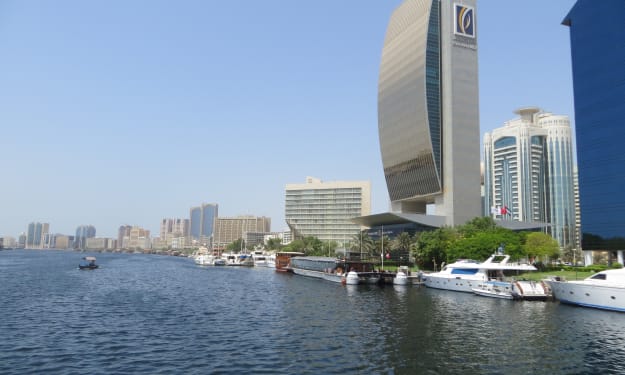
Deira is where Dubai’s story truly begins. Long before the skyscrapers and luxury malls, Deira was a bustling trading hub on the banks of Dubai Creek. Today, it remains one of the most atmospheric districts in Dubai, with rich heritage, culture, and daily life. Exploring Deira in one day is not only possible, it’s incredibly rewarding if you do it right.
By John Ashley6 days ago in Families
Why Tangalle Is Famous Among Honeymooners and Couples
Tangalle is a peaceful coastal town situated on the southern coast of Sri Lanka. It is an excellent location for couples seeking a peaceful and romantic holiday. Tangalle is particularly famous for its pristine beaches and high-end resorts. Unlike other towns in the southern coast, Tangalle remains untouched by mass tourism. This makes it an excellent location for couples who are seeking a peaceful yet romantic holiday.
By John Ashley6 days ago in Families
Two Grumpy Old Men Solve the Problem
Marty and Steve were two grumpy old men who lived together. They had known each other for years. Marty had been a bachelor all his life. Steve said it was because no one could stand to ever live with. Marty’s standard reply was “Well, you are, so what sort of a moron does that make you!”
By Calvin Londonabout 11 hours ago in Humor



Comments
There are no comments for this story
Be the first to respond and start the conversation.