
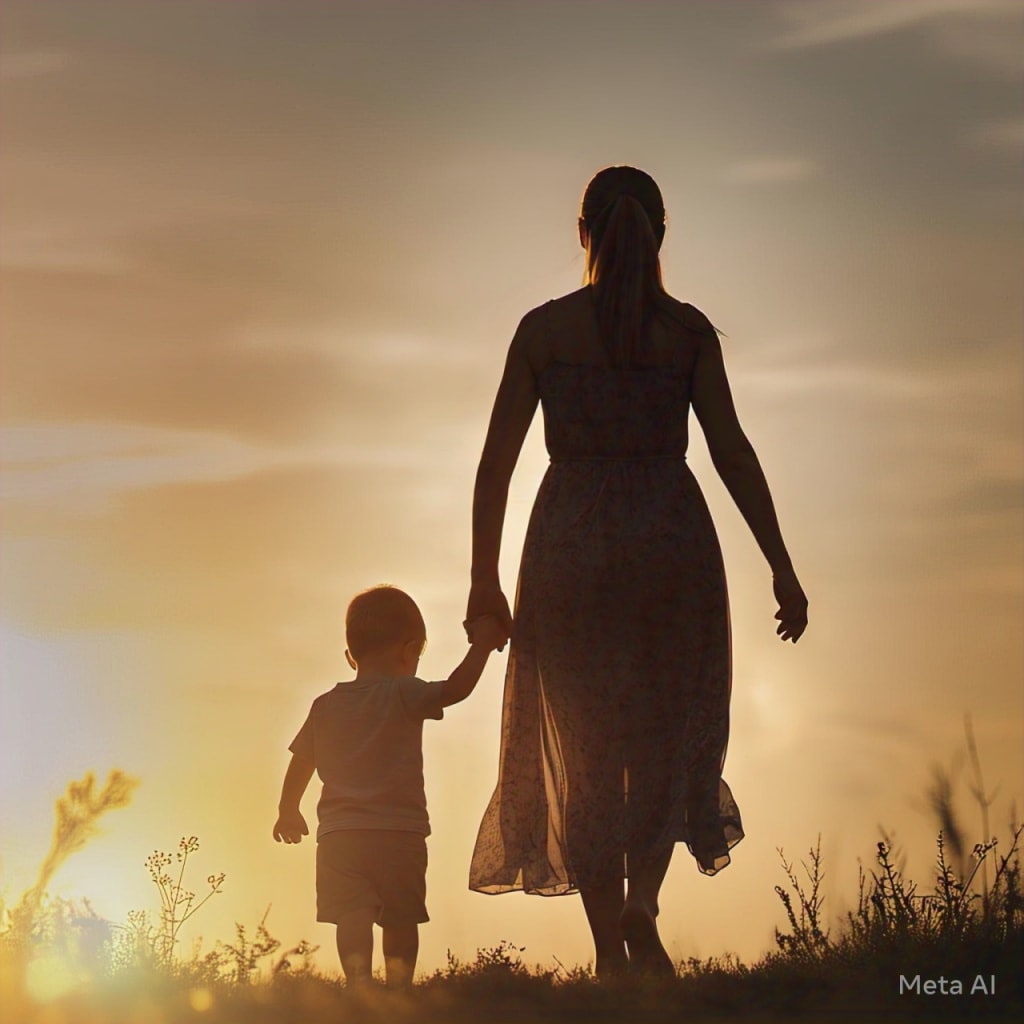
The wind howled through the trees, shaking their skeletal branches as if the forest itself were grieving. In the small village of Chisomo, tucked between two mountain ridges, life had always moved slowly—quietly. That is, until the war came.
For Maria, the war didn't start with bombs or soldiers, but with a whisper.
"Leave," her neighbor had said one evening, eyes wide with fear. "They're coming."
Maria had grown up in Chisomo. Her mother was born there. Her grandmother, too. But now, the place she called home no longer felt safe. Rumors of raids, disappearances, and destruction spread like wildfire. When the whispers became screams, Maria knew she had to go.
But she wasn’t alone.
Clutching her five-year-old son, Elijah, tightly to her chest, Maria stood in the doorway of their tiny thatched home. The boy was asleep, his breath warm against her skin. She looked around one last time—the cracked clay pot by the door, her late husband's boots still near the mat, the family Bible resting on the shelf—and whispered, "I promise I’ll keep you safe, my baby. No matter what."
That was the promise that started everything.
They left at dawn, walking with nothing but a small satchel of dried cassava, a water flask, and Elijah's toy wooden lion—his favorite. The forest paths were unfamiliar and winding. Every snap of a twig made Maria’s heart race, her body tense like a bowstring ready to snap. But she didn’t stop.
She couldn’t.
For days, they journeyed, sometimes hiding in thickets when armed trucks roared nearby, sometimes begging for food from passing travelers. There were kind strangers along the way, but also cold stares, doors closed in her face, and whispers that carried judgment.
One night, after days of walking, Elijah began to cry from hunger.
"I want to go home, Mama," he sobbed.
Maria knelt beside him, brushing dirt from his cheeks. Her own stomach growled, but she pulled out the last of the cassava, handing it to him.
“We don’t have a house right now, baby,” she said softly, “but home is wherever we are together. I promised I’d protect you, remember?”
Elijah nodded, tears still falling, and leaned into her. That night, under the open sky, Maria stayed awake, holding him close, her mind swirling with fear and hope in equal parts.
Eventually, they reached a refugee camp near the border of a neighboring country. The place was crowded, the air filled with cries, laughter, coughing, and the clatter of metal bowls. Maria stood in line for food, filled out forms, and waited for what felt like forever for a tent assignment. Life in the camp was hard—hot days, cold nights, and endless waiting. But Elijah had a place to sleep. He had rice in his belly. And he had his mother.
Maria began helping in the camp’s kitchen, washing pots and preparing meals for other families. She earned extra portions this way, ensuring Elijah had enough to eat. In her free time, she taught him letters and numbers using sticks in the dirt. He was bright—quick to learn and always asking questions.
“Will we stay here forever, Mama?” he asked one day, balancing his lion on her foot.
She looked at him, her heart aching. “No,” she said. “This is just a step. One day, we’ll have a home again. That’s another promise.”
Years passed. Elijah grew taller. He made friends, played soccer barefoot in the dusty yard, and won spelling contests held by aid workers. Maria never stopped working—cooking, teaching, advocating for women in the camp. Her determination didn’t go unnoticed. One of the aid organizations offered her a scholarship to attend classes in social work through a partner university.
She hesitated. “I’m too old to study,” she told the camp coordinator.
He smiled. “You’re never too old to grow. You’ve already been doing the work. Now get the paper to go with it.”
So she studied. At night, while Elijah slept, she read borrowed textbooks by flashlight. She wrote essays, joined discussions, and slowly, a new dream began to take shape—not just to survive, but to lead, to help others like her.
Ten years after she had fled her home, Maria and Elijah were resettled in a quiet town in a new country. The apartment was small but warm. Elijah started high school, excelling in science. Maria found work as a counselor for refugee families, guiding them through the very fears and losses she had once known.
On the night of his graduation, Elijah stood tall in his cap and gown, looking out at the crowd. Maria clapped with tears in her eyes.
When he gave his speech, he said, “Everything I am is because of one person. When we had nothing, she gave me everything. A warm hand, a full belly, and hope. My mother made me a promise—and she never broke it.”
Maria sat in the front row, hand over her heart, her promise fulfilled.
About the Creator
Wise~Guys
— Look Behind what's in Front of You ~ Make Good Choices — Hey, So how you Doin'..! Made~Men — Mobster Movies romanticise a distinctive, elegant appearance, impeccable attire style, along with the 'Families' expressive lingo. Making their 'Bones' gave them Panache — with vintage fedoras, tailored pin-striped suits, mirror-polished wing-tip shoes adorned with tassels; with their 'Gun Moll' gorgeous dates on their arms.
By Jay Kantor21 days ago in Families
Buddha's Inner Peace
In a world that never stops moving, the image of Buddha sitting in perfect stillness beneath the Bodhi tree offers something we desperately need: a reminder that true peace exists not outside ourselves, but within. The story of Buddha's enlightenment isn't just an ancient tale—it's a roadmap to discovering the profound calm that lies dormant in each of us.
By Susmit Bhowmik7 days ago in Families




Comments
There are no comments for this story
Be the first to respond and start the conversation.