
A Little Map of Hope
From my cousin, to me, for you.

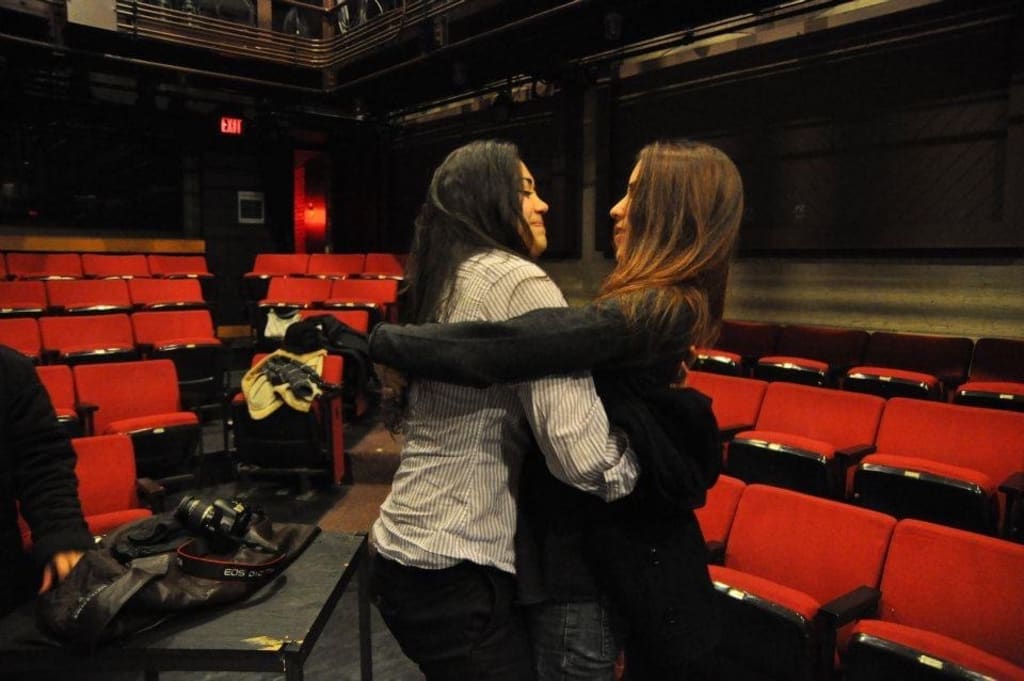
Picture this: You’ve just turned eighteen. You’re wearing a long red shirt with a new pair of tight jeans that you very consciously entrusted with boosting your confidence for the day. After years of dreaming about it, you worked your way to reaching a destination that is presently 1,697.41 miles away from home, and you think you’re ready. You think you’re ready in that petulant way teenagers always swear they are… but when your mami implies that she’s finally leaving the room, the fact that you’re not suddenly sneaks up on you.
On the other side of the experience, unbeknownst to you, your mother has the same realization.
There is a moment of tension. You will understand the intricacies of it years later, but, for now, you look at each other intently. The silence threatens to thrust you headfirst into the idea that pursuing your ambitions is a huge mista—
Cut to the only other person in the room.
This is a woman who’s been part of your life since long before you were born. She interrupts your thoughts, derailing the entire picture with one swift and gentle motion that becomes the kindest thing anyone could have done for you and your mother in that moment in time.
You’re not grateful yet, because you’re not fully aware of what’s happened. But you will know. And you will be.
Fast forward to this: You’re now twenty-eight years old. You’re sitting on your desk looking out the window of your small apartment in Bushwick, Brooklyn. The sunlight makes elongated triangles of orange light dance on your wall, and, if you were to judge this day only by the generosity of the weather, you’d never be able to tell that you find yourself in the middle of a global pandemic.
After abandoning your musings to face your laptop, your hands begin to type a “u” and then an “n,” but the search bar predicts your inquiry before you can finish. The words stare at you with a gravity that’s punctuated by the blinking of the cursor still above them: “unemployment in New York.” For the next few seconds, you take in your new reality. It is many things, but strange is the only one that you can presently process without overwhelming yourself. After a breath or two, you begin to move your mouse towards the query. However, before you click, the corner of your eye catches a light coming on. It’s your phone. Upon reaching for it, you notice that the screen is displaying the words “Shey Shey” next to an emoji of two pink hearts, and you smile at the sight of her nickname.
It’s a message from the same artificer of that small grand gesture a decade ago. She writes to you and your two sisters inside of a group chat in what can only be described as a blog within a text. It opens with “Day # No Idea: Closing in. We’re as ready as we’re going to get. Let’s tackle the giant.” As she has in all the other updates she’s been sending in the past few weeks since the onset of the national crisis, she goes on to detail the most recent happenings of the little health center in Massachusetts she works at, detailing the measures they’re taking to combat the virus while still taking care of the staff physically and emotionally. She adds levity to her update by recounting her comical experience adjusting to Zoom meetings and expressing gratitude for the music that her new saxophone-playing co-workers have brought to the center. Careful to only mention difficulties for the purpose of emphasizing her team’s commitment to their mission of saving as many lives as possible, she concludes, as always, with the hashtag #TogetherWeCan.
Taking notice of the quiet surge of energy that was suddenly ignited inside yourself, you sift through the pictures she attached this time. None are accompanied by any explanation on her part, but they don’t really need it.
You look at them:
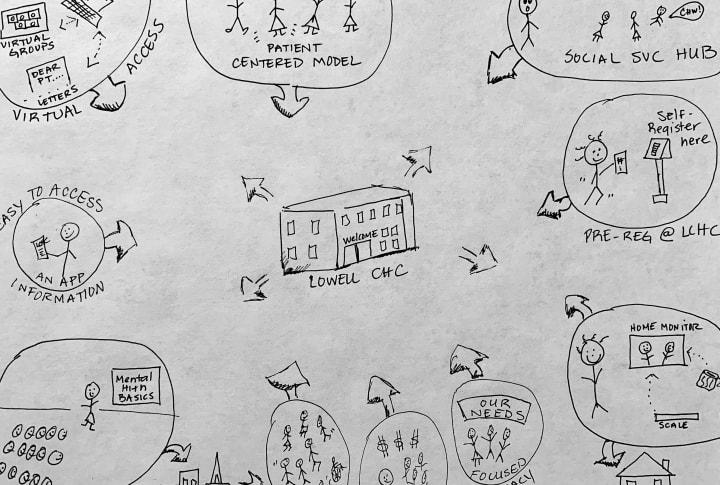
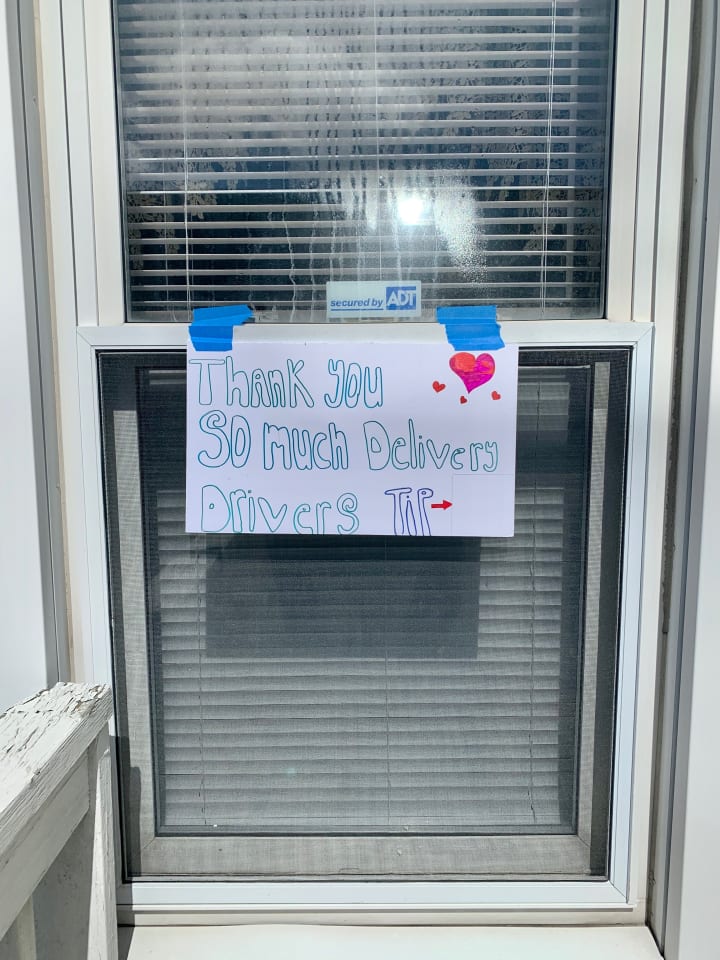

The sight of the mug in the last one pulls a smile out of you, because it’s almost as though she’s saying, “I may be battling against a global enemy of massive historical proportion, but this is all I need to summon my strength for the day.”
You chuckle because
this
is
classic Sheila.
This is my cousin.
Regardless of the enormity of a problem, she talks about it like a video game player would about an obstacle on the virtual path: acknowledging the full breath of its challenges but operating under the assumption that it is ultimately surmountable. As usual, her words are infused with the undying and somehow effortless optimism that is so characteristic of who she’s always been.
Now, I could tell you that she was raised largely in a small town in Massachusetts by a single, poor immigrant mother who did not speak English. I could elaborate on how impressive that alone makes her lonely trek through the U.S. school system and into a Harvard acceptance and a Boston University Master’s Degree in Public Health. I could speak volumes of her work as the Chief of Community Health & Policy at Lowell Community Health Center. I could explain how for her, it’s not just a job. And I could certainly mention that her mission to protect and elevate the oppressed also translates directly to her exemplarily kind and focused service as a mother. But I think the most apt way to convey the magnitude of her impact is by doing for you what she has always done for me in moments of darkness: drawing a little map of hope.
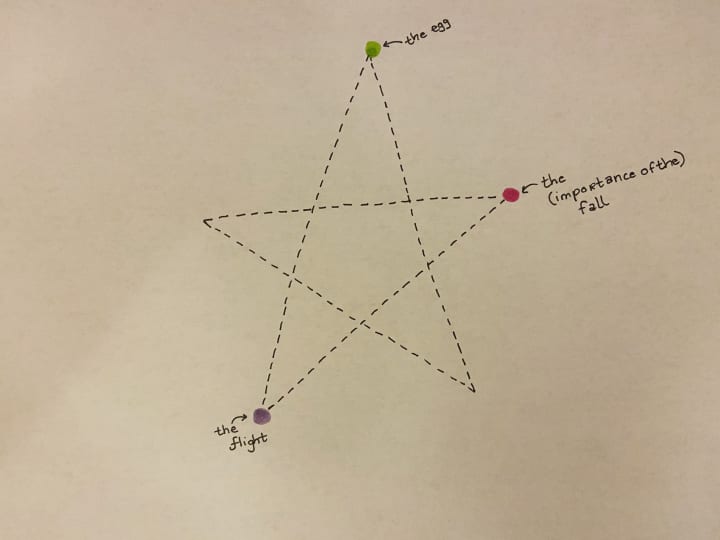
Sheila’s a difficult person to write about, mostly because the debt I have to her is one that simply can’t (and shouldn’t) be repaid in words. But it’s that same gratitude for the depth of her influence that makes it easy to sketch out the shape of what her example has taught me. Every time I come to her with a dilemma—societal or individual—she responds by first validating my emotions, then comprehensively examining the factors responsible for the damage, and finally sanguinely focusing on how to realistically, ethically, and sustainably carve the way forward. This tendency of hers, coupled with the example of how she leads her life in the service of others, have time and time again taken the weight of my intangible thoughts and emotions and inadvertently turned it into a visible road with an invigorating destination. A road that I am about to show you.
Through years of loving and listening to Sheila, I’ve come to realize that hope is strongest when it is communally built and consistently tended to. And, much like Rome, it’s not a project for a single day’s journey. But that doesn’t mean you and I can’t employ the next few minutes to take a quick virtual tour of its three main cities—guided, of course, by my cousin.
We are in lockdown, after all, and if that for you too, reader, means feeling a little lost, let the takeaway of Sheila’s daily example lead you: The three main ways back into personal empowerment are honoring that which supports us, protecting that which emboldens us, and fortifying that which grants us purpose. These are the people, things, and moments to resort to when you’re feeling off-course, because these are the places where your own personal brand of optimism originated in the first place.
But if I’m losing you, reader, just grab my hand. Walk into the first city with me.
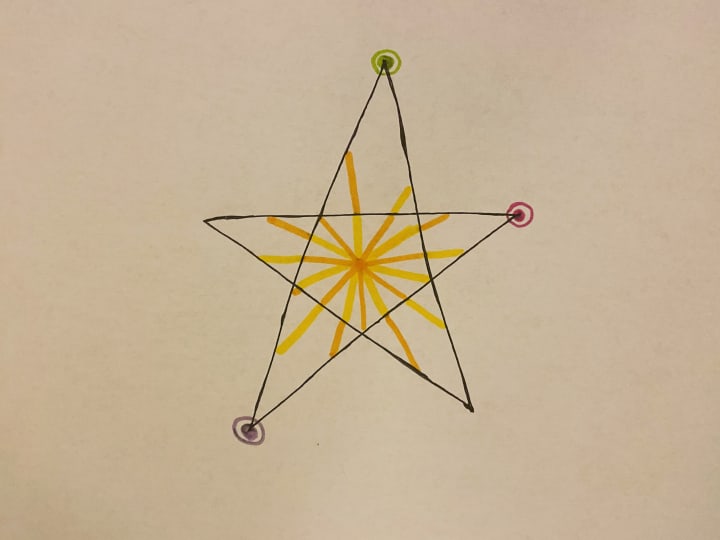
If you’ve forgotten how to draw a star, remember it always starts with one little dot that marks its tippity-top. Press your pencil to the paper to start tracing from there.
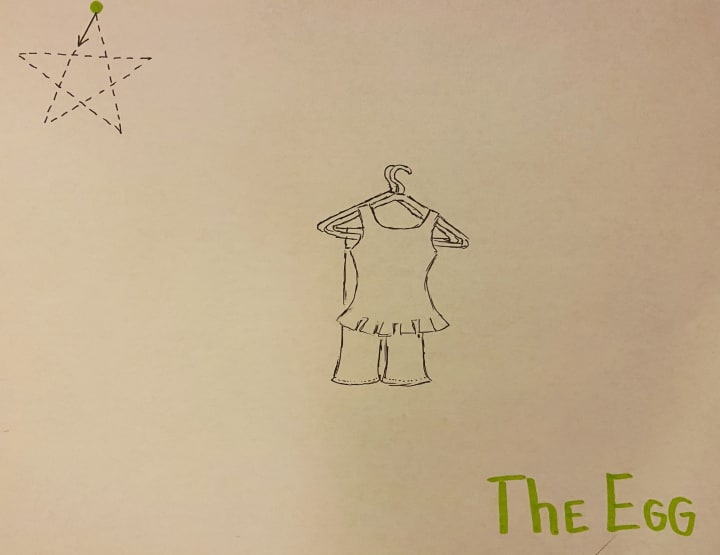
It’s both scary and moving to realize that our sense of belief in life begins to be constructed before we have any control over it. It is installed in us by the actions of those who adore us, oftentimes before we are even born.
When my mother was pregnant with me, Sheila was a teenager. It was 1991, when inflation was at an all-time high in the Dominican Republic. My parents would stand in line at gas stations for hours at a time. Once they found out they were having a child, their only sound chance at a decent life rested in leaving for the United States.
“We left so our youth wouldn’t be wasted in the search for necessities,” my mom recently told me over the phone. “I don’t mind spending hours on end waiting outside a supermarket today, because we’re in the middle of a pandemic. That makes sense. But, back then, your dad and I couldn’t handle the idea of misspending our entire lives and yours waiting to get basic needs. So we left.”
Amongst her family members who had migrated to the United States earlier, the ones who were at the helm of welcoming my pregnant mother into her new world were my mother’s aunt, Kenia, and her then thirteen-year-old daughter, Sheila. Kenia had migrated from the Dominican Republic to Puerto Rico over a decade prior, and that’s where her daughter was born, but by the time my mother reached the North East of the United States, they had been living in Methuen, Massachusetts, for a few years.
As I grew inside her belly, mami attended educational pregnancy and birthing sessions at the hospital where I was eventually born. The classes were in English, which she did not speak. Knowing this, teenage Sheila would welcome her home from the hospital every night with the question, “What did you learn today?” Mami would lay the papers she’d been given flat on the table, and young Sheila would review them with her, carefully clarifying any doubts, causing the slow crumble of the language barrier.
When my mother needed new maternity clothes, Kenia and Sheila would take her to Salvation Army, and Sheila would spend her time inside of the store picking out the least worn-out pieces for my mom to wear.
It’s funny how clearly I can see these moments even though I wasn’t exactly there to see it. But it makes sense that they’re almost memories to me, because my physical, emotional, and mental development benefited directly from them. Sheila’s actions as a thirteen-year-old contributed to my mother’s health and, in turn, to mine.
“You can’t just shame people for not ‘doing some mediation,’ ‘exercising,’ or ‘eating a healthy diet’ if they don’t have a roof over their heads, food on their tables, or other basic needs,” Sheila said to me once, as we drove in her car one November almost a decade ago. Seeing as my parents couldn’t afford to fly me home twice during the holidays, she would take me in on Thanksgivings, which was one of the many ways in which she stepped in when my nuclear family grappled with financial or social disadvantages–particularly ever since I’d gotten into Brown and my parents, who were both unemployed at the time, needed guidance in regards to the U.S. college system. In a moving reprise of the welcome her thirteen-year-old self had given my pregnant mother, Sheila had opened the doors of her house to me and mami when I arrived in the United States to start college, and, to this day, has not closed them.
That November evening in the car, when Sheila mentioned the importance of recognizing basic needs, we were having a conversation about wellness. An ensuing discussion about the key factor of privilege resulted in her introducing me to Maslow’s pyramid, a psychological theory originally introduced in 1943 which deemed that human needs exist in a hierarchy. One can only tackle the higher levels (self-actualization, love, etc.) once one has met the basic requirements of life (air, water, food, sleep, housing, clothes, etc.).
What I brought you here, to this first spot, to tell you, reader, is that hope works in a similar way. Like a seed, like an egg, it’s dependent on the environment that nourishes it. In 2020, a young Latina’s relationship to the future could be directly traced to the treatment of her pregnant mother twenty-eight years earlier.
Thirteen-year-old Sheila’s caretaking of mami gave my mom tools with which to tackle birth and life in a place where she didn’t so much as speak the language. This, in turn, translated to my security and development. And when it gets dark in the tunnel, it’s useful to trace my steps back to hope’s point of origin: the actions of those like Sheila, who patiently crafted a kind path while we were still busy training our legs to walk.
You’ve traced your first line, reaching the bottom-left corner of the star. This marks the first halt in movement, which forces you to find the next right direction.
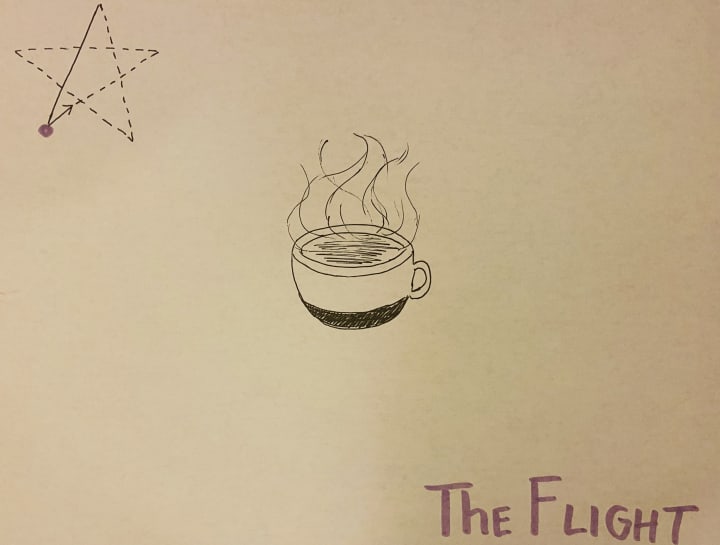
It was only years later, on one of our usual daily phone calls, that mami confessed to me that it was Sheila who saved the day that afternoon in 2009. Somehow, we’d landed on the subject of my first days of college, and of particular interest to me was a window of time that day when I moved into my dorm in which mami and I were briefly separated.
We had just finished setting up my room, and I’d suddenly found myself in the awkward interim between moving in and attending orientation. It was time that I hadn’t accounted for, so I had no idea what to do. As I tried to figure it out, I had heard mami say “Bueno… ya,” which can be roughly translated to “Well, that’s that.”
“What?” I had responded in alarm. “You’re leaving? What?!”
It only occurred to me then. I had pictured my arrival to college alongside my family, I had certainly daydreamed about going to classes, but I had never considered the bridge between the two. Up until that point, the concrete thought of saying goodbye to my mother had never crossed my mind.
On the phone call, mami revealed that the look she gave me in that moment was one of motherly fear. Sensing that was what prompted Sheila to do what Sheila always does: step in when she was most needed. With a light smile, she’d touched mami’s arm and said, “Sanyia, let’s go have some coffee.” Turning to me, she continued with, “You should hang out and make friends. We’ll see you in a bit.”
At the time, I was too overwhelmed with novelty to notice the ease with which my cousin had known exactly what both me and my mother needed, even when we ourselves were at a loss. The fact that my mom and Sheila were stepping away for a little while without leaving for good gave me a chance to explore the new terrain and make some initial bonds without the anxiety of not having anyone to resort to if things went awry in the couple of hours that would follow. For mami, Sheila’s instinctive coffee invitation gave her a chance to cry without me seeing her do so. “Which was important,” mami’s voice reverberated on speakerphone. “Otherwise, you would’ve been afraid to stay. Maybe you would’ve regretted coming at all, and I couldn’t let that happen. Not that day.”
Like lighting, Sheila had reacted in a way that had allowed both me and mami respective space to process our separation anxiety without hindering my budding relationship with college, particularly after everything my family had sacrificed to ensure I would receive the best higher education I could.
In giving me those critical few hours of having a secure base I could run to, she fortified my ability to fly out of the nest. I could make my initial bonds with fellow freshmen without yet drowning in the grief of saying goodbye to my mother. I could make my first rounds around campus engaging my curiosity for what my college years would hold instead of feeling guilt or regret over leaving my family back home, at least this first day. Meanwhile, my mother could process her fears and sorrows without feeling that she was hindering my freedom or joy. In that swift and seemingly simple gesture, Sheila facilitated a healthy transition for me and my family into the stage of our lives in which we had to live thousands of miles away.
This has been her life: facilitating positive moments, and, in the case of those who have been marginalized, oppressed, or thrown into the downside of advantage, positive lives. Sheila’s position as a leader in public health is not just a job for her. “It’s who she is,” mami has always said.
And that’s why I’ve brought you here, to the second vital point in our journey back to belief in life: the gestures of those like Sheila, who facilitate our access to boldness. Because when people feel safe in their support system, they develop the courage to venture into the unknown. They dare to embrace change. They give their ideas a true shot because they know the inevitability of making mistakes will not render them devoid of friendships or family or community. They do. And, hopefully, like Sheila, they do some good.
Finally, you’ve reached the top-right corner of the star, which marks its second halt. Once you change direction and trace the line that heads to its third, you will finally see and know for sure that what you are sketching is a star.
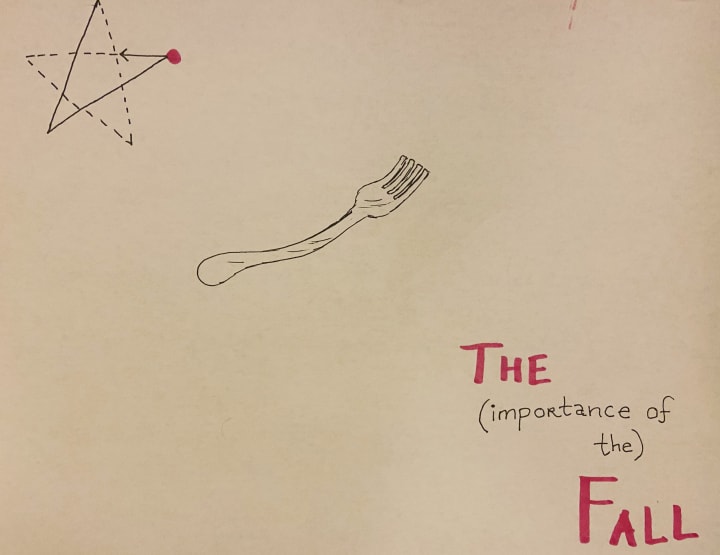
A couple of months ago, shortly before the coronavirus reached the United States, Sheila and her family came to visit New York City, and my sisters, my boyfriend and I had dinner with them. In the middle of the meal, our conversation came to an abrupt stop when an older patron slipped and fell on the floor right next to our table. With a level of focus and calm that could only result from years of expertise, Sheila automatically got up from her chair and leaned down to aid the person who’d been hurt. Putting her hand on the woman’s back, my cousin asked her softly, “Are you okay? Would you like some ice?”
The lady rubbed her knee in pain, still too stunned to be able to respond. As other patrons gathered around the scene to get a glimpse of what had happened, I saw Sheila instinctively begin to move farther away from the woman, quietly signaling to the crowd to make room for the lady to breathe. Slowly, everybody did, subconsciously heeding Sheila’s silent call.
As the restaurant staff helped the afflicted patron into another room, Sheila sat back at our table, saying, “She’s going to need to ice that.” My sister Lía and I exchanged looks of admiration for the kindness we’d just witnessed, and, almost as though reading my mind, Lía turned to Sheila with the words: “Wow… It’s not just a job for you, is it?”
My cousin smiled her warm smile, the one that’s unknowingly traced me many a map out of the darkest corners of my life, and, casually retaking her fork in a mindless gesture that demonstrated how accustomed she was to coming to people’s aid, simply said, “It never has been.”
Dinner continued normally, but my mind has ruminated on the truth of that sentence for a while. Thinking about it often takes me back to one morning in Methuen in September of 2009, when Sheila told me over family breakfast that being a mother had made her a much more confident person.
“That human being is alive and well in great part because of me,” she said, pointing at her then four-year-old daughter Sofía, who gripped her fork with surprising finesse for her age as she picked the scrambled eggs off her plate. “I did that. I do that. I keep that human alive, and that human is okay! Look at me. Look what I can do,” she said with a laugh, making fun of herself.
But it was true. Raising children has always been and will always be a gargantuan challenge, one more than worthy of acknowledgement. As I took in the beauty of how my cousin talked about her relationship with parenting, I thought of all the caretakers who’ve been cheated from recognition throughout history—the vast majority of them being women, of course.
My own mother sacrificed thirteen years of her career to raise us, and it is one of my quiet everyday heartbreaks to consider how most people wouldn’t give her credit for the invaluable work she’s done. Sheila is the opposite of those people. Her existence and contributions to the world directly counteract the cultural narrative that claims that taking care of people is a negligible act. In fact, the way my cousin leads her life reinforces the notion that protecting and empowering others in any given way is at the heart of our purpose as human beings.
Because hope, though fickle, is contagious. It cannot survive in one host alone for very long, so the only way to sustain it is for us to continuously pass it on to one another.
As I read again through Sheila’s last blog-text, one set of characters stuck out: “Our future - we have one? YEAH,” the message read. “Already doing work on envisioning our future. It won’t be the same. It CAN’T be the same.”
I looked at the light dancing on the wall again. It was now a brighter shade of orange. The last few years of struggle since graduating college took turns flashing through my mind, but they looked a little different than they had a few seconds before. They looked a little more normal—and necessary. Because the thing about acting on courage is that hardship will at some point make us forget why we did so.
This is where those like Sheila come in, to remind us that the time pain and failure afford us to reassess our path should be seized. We must be okay with reviewing our actions to better suit our ends, and we must be okay with modifying our ends as our ethics and values grow. Doing so does not compromise our sense of purpose. The act of responding to adversity and change by consciously redirecting our sail is, in fact, how purpose is strengthened. And reconnecting with that is the most direct gateway into that spark of enthusiasm for the future we are all in such need of.
I brought you to this last point, like my cousin did with me, precisely because you won’t need me past it. I’ll let the Sheila of your life take over from here. All I ask is that you thank her for lighting the way by actively putting one foot in front of the other, trusting that will eventually reignite your own sense of direction. And, hopefully, when it does, you will take the time to share it with someone who needs it like my cousin always does, because a world full of people like Sheila?
My goodness…
Picture that.
About the Creator
Alejandra Rivera Flaviá
Give me a piece of paper, and I'll give you back a bird :)
🎬 Actor: HBO, Netflix, CBS + upcoming films 🤫
✏️ Writer
💜 Multimedia Creator
🎓 Brown
🇩🇴 Dominiqueña 🇵🇷
📍NYC
IG: @alejandrariveraflavia
www.alejandrariveraflavia.com
Keep reading
More stories from writers in Families and other communities.
Why Gen Z Is Having Fewer Kids — And What the Data Says About the Future of Birth Rates
Across the United States and much of the world, birth rates are falling—and Generation Z is at the center of that shift. For decades, starting a family in your twenties was considered the norm. Today, many young adults are delaying parenthood or choosing not to have children at all. The change is dramatic enough that economists, demographers, and policymakers are beginning to ask a serious question:
By Navigating the World2 days ago in Families
A Transparent Look at Vocal Challenges and Top Stories
Almost three years ago, we shared a resource article that served as a place for people to suggest new challenge prompts. We thought it would be a good idea to refresh that thread, and take the opportunity to answer a few common questions about top stories, how challenges are judged and how submissions are reviewed.
By Vocal Curation Team3 days ago in Resources
A System That Isn’t Working Challenge Winners
Systems promise order. They organize behavior, distribute opportunity, and suggest that if everyone follows the rules, things will work. The entries in A System That Isn’t Working look closely at what happens when that promise begins to slip.
By Vocal Curation Team4 days ago in Resources




Comments
There are no comments for this story
Be the first to respond and start the conversation.