
6 psychological symptoms that affect the child after witnessing marital disputes
Symptoms that affect the child after witnessing marital disputes

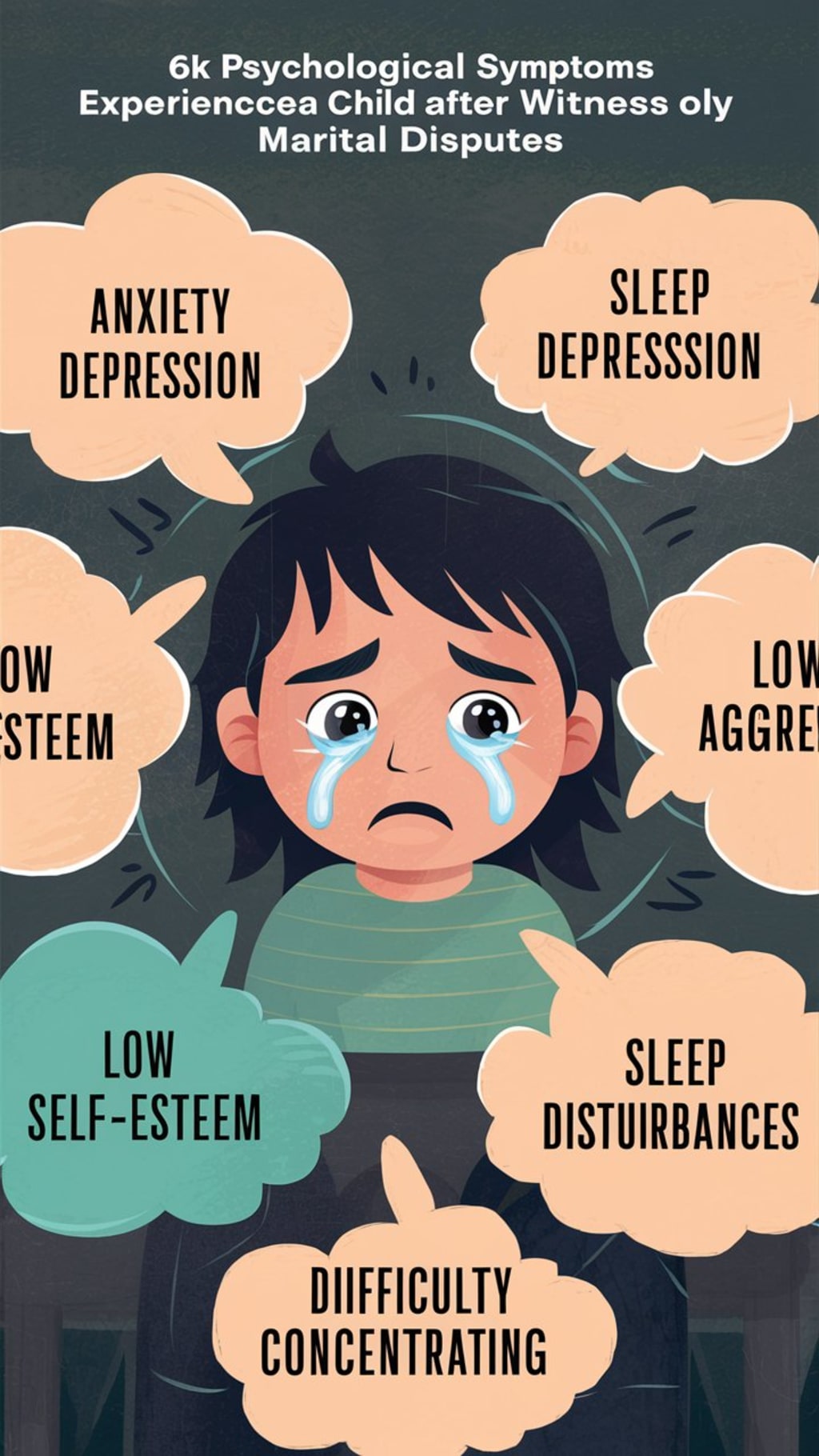
We do not all deny that, no matter how high the degrees of understanding and love between spouses, it is natural to find in every home marital disputes problems between spouses, whether for private matters between them or matters related to the home, expenses, raising children, relations with families and There are many other reasons that we consider within the normal range of married life.
But what is not normal is that these problems or quarrels between spouses are discussed in front of their children, thinking that the children do not understand anything and will not cause them anything because they are not intended for these problems. On the contrary, problems and loud discussions in front of children cause damage and have significant effects on children in one way or another, even if they are not the main cause of the problem. Just because they hear those discussions out loud, they will be moved by them.
Because the father and mother are the sources of safety for the child, they will lose all sources of safety while hearing these fights. This does not stop at this point, but extends outside the home, so the child does not find anyone who can trust him because he has lost the main source of trust. So we will talk about the most important of the effects that the child is exposed to as a result of his parents' quarrel in front of him, which are as follows:
1-Lack of emotional security:
Constant conflicts between parents in front of their children limit the child's sense of security, security and emotional stability to which he is accustomed as a result of family stability. This feeling comes to the child when he witnesses a quarrel between his parents, as he believes that that quarrel will end in the separation of the parents, divorce, or the exposure of one or both of them to harm, leading to emotional deprivation of the child. The large number of problems at home and instability make the child gradually lose his right to be a child who enjoys all security and love within a family free of problems.
2-Deteriorating relations between parents and children:
With the continuation of discussions and fights between parents in front of their children, children feel that the relationship with their parents is gradually deteriorating, and it is no longer the same as before, and that it is just a relationship charged with anxiety and tension. This is especially apparent when the child is confused between being on his father's side or his mother's side, or when he tries to stop a fight that often ends with yelling, hitting, intimidating and threatening him. This makes the child lose the warmth of the family, security and the desire to develop a good relationship with his parents because it has not been right since the quarrels began in front of him.
3-Health and psychological damage to the child:
Parents often think that once the quarrels were not direct to the child, they will not cause him any harm, but quite the contrary, when the child hears the scream, he does not care whether it is directed at him or not as much as he cares about stopping him because he is afraid of him. As the quarrels between parents in front of children increase, children's feelings of fear and anxiety will increase, leading to psychological conditions, depression and neurological diseases that completely interfere with the child's growth in the necessary healthy way, thus affecting the normal healthy development of the child.
4-Lack of academic achievement of the child:
The child's abilities to achieve academic achievement at school and cognitive achievement in general, whether at school, at home, or among friends, gradually decrease, and the child loses his desire to develop. This is because the climate to which the child was exposed and grew up is a family atmosphere fraught with quarrels and screams. This affects the psychological stability of the child, and therefore the child only thinks about the problems between his parents, and feels afraid of the continuation of those problems. This leads to his ability to concentrate decreases, and he becomes distracted, thus, a lot of information is lost, which gradually turns into a scientific and cognitive academic shortcoming, which affects the child initially.
5- Social problems between the child and others:
As a result of the child's exposure to the daily problems between his parents, his desire to be aggressive increases. He also tries to discharge his anger from the actions of his parents by attacking others, whether on his siblings at home, on his friends at school or with family. Because it is difficult to deal with him nicely, he feels that he wants to control the anger inside him through the problems he causes to others, he is unable to trust anyone because he has lost trust from its main source for him.
6-Health disorders, especially weight:
This may not be true for some, but some studies have shown that one of the causes of obesity in children is parental problems. The child resorts to eating alone and eating anything he sees in front of him, whether healthy or unhealthy, whether because he is hungry or because his parents are busy with their problems and there is no one to prepare food for him. At the same time, when a child greedily eats everything he sees in front of him, the exact opposite may happen as he may lose his appetite and suffer from physical illnesses.
Therefore, it is very important for parents to pay close attention to finding the right place to solve all the problems they are exposed to, far from children who do not know exactly how serious these problems are. Parents may solve these problems away from children, but only the child remembers the situation he experienced when he is a witness to his parents' problems, the source of his trust and love.
About the Creator
Keep reading
More stories from reda hamouda and writers in Families and other communities.
How do I strengthen my child's personality?
How do I strengthen my child's personality? How to strengthen my child's personality Raising a child with a strong personality can be a big task, so parents should make sure that their children get a positive environment that helps him learn and understand the world around him, and the majority of physical and mental developments occur during the early stages of childhood, so you must start strengthening and developing the child's personality from a young age and the following are tips that answer the parents' question How do I strengthen my child's personality?
By reda hamouda2 years ago in Families
Wise~Guys
— Look Behind what's in Front of You ~ Make Good Choices — Hey, So how you Doin'..! Made~Men — Mobster Movies romanticise a distinctive, elegant appearance, impeccable attire style, along with the 'Families' expressive lingo. Making their 'Bones' gave them Panache — with vintage fedoras, tailored pin-striped suits, mirror-polished wing-tip shoes adorned with tassels; with their 'Gun Moll' gorgeous dates on their arms.
By Jay Kantor19 days ago in Families




Comments
There are no comments for this story
Be the first to respond and start the conversation.