
10 Banned Kids Shows For Obscure Reasons
kids shows you might not have even realized were banned.
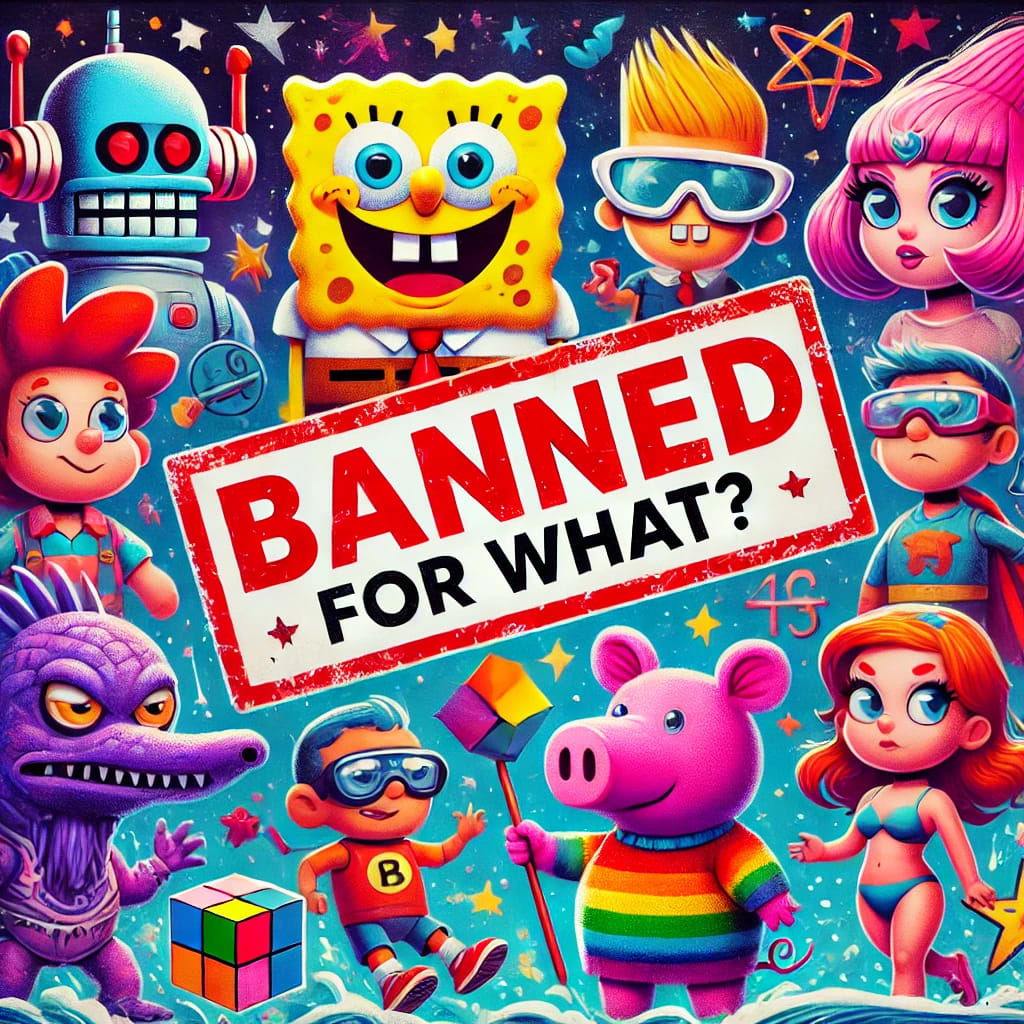
Children’s shows are typically designed to be fun, educational, and engaging. However, there are times when they get taken off the air for shocking reasons. From political upsets to unexpected inappropriate drawings, here are ten kids’ shows that faced bans or censorship for some pretty unusual and obscure reasons. 1. Peppa Pig — Banned in Australia for Befriending Spiders. In the episode “Mister Skinny Legs,” Peppa encourages her friends to befriend a spider, assuring them it’s harmless. While that might be accurate in many places, it brought some serious concerns in Australia, home to some of the most dangerous spiders on the planet. Worried parents argued that the episode sent a dangerously misleading message to children, which led to its removal from the air.
2. Caillou, Pulled from American TV for Promoting Bad Behavior. Parents all over the U.S. grew increasingly annoyed with Caillou’s endless whining, tantrums, and disobedience. Critics claimed the character set a poor example for young viewers. After years of complaints and memes making fun of Caillou’s behavior, PBS quietly pulled the show from its schedule. 3. Winnie the Pooh — Banned in China for Resembling the President. Internet users started sharing memes that compared Winnie the Pooh to Chinese President Xi Jinping, the Chinese government didn’t take it lightly. Pooh became a symbol of subtle political dissent, leading to complete censorship. The character was banned across various forms of Chinese media, including TV, film, and even video games. 4. Barney & Friends — Criticized for “Unrealistic Optimism” Barney the purple dinosaur was always cheerful—and that’s exactly what some parents and mental health professionals took issue with. They argued the show promoted an unrealistic emotional standard, teaching kids that happiness is the only emotion that matters, while overlooking the full range of feelings that children naturally experience. 5. The Simpsons — Banned in Venezuela, Replaced by Baywatch In a truly strange turn of events, The Simpsons got the boot from daytime TV in Venezuela because it was deemed “unsuitable for children.” What’s even weirder is that it was replaced by Baywatch—a show famous for its slow-motion beach scenes rather than any family-friendly messages. This decision left many scratching their heads and shaking their heads in disbelief. 6. Maya the Bee — Removed from Netflix After Inappropriate Hidden Image Parents were left in shock when they discovered that one episode of this animated series had a crude drawing of male genitalia hidden in the background. Once the image went viral, Netflix didn’t just pull the episode; they yanked the entire show. It turns out the offending artwork was allegedly sneaked in by an anonymous animator. 7. Mister Rogers’ Neighborhood — Accused of Encouraging Entitlement Even though it’s a beloved classic, Mister Rogers’ Neighborhood faced some heat from a few educators who claimed it promoted entitlement. They argued that the show’s central message—that every child is special—might lead kids to expect respect without putting in the effort, potentially creating unrealistic expectations and defiance in the classroom. 8. The Powerpuff Girls — Censored for Gender Role Subversion In certain conservative countries, The Powerpuff Girls faced censorship because of its strong “girl power” theme. Critics argued that it challenged traditional gender roles by showcasing young girls as powerful physically. Ironically, while some viewed this as a threat, many others embraced it as a message of empowerment and worldwide progress. 9. Boohbah — Pulled for Being “Too Strange and Mindless” This quirky British show, featuring colorful, dancing blobs and bizarre sound effects, left both critics and audiences scratching their heads. Many wondered if Boohbah had any educational value at all. Dubbed as confusing—even for adults—the show was eventually taken off the air by several networks. 10. Thomas & Friends — Accused of Promoting Capitalism and Sexism Though it has a special place in many hearts, Thomas & Friends has faced criticism in the UK for promoting extreme obedience and a workaholic mentality. Critics have also highlighted the earlier seasons' lack of strong female characters, arguing that the female engines often seem slower and less capable compared to their male companions.
About the Creator
Keep reading
More stories from writers in Families and other communities.
Why Gen Z Is Having Fewer Kids — And What the Data Says About the Future of Birth Rates
Across the United States and much of the world, birth rates are falling—and Generation Z is at the center of that shift. For decades, starting a family in your twenties was considered the norm. Today, many young adults are delaying parenthood or choosing not to have children at all. The change is dramatic enough that economists, demographers, and policymakers are beginning to ask a serious question:
By Navigating the World3 days ago in Families
A Transparent Look at Vocal Challenges and Top Stories
Almost three years ago, we shared a resource article that served as a place for people to suggest new challenge prompts. We thought it would be a good idea to refresh that thread, and take the opportunity to answer a few common questions about top stories, how challenges are judged and how submissions are reviewed.
By Vocal Curation Team4 days ago in Resources
A System That Isn’t Working Challenge Winners
Systems promise order. They organize behavior, distribute opportunity, and suggest that if everyone follows the rules, things will work. The entries in A System That Isn’t Working look closely at what happens when that promise begins to slip.
By Vocal Curation Team5 days ago in Resources



Comments
There are no comments for this story
Be the first to respond and start the conversation.