

World War II was a global war that lasted from 1939 to 1945. It was the deadliest conflict in human history, with an estimated 50 million to 85 million fatalities worldwide. The war was fought primarily in Europe, but it also involved countries in Africa, Asia, and the Americas. The primary axis powers were Germany, Japan, and Italy, while the primary allied powers were the United States, the United Kingdom, and the Soviet Union. The war began with the invasion of Poland by Germany in September 1939, and it eventually led to the use of nuclear weapons on the Japanese cities of Hiroshima and Nagasaki in August 1945. The war also marked the rise of the Soviet Union and the United States as superpowers, and it resulted in the formation of the United NationsThe events leading up to World War II were complex, but one of the main causes of the war was the aggressive expansion of Germany under its leader, Adolf Hitler. Hitler's goal was to create a "New Order" in Europe, which would be dominated by the German people. He began by annexing Austria in 1938, and then he moved on to invade Czechoslovakia and Poland in 1939. This led to declarations of war from the United Kingdom and France, which marked the official beginning of the war.
The war in Europe quickly became a struggle between Germany and the Allied powers. In the early years of the war, Germany was able to conquer much of Europe, including France. However, the tide of the war began to turn in 1942 with the entry of the United States into the war, and the Allied victory in North Africa. The Soviet Union also played a crucial role in the war, pushing the German army back on the Eastern front.
In the Pacific theater of the war, Japan, an axis power, quickly expanded its territories by invading various countries in Southeast Asia and the Pacific region. However, the tide turned against them when United States entered the war and began to push back with island hopping campaign. The war ended with the atomic bombing of Hiroshima and Nagasaki, and the subsequent surrender of Japan in August of 1945.
The aftermath of World War II was significant. The war had a profound impact on the world, including the formation of the United Nations and the beginning of the Cold War, a period of political and military tension between the Western powers and the Soviet Union. Additionally, the Holocaust, the systematic extermination of six million Jews and other minority groups by Nazi Germany, was discovered by the world, leading to a greater awareness of genocide and crimes against humanityThe end of World War II also brought about major changes in the political landscape of Europe. Germany was divided into two separate countries, the Federal Republic of Germany (West Germany) and the German Democratic Republic (East Germany), and the country was occupied by the Allied powers. Similarly, the Soviet Union imposed Communist governments on the countries of Eastern Europe that it had liberated from German occupation. The tension between the Soviet-controlled Eastern bloc and the Western powers, led to the Cold War, a period of political and military tension that lasted for several decades.
The war also had a significant impact on the economies of the countries involved. Many countries were left devastated by the war, and the rebuilding process was long and difficult. The United States, however, emerged as the world's dominant economic power, with its industries having produced the majority of the weapons and materials used during the war. Additionally, the Marshall Plan, a program to rebuild the war-torn countries of Europe, was implemented by the US government, which helped in the economic recovery of Europe.
In addition to the physical and economic damage, World War II also had a profound impact on the people who lived through it. Millions of soldiers and civilians lost their lives, and countless others were injured or traumatized by the experience of the war. Many were also displaced, with millions of refugees fleeing war zones and cities that were destroyed. The war also led to significant changes in societal norms and attitudes, as women entered the workforce in large numbers and the world became more politically and socially conscious.
In summary, World War II was a catastrophic event that had far-reaching consequences for the world. The war caused a massive loss of life and destruction, but also led to significant changes in the political, economic and societal landscapes. It marked the end of the Western colonial empires and it led to the formation of new international organizations, and continues to shape the world today
About the Creator
Keep reading
More stories from Mahendrarajah Mithusharan and writers in Education and other communities.
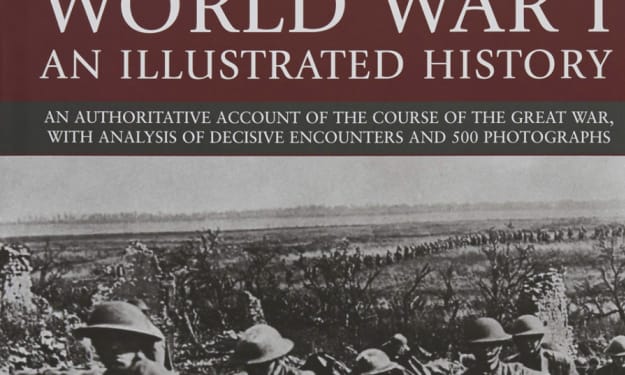
World war 1
World War I, also known as the First World War, was a global war that lasted from 1914 to 1918. It was primarily fought in Europe, but also involved countries from around the world. The war began with the assassination of Archduke Franz Ferdinand of Austria, which led to a chain of events that ultimately led to the mobilization of the vast majority of the world's countries, including all of the great powers, organized into two opposing alliances: the Allies and the Central Powers.
By Mahendrarajah Mithusharan3 years ago in Education
The Rise of Remote Work: Crafting an Application Letter That Opens Doors
A Changing Workplace Work has undergone a dramatic transformation over the past decade. Offices once defined the rhythm of daily life for millions of people. Commutes, cubicles, and conference rooms shaped the professional routine. Today, however, technology has reshaped the way many careers function. The rise of remote work has made it possible for employees to contribute from home offices, shared spaces, and sometimes even different continents.
By CEO A&S Developers6 days ago in Education
How Solar Flares Affect Earth: Impacts on Technology, Climate, and Human Life
What Are Solar Flares? A solar flare is a sudden, intense burst of electromagnetic radiation from the Sun’s surface. These flares occur when magnetic energy stored in the Sun’s atmosphere is suddenly released. They often happen near sunspots—dark regions on the Sun associated with strong magnetic activity.
By shahkar jalal6 days ago in Education


Comments
There are no comments for this story
Be the first to respond and start the conversation.