
Byline: LEAVIE SCOTT
Dateline: February 19, 2026
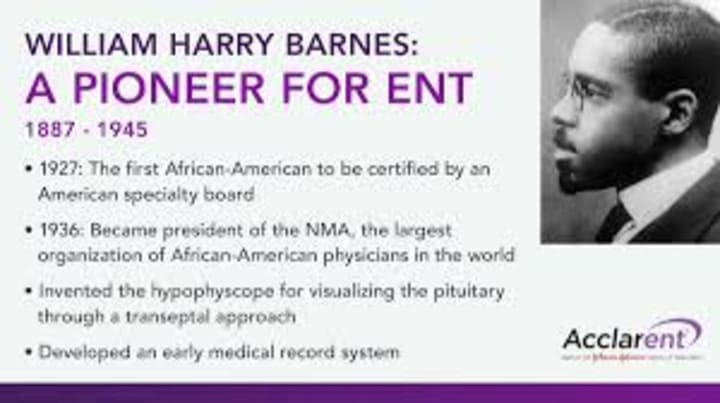
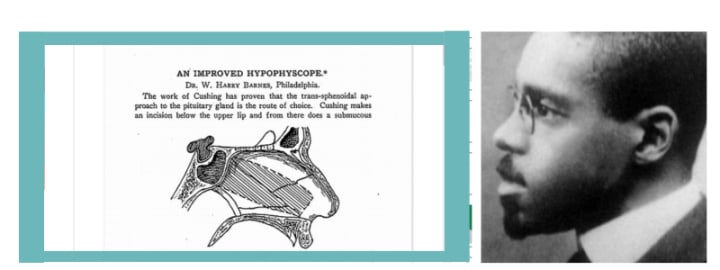
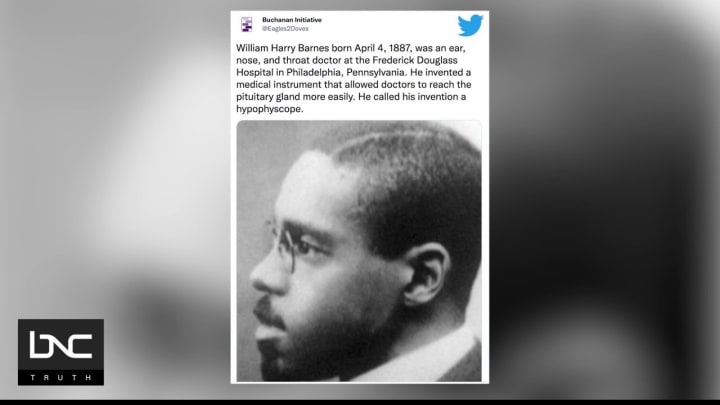
In the bustling corridors of early‑20th‑century American hospitals—long before advanced imaging systems, computerized surgical instruments, or modern endoscopic tools—stood a physician whose ingenuity quietly shifted the boundaries of what medical professionals could do. Dr. William Harry Barnes (1887–1945), an accomplished ENT (Ear, Nose, and Throat) specialist at Frederick Douglass Hospital in Philadelphia, was one of those rare individuals whose curiosity and craftsmanship converged in perfect alignment. His invention, the hypophysoscope, gave doctors a safer and more accessible way to reach one of the most vital, yet deeply hidden structures of the human body: the pituitary gland.
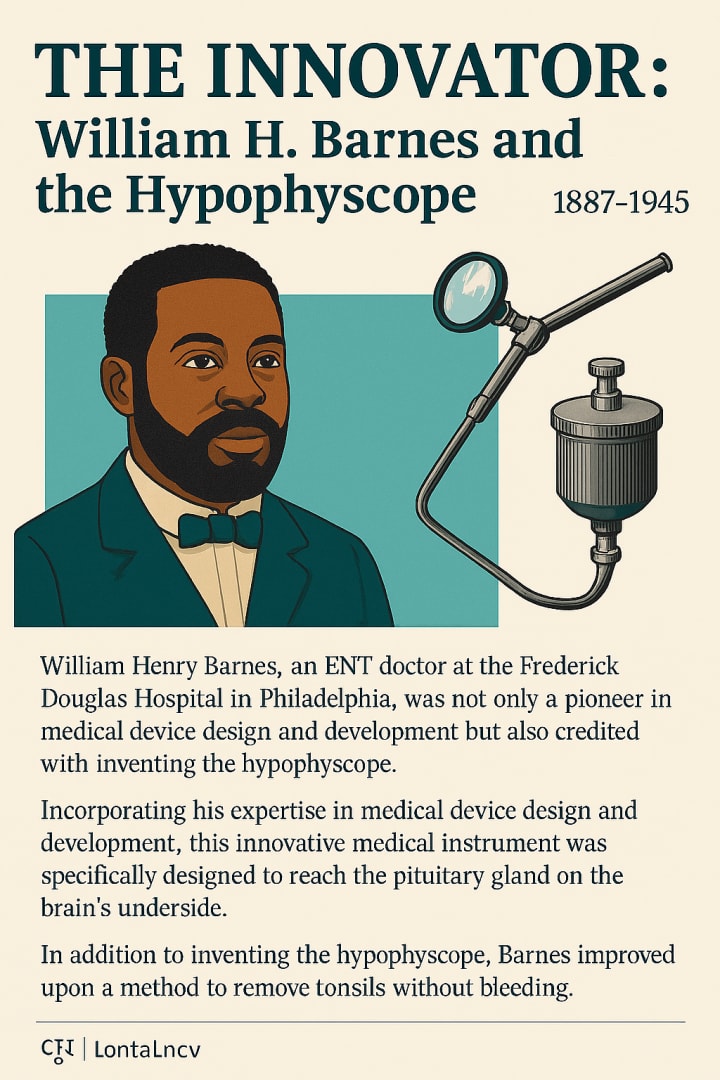
Today, medical students learn about the pituitary gland as the “master gland”—the small, pea‑shaped organ that controls growth, metabolism, and many hormone functions. But in Barnes’ time, it was a destination for only the boldest surgeons. Accessing it required navigating the intricate passages at the base of the skull, a challenge that carried immense risk even for the most skilled practitioners. Barnes saw the need for a device tailored specifically for the job. And from that recognition came a creation that would shape the evolution of surgical tools: the hypophysoscope.
This is the story of Barnes—the doctor, the designer, the problem‑solver—and the pioneering force behind a medical instrument that expanded the limits of what surgeons could reach, treat, and understand.

From Curiosity to Craftsmanship: A Doctor With the Mind of an Engineer
William Harry Barnes began his medical career at a time when African‑American physicians faced barriers at every turn. Access to academic funding, surgical training, and hospital privileges was limited, yet Barnes pushed through these obstacles with a combination of discipline and brilliance. The Frederick Douglass Hospital, a crucial institution serving Black patients and employing Black medical professionals, became his home base.
In addition to medicine, Barnes possessed a mechanical intuition. He was the type of doctor who looked beyond what his hands could do in the operating room. What tools could be reshaped? What procedures could be made more precise? What obstacles in the human body could be reached with the right mechanics? He saw not only the body’s vulnerabilities but also the technological limitations of his era.
It was not long before he began designing ways to overcome them.
Into the Hidden Chamber: Understanding the Need for the Hypophysoscope
To appreciate Barnes’ achievement, one must understand what it meant to reach the pituitary gland before modern medicine had caught up.
The gland sits beneath the brain, cradled in a bony cavity known as the sella turcica, and shielded by layers of bone, tissue, and delicate neural structures. Surgeons attempting to reach it often approached through the nasal cavity or the sphenoid sinus—routes that demanded steadiness, intuition, and a kind of anatomical clairvoyance. Tools were not specifically designed for the task; surgeons often repurposed general instruments that were not long enough, thin enough, or precise enough for the environment they entered.
Barnes recognized the problem firsthand in the operating room. And he asked the same question every great inventor asks: *How can we make this easier, safer, and more reliable?
The hypophysoscope was his answer—a medical instrument engineered to navigate a difficult route toward a delicate target.
The Hypophysoscope: A Device With Purpose, Precision, and Vision
Barnes’ hypophysoscope was created with a singular mission: to give surgeons controlled access to the pituitary gland. Its design took into account the anatomical realities of the nasal cavity, the distance to the gland, and the need for a device that could be maneuvered safely without damaging the surrounding tissue.
The instrument had several key strengths:
Improved depth control: It allowed surgeons to reach the gland with more accuracy than improvised tools ever could.
Specialized structure: Unlike generic surgical instruments, this device was engineered specifically for the contours and distance required for pituitary access.
Enhanced visibility and stability: The construction allowed surgeons a clearer path, reducing the guesswork and increasing the consistency of the procedure.
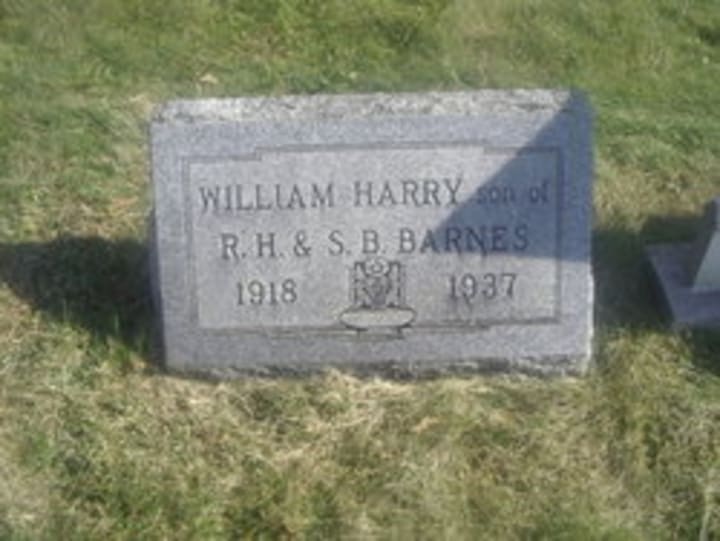
While it remained a specialized device used in carefully selected cases, its very existence signaled progress. Barnes had not only invented a tool—he had opened a door, showing what could be possible when medicine embraced precision-engineered instruments.
Today, endoscopic and microscopic pituitary surgery is common, but its origins can be traced back to innovators like Barnes—people who recognized that access to the gland demanded innovation, not improvisation.
A Surgeon of Many Talents: Improving Tonsil Removal Techniques
Though the hypophysoscope stands as Barnes’ most famous invention, his improvements to tonsillectomy techniques deserve equal recognition.
Tonsil removal in the early 20th century was often associated with **significant bleeding**, prolonged recovery, and widespread patient discomfort. Many methods were crude by modern standards. Barnes refined the tonsillectomy process, introducing techniques and adjustments that:
Reduced bleeding,
Improved surgical efficiency,
Shortened recovery time, and
Increased safety for children and adults alike.
For many physicians, this innovation alone would have cemented a legacy. For Barnes, it was yet another example of his commitment to solving problems through thoughtful design.
The Engineer’s Mind in the Body of a Doctor
What makes William Harry Barnes’ story particularly compelling is not just what he accomplished, but how he approached medicine.
He was part of a generation of African‑American physicians forced to think creatively as they navigated an unequal medical landscape. Hospitals were segregated. Research opportunities were scarce. Funding for innovation was often nonexistent. And yet Barnes took it upon himself to design tools that major institutions were not making—and sometimes not even imagining.
He demonstrated:
Resourcefulness in an era with limited institutional support.
Technical creativity applied directly to patient care.
Courage in pioneering procedures that few dared attempt.
This combination of medical and mechanical genius placed him in the lineage of inventors who changed their professions quietly, one instrument at a time.
A Legacy of Access—In Every Sense of the Word
William Harry Barnes died in 1945, leaving behind more than a medical practice. He left a legacy of innovation—one that carried implications far beyond his lifetime.
His hypophysoscope represented something profound: access.
Access to a part of the human body previously shielded by danger.
Access to new surgical techniques.
Access to better patient outcomes.
And for future Black physicians and surgeons, Barnes’ success offered another kind of access—the proof that groundbreaking contributions could come from anywhere, even in a time when the medical establishment tried to limit who could innovate.
Today, when surgeons reach the pituitary gland with sophisticated endoscopic tools, they are walking a path Barnes helped clear. The shape of the device has changed—from handcrafted metal instruments to fiber‑optic systems—but the spirit behind it remains the same.
Conclusion: The Hypophysoscope and the Measure of a Medical Pioneer
The story of William Harry Barnes is not merely a record of a surgical instrument. It is the story of a man determined to solve problems that others accepted as insurmountable. It is the story of a doctor who refused to be constrained by the limitations of his time. And it is the story of creativity applied directly to human wellbeing.
Barnes stands among the innovators who dared to turn skill and imagination into breakthroughs. His hypophysoscope may not be a household term, but its significance lives on in every surgery that follows the path he mapped, in every instrument designed with purpose, and in every doctor who believes medicine is as much an art as it is a science.
He showed the world that innovation thrives in the hands of those who see both the problem and the possibility—and have the courage to build the bridge between them.
About the Creator
TREYTON SCOTT
Top 101 Black Inventors & African American’s Best Invention Ideas that Changed The World. This post lists the top 101 black inventors and African Americans’ best invention ideas that changed the world. Despite racial prejudice.
Keep reading
More stories from TREYTON SCOTT and writers in Education and other communities.
Lewis Temple
In the bustling port city of New Bedford, Massachusetts, where the salty air mixed with the clang of metal and the shouts of sailors preparing for months-long voyages, stood a man whose name would one day be etched into maritime history—though not nearly as widely as it deserved. Lewis Temple, born in 1800, was not a sea captain, nor a harpooner, nor a weathered whaleman hardened by years on open waters. He was a blacksmith—self‑taught, sharp‑minded, and extraordinarily skilled with iron. Yet it would be this man, working far from the decks of whaling ships, who would reshape an entire global industry.
By TREYTON SCOTT2 days ago in Education
When Women Lead: Unlocking Economic Power with Dignity and Purpose for a Stronger Future
When women lead, societies move forward with balance and strength. Leadership is not only about authority. It is about responsibility, service, and vision. Across the globe, women are rising in business, government, education, and community work. As this change grows, it becomes clear that when women lead, they help unlock economic power with dignity and purpose.
By Convoy of Hopeabout 23 hours ago in Education
Is the Universe Endless in Questions? Exploring the Infinite Depth of Cosmic Mystery
The History of Expanding Questions Throughout history, humans have looked to the sky and asked questions. Ancient astronomers mapped stars and planets to track seasons. Later, revolutionary thinkers like Galileo Galilei and Johannes Kepler transformed celestial observation into mathematical science.
By shahkar jalalabout 8 hours ago in Education


Comments
There are no comments for this story
Be the first to respond and start the conversation.