
Why Your Home Never Stays Clean: Habits That Quietly Undo Your Hard Work
Small daily habits can quietly undo hours of cleaning. Here’s why your home gets messy faster than it should—and the simple changes that make tidiness last.
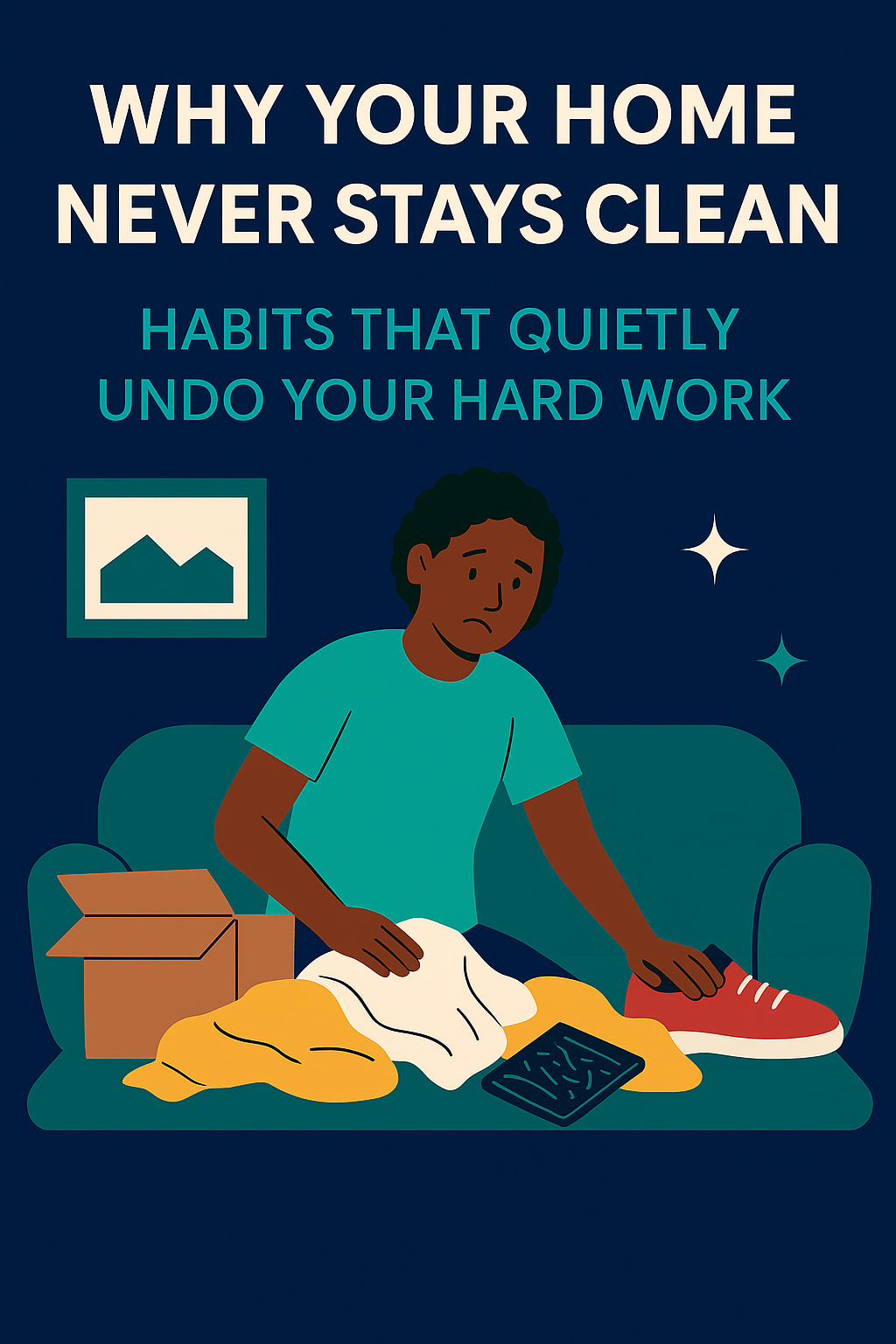
Some homes seem to get messy again almost immediately after a deep clean. You finish wiping the counters, sweeping the floors, putting everything back in its place—then within a day or two, it feels like you’re starting over from scratch. It’s easy to blame a “dirty house,” pets, kids, or a lack of time, but the real culprit is usually something much simpler:
Everyday habits that quietly undo your cleaning efforts without you realizing it.
These small, automatic actions accumulate throughout the week, creating clutter, dust, and grime faster than you can remove it. Understanding these habits—and replacing them with small, manageable alternatives—can dramatically change how long your home stays clean.
1. The Shoes-Anywhere Habit
Walking through the home with outdoor shoes is one of the fastest ways to spread dirt. Each step brings in dust, bacteria, pollen, and small particles from sidewalks, entryways, and parking lots. Even if floors look clean, invisible debris settles into carpets and corners.
A simple mental reset—removing shoes at the door—keeps floors cleaner for much longer.
2. “I’ll Put This Away Later” Piles
A jacket tossed on the couch. A bag dropped on the table. Mail left on the counter. None of these seem like a big deal in the moment, but they create small clutter hotspots that grow quickly.
When something has no immediate “home,” it becomes a magnet for more items. This is why a single chair or table can suddenly look like a donation drop-off.
The fix: put items back immediately, even if it takes just 10 seconds. It prevents clutter from snowballing.
3. Not Wiping Surfaces Right After Use
Spills and crumbs harden surprisingly fast. Coffee splashes dry into sticky rings. Grease droplets collect dust. Small messes become stubborn stains that require more effort later—and make spaces appear messy even when everything else is clean.
The habit to break is waiting until “later.” A quick wipe right after cooking, eating, brushing teeth, or doing makeup keeps surfaces consistently fresh.
4. Keeping Too Much on Counters and Tables
Crowded surfaces make a home feel cluttered even when it’s clean. Items like small appliances, random décor, mail stacks, and personal care products attract dust faster and make wiping harder.
The more objects on display, the faster things look messy.
Daily-use areas benefit from a “less is more” approach—only keep what you genuinely use every day.
5. Not Cleaning As You Go
One of the strongest habits of consistently clean homes is the idea of micro-cleaning. Instead of letting things build up, small tasks happen at the same time as daily routines:
Rinse dishes right after meals
Wipe the bathroom sink after brushing teeth
Shake out mats during laundry day
Sweep the kitchen quickly after cooking
These tiny actions prevent the constant cycle of “big cleans” that only stay fresh for a day or two.
6. Overlooking High-Traffic Zones
Hallways, entryways, kitchen floors, and bathroom counters get messy faster than any other areas—but they’re also the most ignored. These spots collect grime every single day, so weekly cleaning isn’t enough to keep them fresh.
Giving these areas a quick daily reset keeps the whole home looking consistently maintained.
7. Letting Laundry and Trash Sit Too Long
Laundry piles—even clean ones—instantly make a space look cluttered. Same with trash that fills up but isn’t overflowing yet. Both become visual noise that makes the entire home feel less tidy.
Establishing a simple routine for both prevents them from building up.
Final Thoughts
Homes don’t fall apart because of one big mistake—they fall apart because of dozens of tiny, invisible habits that slowly undo your effort. When you identify and replace these habits with small daily actions, your home stays cleaner, longer, with far less work.
A clean home isn’t just about deep cleaning.
It’s about quiet routines, small resets, and daily habits that support the environment you want to live in.
About the Creator
Keep reading
More stories from Pro Prep Cleaning and writers in Education and other communities.
How Small Daily Cleaning Habits Make Home Maintenance Easier
A clean home doesn’t come from one big weekend cleaning session—it comes from the small actions that happen in-between. Many people imagine home cleaning as something that requires hours of scrubbing and dusting, but most long-term cleanliness is actually built through little routines woven into everyday life. These tiny tasks keep things from piling up, and over time, they make your home feel lighter, fresher, and easier to manage without much effort at all.
By Pro Prep Cleaning2 months ago in Education
Restored to Its Roots: The Homecoming of a Historic Waterwheel
The quiet sound of rushing water once again spins a historic waterwheel in its original location. After decades of absence, the wheel has returned to the same stream it once relied on for power, bringing a sense of closure and continuity to a community that never forgot its value. This return marks not just the restoration of a structure but the revival of a piece of living history.
By Grady Gaston5 days ago in Education
How to Enhance Team Productivity
Team productivity improves when leadership replaces guesswork with structure, clarity, and accountability. Through Strategic coaching, businesses enhance productivity by aligning teams around clear outcomes, defined roles, strong communication systems, and leadership driven standards creating high performance teams that operate without constant supervision.
By Alice Adams4 days ago in Education


Comments
There are no comments for this story
Be the first to respond and start the conversation.