
Why Understanding Your Parents Is Harder Than It Should Be — and How It Can Change Your Life
We’re taught how to read books, navigate careers, and build friendships — but somehow, no one teaches us how to truly understand our parents.
And yet, for many of us, the most confusing, emotionally charged relationships we have are with the very people who raised us.
Maybe you’ve felt misunderstood.
Maybe conversations turn into arguments.
Maybe old wounds keep reopening no matter how much time has passed.
If any of that sounds familiar, you’re not broken — you’re human.
The Parent–Child Relationship Is More Complex Than We Admit
Parents are often our first source of love and pain. They shape our beliefs, our emotional patterns, and even how we communicate as adults.
But here’s the uncomfortable truth: Most parents were never taught how to parent emotionally.
They carry their own unresolved trauma, cultural conditioning, fears, and expectations — and those things don’t magically disappear just because they had children.
Understanding this doesn’t excuse hurtful behavior.
But it does give us a starting point for healing.
Why I Wrote How to Understand Parents
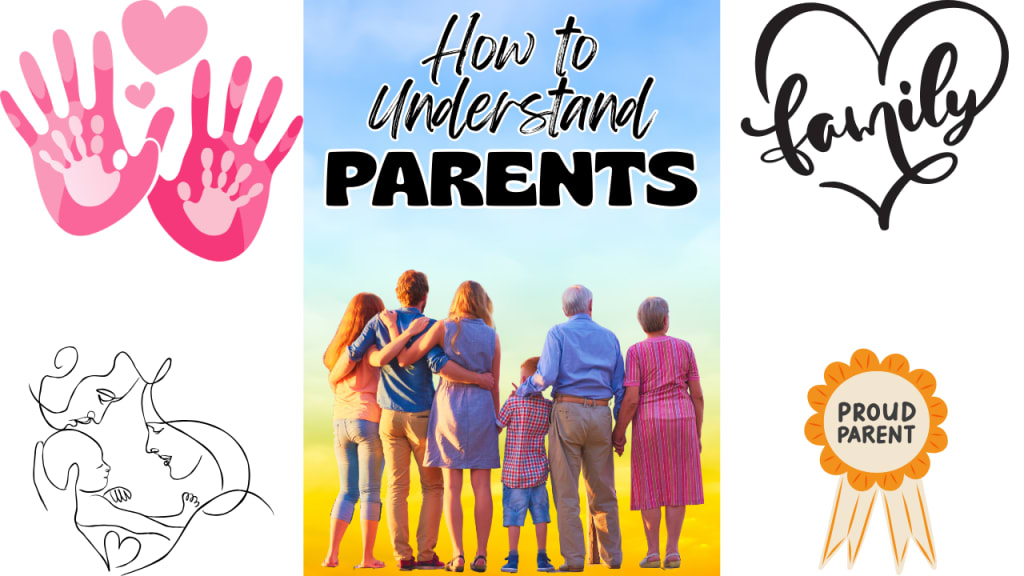
I created How to Understand Parents: A Practical Guide to Improve Communication, Heal Emotional Wounds, Set Healthy Boundaries, and Build Stronger Parent–Child Relationships Parents Love for anyone who wants peace — not perfection — in their family relationships.
This book is for:
- Adult children who feel emotionally stuck
- People who love their parents but feel hurt by them
- Anyone trying to heal without blaming or self-erasing
It’s practical, compassionate, and focused on real-life situations — not vague advice.
👉 You can find the book here: How to Understand Parents You don’t have to choose between loving your parents and loving yourself.
With understanding, communication, and boundaries, it is possible to create healthier, more honest relationships — even if they’ve been difficult for years.
Understanding means:
- Seeing the why behind their behavior
- Recognizing generational patterns
- Learning when to engage — and when to step back
- Communicating without abandoning yourself
Healthy relationships require clarity, not guilt.
Good intentions alone aren’t enough.
What actually helps is learning:
- How to communicate without escalating conflict
- How to express feelings without being dismissed
- How to set boundaries without cutting off love
- How to stop repeating the same painful cycles
These are skills, and skills can be learned.
You Can Love Your Parents and Still Feel Hurt — Here’s Why That Matters
We’re taught that family relationships should be easy.
They’re not.
If you’ve ever thought:
- “Why do my parents still trigger me?”
- “Why do I feel guilty for wanting boundaries?”
- “Why does every conversation turn into an argument?”
You’re not broken.
You’re human.
The Problem No One Talks About
Many adults carry emotional wounds from childhood without even realizing it.
Not because their parents were “bad,”
but because:
- emotions weren’t discussed,
- needs weren’t validated,
- boundaries weren’t respected.
Over time, this shows up as:
- people-pleasing,
- emotional distance,
- explosive arguments,
- or silent resentment.
And the hardest part?
You can deeply love your parents and still feel hurt by them.
Both things can be true.
Understanding Changes Everything
When we stop asking “Who’s right?” and start asking “Why does this hurt so much?”, real healing begins.
This isn’t about blaming parents.
It’s about understanding patterns — generational, emotional, and psychological.
Many parents:
- were raised without emotional language,
- passed down survival behaviors,
- loved in the only ways they knew how.
That doesn’t erase pain — but it explains it.
And understanding gives you power.
What This Guide Actually Helps You Do
How to Understand Parents is practical, not preachy.
Inside, you’ll learn how to:
- recognize emotional wounds without reliving them,
- communicate needs without guilt or fear,
- set boundaries without cutting off love,
- stop repeating unhealthy family patterns,
- rebuild relationships without losing yourself.
This isn’t about becoming the “perfect child.”
It’s about becoming a healthy adult.
Mental Health Healing Relationships Self Growth Personal Development Psychology Family Parenting Relationships
About the Creator
Keep reading
More stories from Akash Mano and writers in Education and other communities.
How to Understand Aging Minds: A Practical Guide to Cognitive Changes, Emotional Well-Being and Personality
Aging is one of the most natural and universal experiences of human life—yet it remains one of the least understood. As bodies change with time, so do minds. Memory may shift. Emotions may deepen or become more sensitive. Personality traits may soften, strengthen, or reveal new layers. These changes are not signs of decline alone; they are part of a complex psychological evolution that deserves understanding, respect, and compassion.
By Akash Manoabout 16 hours ago in Education
Could the Universe Be a Simulation? Exploring the Science and Philosophy Behind the Simulation Hypothesis
What Is the Simulation Hypothesis? The simulation hypothesis proposes that reality as we experience it is an artificial simulation, similar in principle to a highly advanced virtual reality. According to this idea, an advanced civilization — possibly in another universe — could possess computational power vast enough to simulate entire worlds populated with conscious beings.
By shahkar jalal4 days ago in Education


Comments
There are no comments for this story
Be the first to respond and start the conversation.