

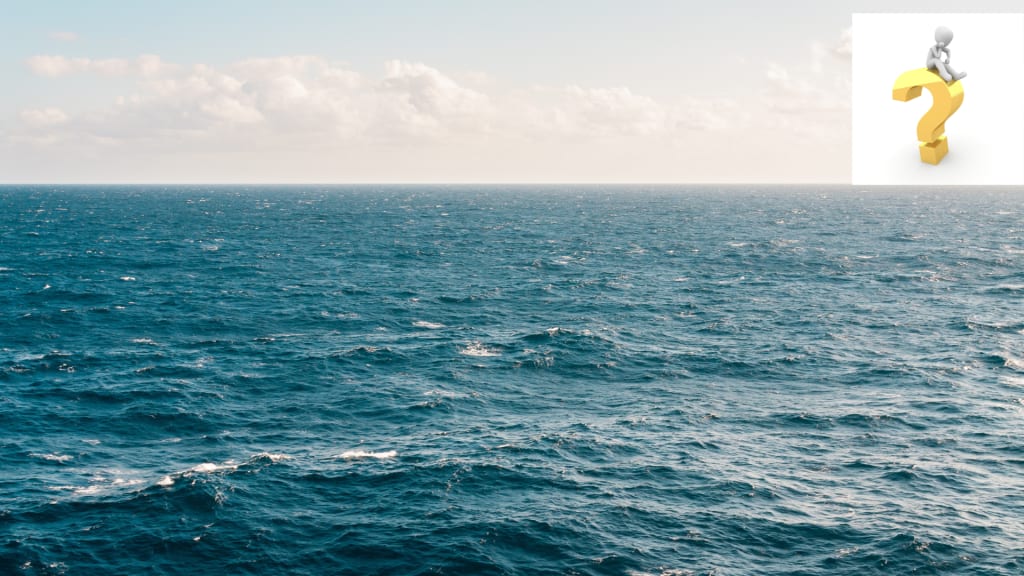
The sea, a vast and mysterious body of water that covers over 70% of the Earth's surface, has long fascinated humans. It is not only a source of life, providing food and resources for countless species, but also a symbol of beauty and tranquility. One of the most commonly asked questions about the sea is why it is blue. In this article, we will explore the science behind the sea's color and what factors contribute to its blue hue.
The color of the sea is determined by the way that light interacts with water molecules. Sunlight is composed of a spectrum of colors, ranging from red to violet, with different wavelengths. When sunlight enters the atmosphere, it is scattered by particles in the air, such as dust and gas molecules. This scattering causes the blue light to be scattered more than other colors, resulting in the blue sky that we see on a clear day.
The same principle applies to the sea. When sunlight enters the water, it is also scattered by water molecules, with blue light being scattered more than the other colors. This scattering effect causes the water to appear blue to the human eye. However, the depth and clarity of the water can affect the shade of blue that we see. For example, shallow water near the shore may appear lighter blue, while deep ocean water may appear darker blue.
Another factor that can affect the color of the sea is the presence of other substances, such as algae or dissolved organic matter. These substances can absorb or scatter different colors of light, which can alter the color of the water. For example, in areas with high levels of phytoplankton, the water may appear greenish due to the chlorophyll pigments in the algae.
In addition to these factors, the time of day and the angle of the sun can also affect the color of the sea. During sunrise and sunset, the angle of the sun is lower, and the light must travel through more of the atmosphere before reaching the water. This can cause the light to be scattered more, resulting in a range of colors, including reds, oranges, and pinks.

In conclusion, the sea appears blue due to the scattering of sunlight by water molecules. The depth and clarity of the water, the presence of other substances, and the time of day can all affect the color of the sea that we see. Despite the scientific explanation for the sea's blue hue, it remains a beautiful and mesmerizing sight that continues to captivate and inspire us.
Here comes the fact about the sea!
1. The sea covers over 70% of the Earth's surface, making it the largest habitat on the planet.
2. The deepest part of the sea is the Challenger Deep in the Mariana Trench, which is over 10,900 meters (35,800 feet) deep.
3. The sea is home to the largest animal on Earth, the blue whale, which can grow up to 30 meters (100 feet) long.
4. The sea is also home to the longest mountain range on Earth, the Mid-Ocean Ridge, which spans over 65,000 kilometers (40,000 miles).
5. The sea is a major source of oxygen, with over 50% of the world's oxygen being produced by photosynthetic plankton in the ocean.
6. The sea is also a major source of food for humans, with over 3 billion people depending on the ocean for their primary source of protein.
7. The sea is home to a vast array of marine life, including over 250,000 known species of plants and animals, and an estimated 2 million yet-to-be-discovered species.
8. The sea is not actually blue but appears blue due to the way that light interacts with water molecules.
9. The sea contains over 20 million tons of gold, with most of it being dissolved in the water in very small amounts.
Questions for you,
1. What is the name of the deepest part of the sea?
a) Pacific Trench
b) Challenger Deep
c) Atlantic Abyss
d) Mariana Trench
2. Which is the largest animal on Earth that lives in the sea?
a) Humpback whale
b) Sperm whale
c) Blue whale
d) Killer whale
3. Which of the following is not a source of oxygen in the sea?
a) Seaweed
b) Plankton
c) Coral
d) Volcanoes
4. Which underwater mountain range is the longest in the world?
a) The Andes Mountains
b) The Himalayan Mountains
c) The Rocky Mountains
d) The Mid-Ocean Ridge
5. Which color is the sea?
a) Blue
b) Green
c) Turquoise
d) Clear
Do Comment guys-)
About the Creator
Vairamani S
I'm an Engineer with an interest in writing about numerous topics. I aim to provide informative and entertaining content that educates and shares my insights with others. Thanks for reading!
Keep reading
More stories from Vairamani S and writers in Education and other communities.
10 Quick fixes for a Stressful life
Stress is an ineluctable part of ultramodern life, but it does not have to control us. While it's not always possible to exclude stress fully, there are numerous quick and easy ways to manage it and reduce its impact on our diurnal lives. In this composition, we'll explore 10 similar strategies that you can start using right down to help you lead a further stress-free life.
By Vairamani S3 years ago in Education
7 Online Skills That Can Change Your Financial Future in 2026
7 Online Skills That Can Change Your Financial Future In today’s digital world, one skill can completely transform your life. Just a decade ago, making money online sounded unrealistic to many people. Today, thousands of people are building careers, businesses, and even financial freedom using only their laptops and internet connections. The truth is simple: the internet has created opportunities that never existed before. But the biggest mistake most people make is waiting for the “perfect moment” to start learning. The reality is that learning just one valuable online skill can open doors to income streams you never imagined. Here are seven powerful online skills that can truly change your financial future. 1. Content Writing Content writing is one of the easiest online skills to start with. Every website, blog, and online business needs high-quality content to attract readers and customers. If you can write helpful, interesting, or informative articles, you already have the foundation for this skill. Content writers earn money by writing: Blog posts Website content Product descriptions News articles Platforms like freelance marketplaces, blogging websites, and digital publications are always looking for good writers. With practice, many writers turn this skill into a full-time career. 2. Graphic Design In the online world, visuals matter. Businesses need logos, social media graphics, advertisements, and brand designs to attract attention. Graphic design allows creative people to turn their imagination into income. Even beginners can start by learning simple tools and gradually improving their skills. Graphic designers can work with: Small businesses Online brands Content creators Marketing agencies A single well-designed logo or brand package can sometimes earn more than weeks of traditional work. 3. Video Editing Video is the most powerful form of content on the internet today. From social media platforms to online courses, videos dominate the digital world. But most creators don’t have the time or skill to edit their own videos. This is where video editors come in. If you learn how to cut clips, add music, create smooth transitions, and improve video quality, you can become extremely valuable. Video editors are needed by: YouTubers Businesses Online educators Social media influencers The demand for video editing continues to grow every year. 4. Social Media Management Millions of businesses rely on social media to reach customers. But many business owners don’t know how to grow their pages, create content, or engage with their audience. Social media managers help brands: Plan content Post regularly Respond to followers Grow their audience With the right strategy, social media managers can manage multiple accounts and earn steady monthly income. This skill combines creativity with marketing knowledge, making it highly valuable. 5. Digital Marketing Digital marketing is one of the most powerful online skills you can learn. It involves promoting products, services, or brands through online channels such as search engines, social media, and email. Digital marketers help businesses get: More website visitors More customers More sales Companies are willing to pay well for people who can increase their revenue. Learning digital marketing can open doors to freelance work, remote jobs, or even your own online business. 6. Web Development Every business needs a website. But building a professional website requires technical skills. Web developers create and maintain websites using coding languages and development tools. Although this skill takes more time to learn than others on this list, it is also one of the highest-paying online skills. Many web developers work remotely and build websites for clients all around the world. Once you gain experience, the opportunities become endless. 7. AI Content Creation Artificial intelligence is rapidly changing the online world. Many creators and businesses now use AI tools to produce content faster and more efficiently. AI content creators use technology to generate: Articles Images Videos Marketing content People who understand how to use AI tools effectively have a huge advantage in the modern digital economy. Instead of replacing creativity, AI often amplifies it. Those who learn how to combine creativity with technology will be ahead of the curve. Final Thoughts The internet has made it possible for anyone, anywhere in the world, to build valuable skills and create new income opportunities. But knowledge alone is not enough. The real difference comes from taking action. Pick one skill from this list and start learning today. Practice consistently. Improve a little every day. Over time, that single skill could become the foundation of a completely different financial future. Because sometimes, all it takes is one skill to change everything.
By Baseer Shaheen 4 days ago in Education
I <3 Irasutoya
If you live in Japan, you've seen Irasutoya images everywhere. It's on posters, it's on flyers, it's on internet adverts, it's truly everywhere. You've probably seen it once or twice if you don't live in Japan. It's cute, it's simplistic and it somehow manages to get succinct points across really clearly and concisely.
By Max Brooks5 days ago in Education


Comments
There are no comments for this story
Be the first to respond and start the conversation.