
Why the Airport Bus Market Is Redefining Ground Transportation for Air Travelers?
The Growing Demand for Reliable, Affordable, and Connected Airport Mobility Solutions

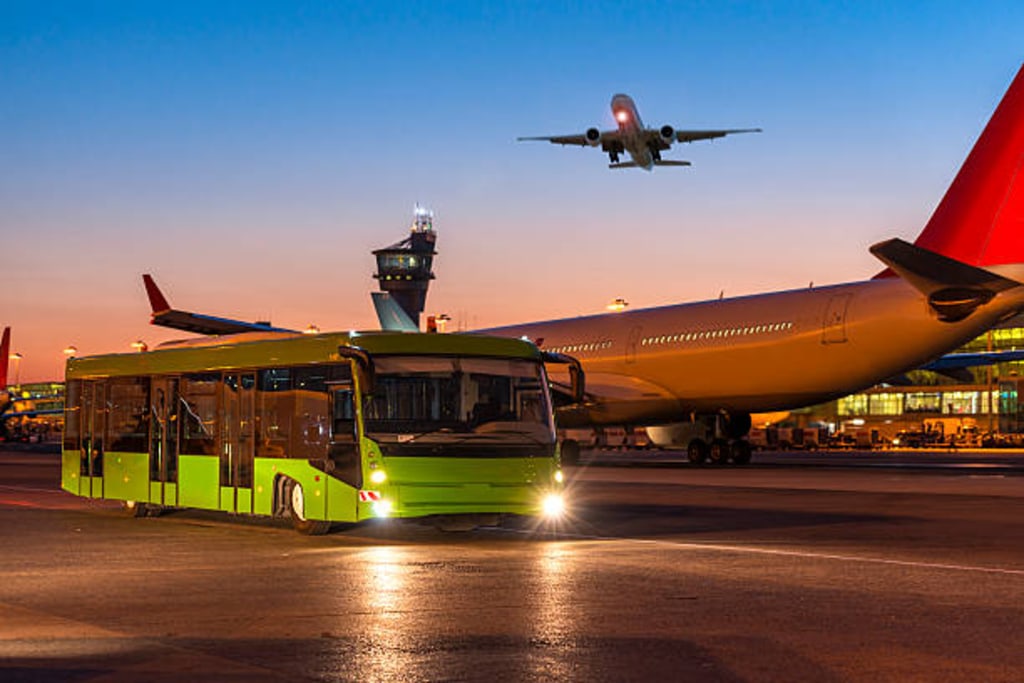
Air transport is an important part of the world's transportation system, providing essential links for tourism, business trips, and international trade. With the increased size of airports and the increase in air traffic, ground transport facilities to and from airports are also growing. The airport bus market, as part of this new era of mobility, is becoming more important as an organized, reliable and cost effective means of airport-city transport.
Airport buses are no longer just shuttle buses, increasingly serving a role as an integrated mode of transport with connections to metro systems, hotels, office buildings and the suburbs. The airport bus market reflects the need for a ground transport system that is coordinated and accessible to airport developments and passengers.
Understanding What the Airport Bus Market Really Is
Likewise, the airport bus market can include dedicated bus routes between an airport and its city center (or major transport hub) at the same time every day, and between airport hotels and car parks.
Most airport bus services are equipped to carry luggage, feature comfortable seating and have schedules designed to meet specific arrival and departure times of flights. The industry has vehicle manufacturers, operators, route planners, service providers and contractors for both the public and private sectors.
In contrast to regular city buses, airport buses are designed to meet the special needs of air travelers for convenience, reliability and efficiency.
Key Factors Driving the Popularity of the Airport Bus Market
The world airport bus industry benefits from the fact that air passenger numbers globally have been steadily increasing for several decades, resulting in an increasing demand for coordinated and reliable surface transport services for air passengers.
Affordability is another factor: airport buses are cheaper than taking a private taxi or a ride-sharing service, so they are a viable mode of transport for a larger number of passengers.
Airport buses can alleviate congestion within the city since travelers are less likely to choose a personal vehicle, or drive to the terminals, which is where parking is located.
Sustainability considerations also come into play; public transport alternatives, including airport buses, have much lower emissions per passenger than traveling by car.
Click here if you want to know more about Airport Bus Market
The Role of Innovation and Technology
The airport bus sector is more efficient and comfortable than in the past, offering coach style seating, air conditioning, luggage space, and facilities for the disabled and elderly.
Features such as digital ticketing enable passengers to reserve a seat through the internet or apps, reducing the time spent on booking. Real-time location tracking is also available to improve travel schedules.
Other fleet management technologies can assist in the management of routings, fuel economy and reliability. Electric and hybrid bus models have increasingly been adopted by airports as part of their sustainability strategies.
Integrated payment systems and the connection to urban public transport systems further increase the convenience and ease of use by travellers.
Changing Passenger Preferences and Travel Habits
The trend for more convenience, low cost and predictability continues, with travellers preferring modes of transport that take account of their flight timetable.
Airport buses may be used by budget conscious travelers such as students and tourists. Business travelers may have the added advantages of predictability and lower stress afforded by airport bus services.
There is support for environmentally responsible transport to the airport. Buses to the airport support mass transit and reduce individual car use.
When planning ground transport ahead of time, travelers use digital platforms like reviews and mobile applications to assist their decision-making.
Benefits and Practical Advantages
There are some advantages to using airport bus services for both passengers and airport authorities:
• Cost-Effective Transportation: Low-cost airport travel
• Reliable Scheduling: Coordination with flight arrival and departure schedules
• Reduced Traffic Congestion: Decreases reliance on private vehicles.
• Luggage Accommodation: Designed to efficiently accommodate travel baggage
• Sustainability Support: Promotes shared mobility and lower emissions
• Urban Connectivity: connects airports with major transport hubs and city centers
• Passenger Convenience: Reliable routes and structured operations
These benefits make airport buses a potential option in transport planning.
Global Adoption and Regional Relevance
Airport buses are now a regular feature of most metropolitan areas and international airports, which commonly rely upon them as a means of organizing air passenger traffic.
Airport bus systems exist in many developed countries and are often integrated with the city's rail and metro system. Developing countries have also established airport bus systems.
In areas dependent on tourism, airport buses connect visitors to hotels and other attractions. The growth and modernization of the service is affected by local government policy and investment in public transport infrastructure.
Airport bus services link airports with ground transportation in many other cities in the world.
Challenges Facing the Airport Bus Market
Traffic congestion around cities can have negative effects on airport bus punctuality and reliability despite its importance. Route planning must therefore take into consideration the existing traffic conditions to avoid delays.
Other factors affecting demand include the availability of services such as ride-sharing and other forms of private transport, and service frequency and prices.
Infrastructure constraints, such as limited availability of bus lanes or terminals, and operational costs of maintaining the fleet and refuelling also constrain bus rapid transit.
Passengers want digital connections and convenience, and operators must invest more in upgrading and adapting their infrastructure.
Future Outlook of the Airport Bus Market
The future of the airport bus sector is linked to developments in smart mobility and sustainable transport, particularly in relation to greater emphasis on public transport and reductions in carbon emissions, both of which could drive increased airport bus use.
Electric buses and smart transport systems can improve efficiency and reduce emissions. Connectivity could improve with more thorough urban mobility platforms, for example.
As air travel continues to expand, the need for a reliable and affordable airport transport system has become more apparent.
Conclusion
The airport bus market includes scheduled and structured services that providing convenient, low-cost transportation to airports and within cities, benefiting passengers and promoting efficient airport operations and the economy.
The airport bus market is driven by volume of air traffic, continual technological advancements, and sustainability and will remain an integral part of the global transport network as systems further evolve to meet the requirements of modern day travel in terms of accessibility and ease of use.
About the Creator
Akshay Kumar
A dedicated Market Research Professional specializing in in-depth analysis, industry forecasting, and strategic insights. Known for precision, reliability, and delivering research that adds real business value.
Keep reading
More stories from Akshay Kumar and writers in Education and other communities.
Why the Healthcare BPO Market Is Transforming Operational Efficiency in Healthcare?
Globally, healthcare systems are under pressure to provide good quality of care to patients. Administrative, billing, claims handling and data management tasks are labor-, time- and resource-intensive for many healthcare organizations. To address this, the healthcare BPO industry has emerged as a solution to enable healthcare organizations to better focus on their patients and ease the burden of operations.
By Akshay Kumarabout an hour ago in Education
Why Europe Cosmetics Is Redefining Beauty and Personal Care
Europe Cosmetics and the Evolution of Beauty Standards The beauty and personal care industry in Europe is undergoing significant transformation as consumers become more conscious of ingredients, sustainability, and brand values. Cosmetics are no longer viewed as simple aesthetic products; they are increasingly associated with self-expression, wellness, and lifestyle choices. Across the region, changing consumer preferences and technological advancements are reshaping how beauty products are developed, marketed, and consumed.
By deepanshu Thakura day ago in Education
The Digital Blueprint Inside France USD 781.69 Million Industrial PLC Revolution (2025-2033)
In 2026, the factory floors and logistics hubs of France are no longer defined by the heavy clank of manual machinery. Instead, they are defined by a quiet, precise digital pulse. At the heart of this transformation lies a technology that has evolved from a simple relay replacement into the "central nervous system" of modern industry: the Programmable Logic Controller (PLC).
By Neeraj kumar6 days ago in Education




Comments
There are no comments for this story
Be the first to respond and start the conversation.