
Why is Revit Necessary in Florida’s AEC Sector?
Revit Structure Modeling in Florida

Picture your team working on the structural details of a project for days. Ultimately, the architect changes the design without communicating it. The results?
You lose out on time, resources, and productive results. Eighty percent of the cost overruns are due to change orders in the design.
A traditional workflow involves time-consuming manual analysis, communication, and design revisions. In contrast, Revit is a centralized platform for every stakeholder. With real-time changes, there is zero chance of miscommunication, thus no rework demands.
We can’t afford project delays in Florida's fast-paced infrastructural developments. Revit thus becomes crucial. It is a holistic practice for design, modeling, analysis, collaboration, and scheduling.
Top 10 Features of Revit Structure Modeling
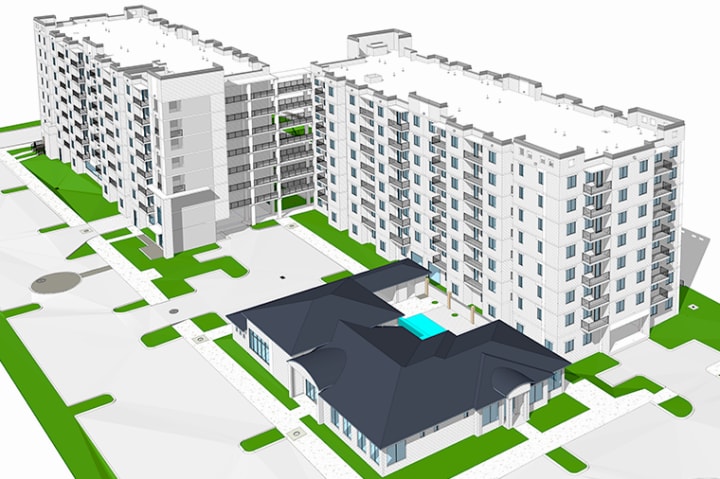
These queries arise for a structural design owing to the manual and the typical 2D approach. Manual and 2D approaches make reading the drawings challenging for the site team, whereas 3D modeling makes them understandable.
Here are the top features of Revit structural modeling that streamline the process:
1. Modeling of Structural Elements
Revit offers robust tools for modeling structural elements like beams and columns. You can specify the location, sizes, and types for integration throughout the design.
2. Detailed Load Analysis
Structural design isn’t restricted to a particular type of load. Instead, a resilient design demands analysis of several loads. For example, the Florida Building Code requires considering live load, roof, snow, wind loads, etc., for structural details.
Revit enables the assessment of load combinations that follow design efficiency norms.
3. Precise Reinforcement Detailing
You can specify the reinforcement's shape, size, and placement with a BIM approach. The tools also enable designers to define the rules for rebar placement , guaranteeing building code efficiency.
4. Safe Structural Connections
A structure's safety depends on its structural connections. Revit helps detail every minute connection to promise the structure's safety.
5. Analytical Modeling
Curating an analytical model from physical information is effortless with a BIM-driven workflow. This approach helps in design validation with comprehensive structural analysis.
6. Holistic Construction Documentation
Revit structural modeling is much more than adding reinforcement details. It also generates a set of plans, elevations, and sections from the 3D model. This helps in construction documentation with accurate information.
7. Quantity Extraction
The material calculation isn’t tedious anymore. The Revit approach helps extract quantities, aiding in cost estimation and procurement.
8. Energy Analysis
You can even perform an energy analysis with a single click. Once the structural framework is ready, click on the ‘Energy Setting’ dialog box for simulation. This tool helps drive better decisions for building efficiency.
9. Modeling with Materials
Your structure doesn’t stay restricted to a single material with Revit. Rather, you can incorporate materials like wood, precast concrete, steel, cast-in-place concrete, etc., to analyze better.
10. Seamless Coordination
A centralized platform helps keep the entire team on the same track. It facilitates real-time collaboration, enhancing coordination and better decision-making for every team involved.
Structural design isn’t a single process. Instead, it involves several stages to arrive at the final design. Let’s understand the different phases involved in the design and modeling.
● Conceptual Design
It is the initial phase where structural modeling works with preliminary ideas and the feasibility of the design. It highlights the opportunities and challenges involved in the concept.
● Schematic Phase
Schematic design involves design refinement and detailing of the structural elements. In this stage, the structural experts test load-bearing capacity and develop design iterations.
● Design Development
During the design development phase, structural stability and construction concerns are addressed. The elements are further detailed with the specifications required for on-site work.
● Documentation
The documentation phase focuses on developing comprehensive 2D drawings and specifications.
5 Perks of Integrating Revit Structural Modeling in Florida
1. Cuts Down on Costly Errors
Clash detection in the early design phases helps prevent errors. It highlights and resolves every minor or major clash. This advanced approach helps reduce costly reworks. A smoother workflow also guarantees on-time project delivery.
2. No More Miscommunication
Revit facilitates multidisciplinary collaboration. As each team receives real-time updates, the approach promises consistency.
3. Better Feedback with Visualization
Not everybody understands the symbols and linework involved in 2D structural designs. This is where Revit structural services come into the picture for detailed visualization. They help communicate every detail better, resulting in quick feedback from the team.
4. Structural Simulations for Detailed Analysis
Through simulations, structural experts can analyze potential flaws in their designs. An in-depth analysis in the pre-construction stages optimizes the structure’s performance. Thus leading to secure and high-performing results.
5. Single Database
Structural BIM services help streamline the workflow. A single source of information for the team resolves communication lags. It keeps the whole team updated at every stage and helps in informed decision-making.
Addressing Florida’s Advanced Demands
The AEC industry in Florida is transforming daily, demanding fast-paced developments. Revit is all set to revolutionize our conventional workflows for better efficiency. The advanced tools streamline complex structural tasks and foster better communication.
At AEO Design Consultants, our experts stay at the forefront of transformative trends. We’re leveraging technology's potential to shape the industry's future in Florida.
About the Creator
RB
AEODC is a global hub advancing the AEC industry through cutting-edge BIM and virtual Design & Build tech, connecting all stakeholders to foster innovation, collaboration, and efficiency across every project stage.
Rooted in Conviction: Lessons on Spiritual Leadership and Social Order from Iglesia ni Cristo
Spiritual leadership has always played an essential role in guiding communities toward shared values and ethical living. In a world where leadership styles constantly evolve, religious institutions continue to offer enduring perspectives on responsibility and social harmony. Iglesia ni Cristo (INC), a Christian church founded in 1914 in the Philippines, presents a distinctive model of spiritual leadership that emphasizes order, unity, and moral discipline. Its influence reaches beyond religious practice and offers valuable lessons for society as a whole.
By Iglesia Ni Cristoabout 20 hours ago in Education
Your phones camera isn't as good as you think
When the Visualphone VP210 hit the market in 1999, it advertised a never-before-seen feature: a camera. With only 0.11 megapixels and storage for 20 photos, the Visualphone is a relic compared to modern devices sporting three distinct cameras, each with up to 100 times more resolution. But while this technology has improved dramatically in the 21st century, engineers are rapidly approaching a hard limit on phone camera quality. To understand this limit, we first need to know how phone cameras work.
By Munesh Yadav3 days ago in Education
Miss Persephone's Manual to a Seemingly Ordinary Life
Miss Persephone was found at the dining table, her blue eyes swollen, her tears arriving and retreating like the tides of the ocean. Earlier that day, her family had visited her in the retirement home where she had lived for eight years. It was her eightieth birthday.
By Imola Tóth4 days ago in Fiction



Comments
There are no comments for this story
Be the first to respond and start the conversation.