
Why Is No One Talking About This?
The Most Underrated Climate Solution No One Talks About.

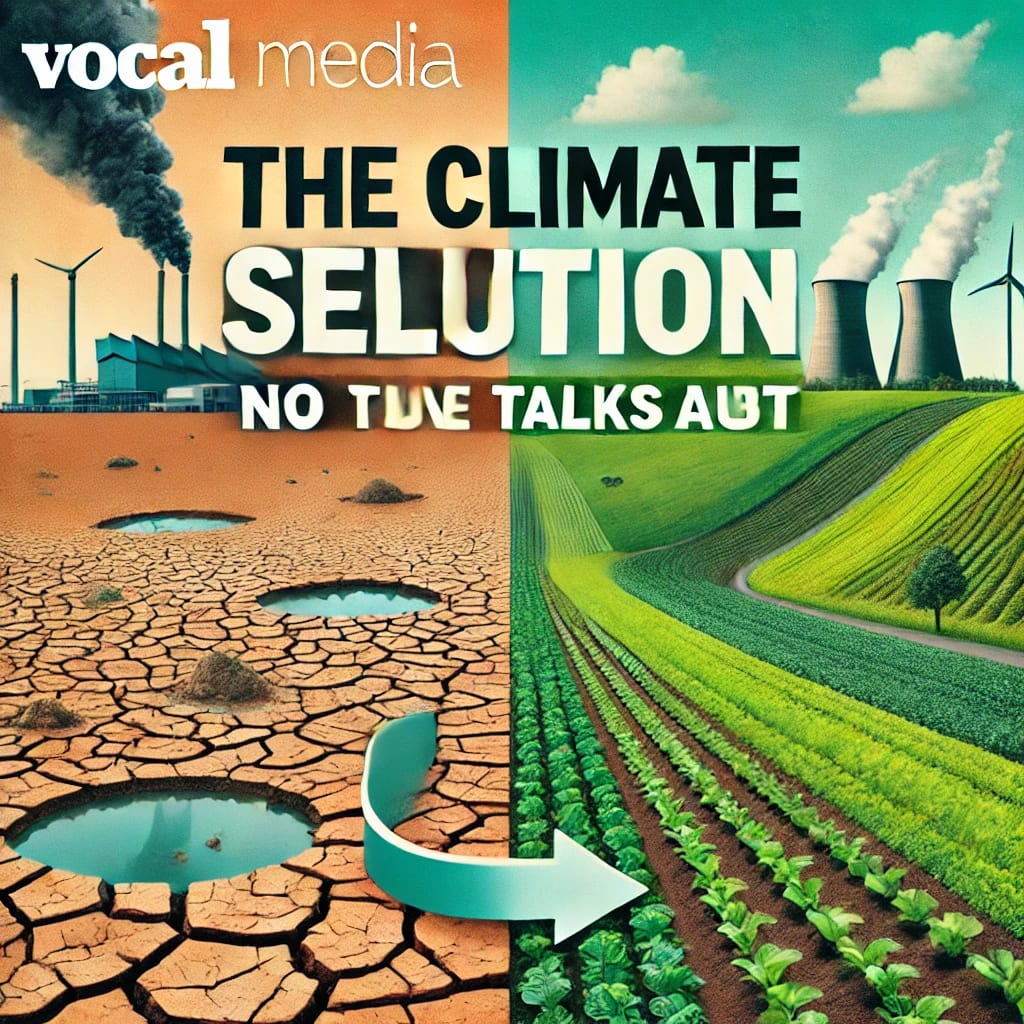
When we talk about climate change solutions, we often hear the same buzzwords: renewable energy, electric vehicles, recycling, and cutting down on plastic. But what if I told you there’s an incredibly powerful climate solution that almost no one is talking about?
Meet the Hidden Hero: Regenerative Agriculture
Regenerative agriculture isn’t just another farming technique—it’s a revolutionary way of growing food that could reverse climate change, restore soil health, and increase food security all at the same time. Yet, despite its enormous potential, it barely gets the attention it deserves. Here’s why this underrated solution might just be the key to saving our planet.
The Problem: Our Soil is Dying
Modern industrial agriculture is one of the biggest contributors to climate change, responsible for nearly 25% of global greenhouse gas emissions. Overuse of synthetic fertilizers, monoculture farming, and heavy tilling have led to massive soil degradation. In fact, experts warn that if we continue at this rate, we could lose all farmable topsoil within 60 years.
Without healthy soil, we lose more than just food production—we also lose one of the planet’s best natural carbon sinks.
The Game-Changer: How Regenerative Agriculture Works
Unlike conventional farming, regenerative agriculture works with nature, not against it. The goal is simple: restore soil health so it can absorb more carbon, retain more water, and boost biodiversity. Here’s how it works:
✅ No-Till Farming – Reducing soil disturbance allows natural microbes to flourish, improving fertility and carbon storage.
✅ Cover Crops & Crop Rotation – Instead of depleting the soil with one type of crop, farmers grow diverse plants that restore nutrients.
✅ Managed Grazing – Rotational grazing of livestock helps fertilize the soil naturally and prevent desertification.
✅ Composting & Organic Practices – Eliminating synthetic fertilizers and pesticides improves soil and prevents chemical runoff.
Why This Could Be a Climate Game-Changer
1️⃣ Soil as a Carbon Sponge – Healthy soil can absorb massive amounts of CO₂, essentially reversing the damage caused by industrial agriculture. Some studies suggest that scaling up regenerative practices could sequester up to 100% of current global carbon emissions!
2️⃣ More Resilient Crops – With climate change causing unpredictable weather, regenerative farms produce crops that can better withstand droughts and floods.
3️⃣ Food Security & Farmer Prosperity – Healthier soil leads to higher yields, meaning farmers can grow more food with fewer resources. That’s a win-win for people and the planet.
Why Is No One Talking About This?
Despite its massive potential, regenerative agriculture is still underfunded and underreported. Big agricultural corporations profit from synthetic fertilizers, pesticides, and monoculture farming, so they have little incentive to promote regenerative practices. But change is happening.
Governments, farmers, and consumers are starting to recognize the power of regenerative agriculture. Countries like France, India, and the U.S. are investing in soil restoration programs, and major brands like General Mills and Patagonia are transitioning to regenerative sourcing.
What Can You Do?
✅ Support Regenerative Brands – Look for food products labeled organic, regenerative, or sustainably farmed.
✅ Spread Awareness – Share this article, talk about it on social media, and educate others.
✅ Advocate for Policy Changes – Push for policies that support soil restoration, sustainable farming, and carbon sequestration.
✅ Eat More Regenerative Foods – Choosing food grown through regenerative practices supports farmers who are making a difference.
The Bottom Line
Regenerative agriculture isn’t just about farming—it’s about restoring the planet. While it won’t solve climate change overnight, it’s one of the most powerful yet overlooked solutions we have. The more we talk about it, support it, and demand change, the faster we can heal the earth from the ground up.
The question is: will we act before it’s too late?
About the Creator
Keep reading
More stories from Melvin Odhiambo and writers in Education and other communities.
What is Carbon Footprint and does it really matter?
Carbon footprint, what is this? This is an area that most people have limited understanding on unless you are an environment enthusiast, but don't worry you are not because I'm here to demystify it for you. So lets go...
By Melvin Odhiambo 11 months ago in Education
Innovation and Adaptability in Action: How to Thrive in a Fast-Changing World
The modern world changes fast. New tools, new ideas, and new challenges appear every day. People and organizations must respond with speed and purpose. This is why innovation and adaptability matter more than ever. These skills help individuals, teams, and businesses stay strong during change. They support growth, learning, and long-term success. When change feels constant, the right mindset can turn risk into opportunity. Innovation and adaptability are not abstract ideas. They are daily actions. They guide how we solve problems, learn new skills, and adjust plans. They help us move forward when old ways no longer work. In a world shaped by technology, climate issues, and social shifts, these qualities are essential.
By Brian Ferdinand7 days ago in Education


Comments (2)
Thanks a lot. Let talk and act the solution to help save the earth.
I’ll talk about the solution! Great work! Amazing! 🥰😈