

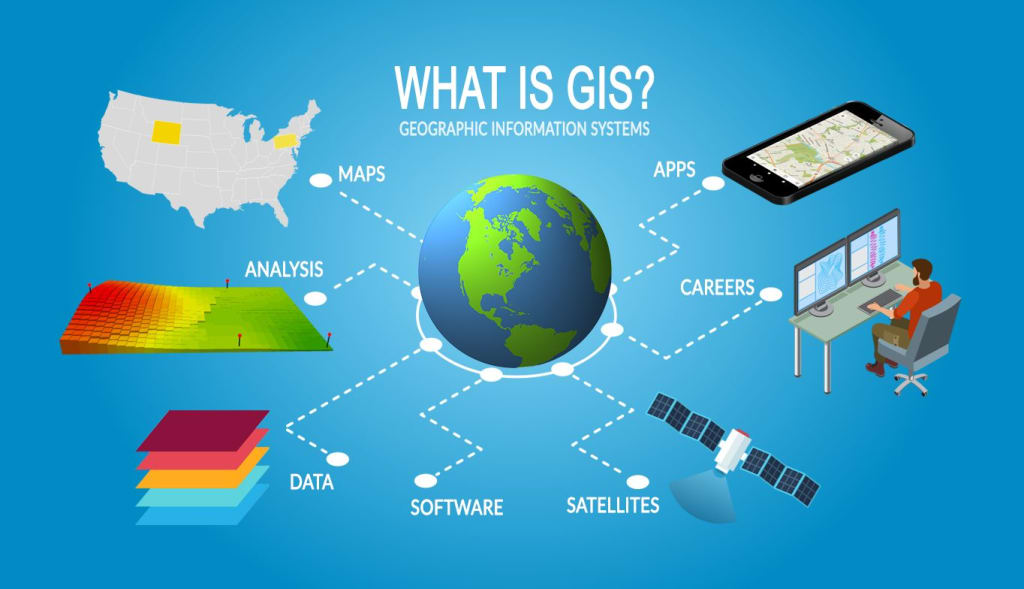
A Geographic Information System (GIS) is a powerful tool that plays a crucial role in various sectors by enabling the analysis and visualization of spatial data. Its importance cannot be overstated, particularly in a world where geographic data is becoming increasingly essential for decision-making. The following discussion will delve into why a GIS is needed, highlighting its various applications, benefits, and the impact it has on modern society.
1. **Understanding Geographic Data**
At its core, GIS is a system designed to capture, store, manipulate, analyze, manage, and present all types of geographical data. This data can be anything from the location of a new store to the pattern of deforestation in the Amazon. The need for GIS arises from the necessity to understand and interpret these spatial patterns and relationships. Without GIS, it would be nearly impossible to analyze large sets of geographic data effectively. Traditional methods of analyzing spatial data, such as paper maps and manual plotting, are time-consuming and prone to errors. GIS automates these processes, allowing for quicker and more accurate analysis.
2. **Improved Decision-Making**
One of the primary reasons a GIS is needed is its ability to improve decision-making processes. By analyzing geographic data, GIS helps organizations and governments make informed decisions. For instance, urban planners use GIS to determine the best locations for new infrastructure, such as roads, schools, or hospitals. Environmentalists rely on GIS to track changes in ecosystems and plan conservation efforts. Emergency response teams use GIS to map disaster-prone areas and plan evacuation routes. In all these scenarios, GIS provides critical insights that lead to better outcomes. The ability to layer different types of data (such as population density, transportation networks, and natural resources) on a single map enables decision-makers to see the bigger picture and consider all relevant factors before taking action.
3. **Enhanced Efficiency and Productivity**
GIS significantly enhances the efficiency and productivity of various tasks. For instance, in agriculture, GIS can be used to monitor crop conditions, predict yields, and optimize the use of resources like water and fertilizers. This not only saves time and money but also increases crop productivity and reduces environmental impact. In the transportation sector, GIS is used to manage and optimize routes for delivery trucks, reducing fuel consumption and improving delivery times. By automating the collection, analysis, and presentation of spatial data, GIS eliminates the need for labor-intensive manual processes, allowing organizations to achieve more with fewer resources.
4. **Data Integration and Management**
Another critical need for GIS is its ability to integrate and manage large volumes of spatial data. In many fields, data is collected from various sources, such as satellite images, GPS devices, and field surveys. GIS provides a platform where all this data can be brought together, stored, and organized in a way that makes it easy to access and analyze. This capability is especially important in complex projects that require collaboration between different organizations or departments. For example, in urban development projects, data from different agencies (such as land use data, transportation data, and environmental data) can be integrated into a single GIS system, enabling seamless collaboration and coordination.
5. **Better Communication and Visualization**
GIS is also a vital tool for communication and visualization. Maps are a universal language that can convey complex information in an easily understandable format. With GIS, data can be visualized in various ways, such as through thematic maps, 3D models, or time-series animations. This ability to present data visually is crucial for conveying information to stakeholders, such as government officials, investors, or the general public. For instance, a GIS map showing the spread of a disease can help public health officials communicate the urgency of a situation and mobilize resources effectively. In the business world, GIS-generated maps can be used in presentations to illustrate market trends or the potential impacts of a new project.
6. **Real-Time Monitoring and Analysis**
The need for real-time monitoring and analysis is another reason why GIS is indispensable. In sectors such as disaster management, transportation, and environmental monitoring, having up-to-date information is crucial for effective decision-making. GIS systems can be integrated with real-time data sources, such as weather stations, traffic cameras, or IoT devices, to provide a live view of what is happening on the ground. This capability is particularly valuable in emergency situations, where quick responses are necessary to mitigate risks and save lives. For example, during a flood, GIS can be used to monitor water levels in real-time and predict which areas are at risk of flooding, allowing for timely evacuations and resource allocation.
7. **Support for Sustainable Development**
GIS plays a vital role in supporting sustainable development goals. As the world grapples with challenges such as climate change, resource depletion, and population growth, GIS provides the tools needed to plan and implement sustainable solutions. For instance, GIS can be used to model the impacts of climate change on different regions, helping policymakers develop strategies for mitigation and adaptation. In urban planning, GIS can be used to design cities that are more resilient to environmental challenges and that promote sustainable practices, such as energy efficiency and waste reduction. By providing a comprehensive view of the interactions between human activities and the natural environment, GIS helps ensure that development is carried out in a way that is socially, economically, and environmentally sustainable.
8.**Risk Assessment and Management**
In today’s world, where natural and human-made disasters are increasingly common, GIS is essential for risk assessment and management. By analyzing spatial data, GIS helps identify areas that are at risk of hazards such as floods, earthquakes, or industrial accidents. This information is crucial for planning and implementing risk mitigation strategies, such as building flood defenses, enforcing building codes, or planning evacuation routes. In addition to assessing risks, GIS is also used in disaster response and recovery efforts. For example, after a hurricane, GIS can be used to assess the extent of the damage, plan recovery efforts, and coordinate the delivery of aid to affected areas.
9. **Resource Management and Conservation**
GIS is indispensable in the field of resource management and conservation. Natural resources such as water, minerals, and forests are finite and need to be managed sustainably. GIS provides the tools needed to monitor the use of these resources, identify areas where they are being depleted, and develop strategies for their conservation. For instance, in water resource management, GIS can be used to map water catchment areas, monitor water quality, and plan the distribution of water resources. In wildlife conservation, GIS is used to track animal populations, map their habitats, and plan conservation strategies to protect endangered species. By providing a detailed understanding of the spatial distribution and usage of natural resources, GIS plays a crucial role in ensuring that these resources are managed in a way that meets current needs without compromising the ability of future generations to meet theirs.
10. **Economic and Social Impact**
Finally, the economic and social impact of GIS cannot be ignored. GIS is not just a tool for analyzing geographic data; it is a driver of innovation and economic growth. By providing insights into spatial patterns and relationships, GIS helps businesses identify new opportunities, optimize their operations, and increase their competitiveness. For example, retailers use GIS to analyze consumer demographics and market trends, helping them choose the best locations for new stores or target their marketing efforts more effectively. In the public sector, GIS is used to improve the delivery of services, such as healthcare, education, and transportation, leading to better outcomes for citizens. By enabling more efficient and effective use of resources, GIS contributes to economic growth and social well-being.
Conclusion
In conclusion, a GIS is needed because it provides the tools and insights necessary to understand and manage the complex spatial relationships that underlie many of the challenges we face today. Whether it’s improving decision-making, enhancing efficiency, supporting sustainable development, or managing risks, GIS is an indispensable tool that has a profound impact on modern society. As the world continues to generate more geographic data, the need for GIS will only grow, making it a vital component of our efforts to build a better and more sustainable future.
About the Creator
Mohamed sha
Reading makes a man perfect. Come and read my page if possible
Keep reading
More stories from Mohamed sha and writers in Education and other communities.
Casie Hynes and the Future of Student-Centered Math Education
Mathematics has long been considered a gatekeeper subject. It opens doors to careers in science, technology, engineering, finance, and medicine. Yet for many students, math feels less like an opportunity and more like an obstacle. Timed tests, rigid formulas, and high-pressure performance environments have shaped generations of learners—sometimes at the expense of curiosity and confidence.
By Casie Hynes3 days ago in Education




Comments (2)
Thanks for sharing
Thanks for filling me with knowledge. Well done.