
Why Indians Eat Only With Their Right Hand
The Cultural, Spiritual, and Practical Reasons Behind a Centuries-Old Tradition That Even Left-Handed People Follow

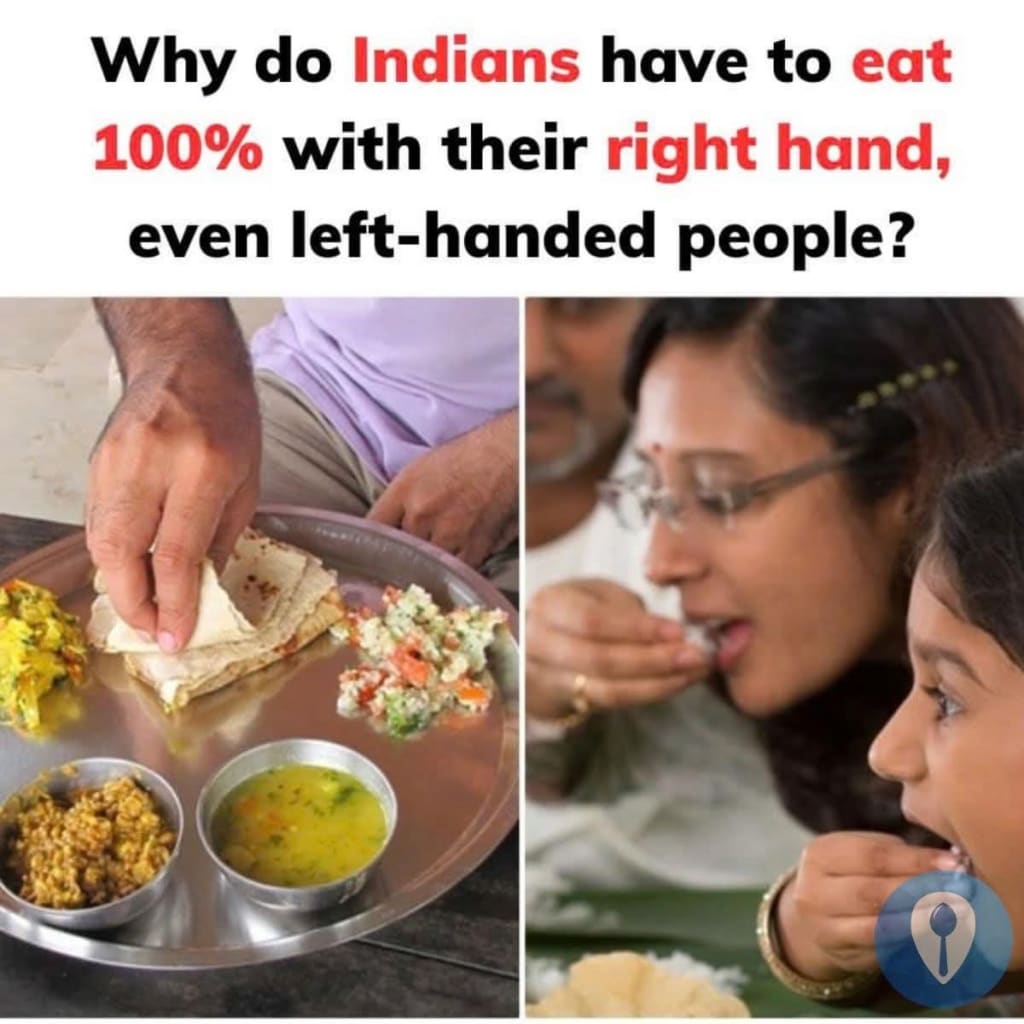
In many parts of the world, using a knife and fork is standard dining etiquette. But in India, a land rich in tradition and symbolism, eating with your hands—specifically your right hand—is both a ritual and a reflection of deeper cultural values. Even left-handed individuals are often taught to adapt and use their right hand for meals. To the outsider, this might seem curious or even restrictive, but to those raised in Indian households, the practice is second nature, a symbol of respect, purity, and mindfulness.
So why do Indians insist on eating 100% with their right hand, even when someone is naturally left-handed? The answer lies in a combination of ancient customs, religious beliefs, hygiene considerations, and social etiquette that have shaped Indian life for centuries.
A Matter of Cleanliness and Respect
In traditional Indian culture, the left hand is associated with personal hygiene, specifically with cleaning oneself after using the restroom. This association is deeply ingrained and has a significant influence on etiquette. Because of this, using the left hand for tasks such as serving food, eating, or giving offerings is considered impolite or even unclean.
Eating with the right hand is seen as a mark of respect—not just for others but also for the food itself. Meals in India are more than sustenance; they are sacred acts often accompanied by gratitude and blessings. Using the right hand ensures that the act remains clean and respectful in both a physical and symbolic sense.
The Role of Religion and Rituals
India is a diverse country with multiple religions, but many of them—including Hinduism, Islam, Jainism, and Sikhism—have similar cultural taboos around the use of the left hand. In Hinduism, for example, the right hand is used for religious offerings (pujas), lighting lamps, and eating, while the left is reserved for less pure tasks. During ceremonies, even something as simple as handing someone a gift or receiving prasad (blessed food) is always done with the right hand.
This is why, even in temples and spiritual gatherings, one would never see prasad being taken with the left hand. The same reverence extends to everyday meals, reinforcing the tradition at home and in public settings.
Social Norms and Community Dining
India places a strong emphasis on communal dining. It is common to share food with family members, neighbors, and guests. Traditionally, meals are served on large banana leaves or steel thalis (plates), and people may eat sitting on the floor in a circle. In such communal settings, hygiene and manners are critical.
Touching food that others may eat with your left hand, which is believed to be unclean, can be considered disrespectful or offensive. Using your right hand ensures the food remains acceptable for everyone and maintains social harmony.
Even in modern urban environments where people eat with utensils, this tradition still lingers. You may notice people serving themselves or others with the right hand only, especially during weddings, festivals, or religious events.
Adaptation for Left-Handed Individuals
Left-handedness is naturally occurring in a minority of the population worldwide, and India is no exception. However, due to the cultural weight given to the right hand, left-handed children in Indian households are often encouraged or trained to eat with their right hand from a young age.
This does not mean their natural dominance is discouraged entirely. Many left-handed Indians write, play sports, or perform other tasks with their left hand. But when it comes to eating, serving food, or participating in rituals, they are expected to switch to the right.
While this might seem unusual, it is viewed more as a matter of cultural conformity than a suppression of identity. Most people adapt to it just as they would adapt to wearing traditional attire for certain occasions or observing family customs.
The Sensory Experience of Eating
Another reason behind hand-eating in Indian tradition is the sensory connection with food. According to Ayurveda, the ancient Indian science of life and wellness, eating with your hands stimulates the five elements—earth, water, fire, air, and ether—promoting digestion and balance. The fingertips are believed to release enzymes that aid in digestion.
By using your hands, you become more mindful of the texture, temperature, and even the energy of the food you are consuming. This mindful eating aligns with Indian philosophy, which teaches that meals should be eaten slowly, gratefully, and with intention.
Embracing the Experience: Eating with the Right Hand as a Cultural Bridge
For travelers or guests unfamiliar with Indian customs, the idea of eating with the hand—especially only the right hand—can feel awkward at first. But many who try it come to appreciate the tactile, sensory richness it offers. By using the hand, you don’t just eat your food—you interact with it. You feel the softness of warm rice, the crunch of a papad, or the texture of a spiced lentil curry, and that enhances both awareness and appreciation.
Eating in this way can also become a symbol of respect toward the host culture. In many Indian households, a guest who makes the effort to follow this practice—even imperfectly—is appreciated for being open and willing to honor tradition. It becomes a cultural bridge, breaking down barriers and creating shared understanding.
Science Behind the Practice
Modern science has even offered some surprising support for the practice. When you eat with your hand, particularly using the right one in Indian style, your brain engages in more motor coordination and sensory awareness than it does with utensils. This can lead to a more mindful eating experience, where you are more in tune with hunger and fullness cues—something modern nutritionists actually encourage.
Furthermore, Ayurvedic philosophy teaches that our fingers have nerve endings connected to the digestive system. Stimulating these nerves by touching food is believed to activate enzymes and improve digestion, providing a physical benefit beyond the cultural and spiritual ones.
Changing Times, Enduring Values
Despite the increasing use of spoons and forks in modern Indian dining, the cultural message behind the “right hand only” rule remains relevant. It reflects values that are timeless—respect, cleanliness, mindfulness, and community. These values can be embraced in any form, regardless of whether you’re eating with your hands or utensils.
Some Indian households today are becoming more accepting of left-handed family members using their dominant hand, especially in more urban or globalized settings. However, many still follow the tradition during religious festivals, weddings, and sacred meals, where the symbolism of the right hand holds deep significance.
At its core, the practice reminds people to approach food not as a quick bite to fill the stomach, but as a gift to be received with gratitude, attention, and intention.
Final Thoughts
In a world increasingly driven by convenience, the Indian tradition of eating with the right hand stands as a beautiful reminder of what it means to eat with awareness, respect, and presence. It’s more than a rule or ritual. It’s a way of life—a small but profound expression of how food connects us not just to our bodies, but to our culture, our history, and the people we share our meals with.
Whether you’re right-handed or left-handed, Indian or not, there’s something powerful in this simple gesture. It teaches us that the hand you eat with matters less than the heart you bring to the table.
About the Creator
Keep reading
More stories from DigitalAddi and writers in Education and other communities.
Young Cheerleaders Vanished in 1995 After a Show
It was a warm spring evening in 1995 when two high school cheerleaders, both 17, vanished without a trace after performing at a local football game in a quiet town in Oregon. The disappearance of Rachel Price and Emily Monroe sent shockwaves through the community. One moment they were waving to the crowd with bright smiles, the next — gone. For decades, their names remained etched in missing persons files, their photos aging year by year on bulletin boards and news articles. Then, 20 years later, a single hiker stumbled upon something in the forest that would change everything.
By DigitalAddi7 months ago in Education
Top 10 Essential Skills for Success in 2026
By 2026, the job market is no longer driven only by degrees or titles. Technology, especially Artificial Intelligence (AI), automation, and remote work, has changed how companies operate and how people work. Many routine tasks are now handled by machines, while humans are expected to do work that requires thinking, judgment, creativity, and emotional understanding. This shift means that skills — not just education — determine success. The following 10 skills are considered essential for 2026 because they combine technology awareness with human intelligence. Let’s understand them one by one, step by step.
By Talha khan3 days ago in Education




Comments
There are no comments for this story
Be the first to respond and start the conversation.