
Why ChatGPT ?, We Build our Own AI-Bot.
This article helps to make step by step of a perfect AI-Bot like ChatGPT.


As a computer student, I can understand the appeal of creating an AI bot like ChatGPT. I want everyone to understand and i hope eveyone implement on your own for your real-time.
The ability to communicate with users in a natural, conversational way is a powerful tool that can be used in a variety of applications. In this article, I will outline the steps necessary to create an AI bot like ChatGPT through programming.
Step 1: Choose a Programming Language
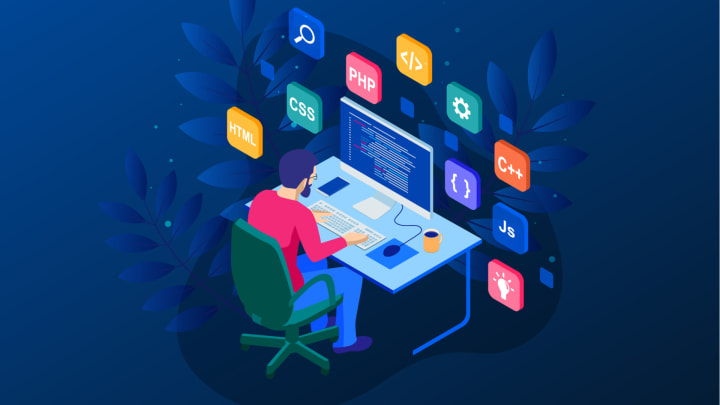
The first step in creating an AI bot is to choose a programming language. There are many options available, but some of the most popular ones for creating AI bots include Python, Java, and C++. Python is a particularly good choice for beginners because of its simplicity and readability. It also has many libraries and frameworks available that can simplify the process of building an AI bot.
Step 2: Decide on a Chatbot Framework

Once you have chosen a programming language, the next step is to decide on a chatbot framework. There are many chatbot frameworks available, but some of the most popular ones include Dialogflow, IBM Watson, Rasa, Microsoft Bot, Pandorabots, etc. These frameworks provide pre-built tools and models that can be used to create a chatbot. They also provide APIs that can be used to connect the chatbot to other applications.
Step 3: Train Your AI Bot

The next step is to train your AI bot. This involves feeding it large amounts of data and teaching it to recognize patterns and respond to user input. For ChatGPT, the training data consisted of text from various sources such as books, articles, and websites. This data was then used to train a language model that could understand and generate natural language responses.
To train your AI bot, you will need to collect data and preprocess it so that it can be fed into the language model. You can use techniques such as tokenization, stemming, and lemmatization to prepare the data. Once the data has been preprocessed, you can use it to train the language model using techniques such as neural networks.
Training makes the Bot get a accurate knowledge and we can test while building the bot by some set of machine learning models. That seperate the data informations for the bot as training and testing part. So, we can give lot of models to upgrade its AI and it learns well and it completely ready for the user experience.
Step 4: Connect the Chatbot to a User Interface

The next step is to connect your chatbot to a user interface so that users can interact with it. There are many options available for creating a user interface, including web applications, mobile applications, and chat applications such as Facebook Messenger and WhatsApp.
User Interface (UI) development is a crucial aspect of both web and application development. It involves creating the visual and interactive elements that users see and interact with.
For web development, UI design must be responsive and work well on various devices, from desktops to mobile devices. This requires the use of design frameworks and technologies such as HTML, CSS, and JavaScript.
For application development, UI design must be tailored to the specific platform, such as iOS or Android. This requires knowledge of the platform's UI design guidelines and the use of tools such as Xcode for iOS and Android Studio for Android. Good UI design can enhance user experience, improve engagement, and ultimately lead to more successful products.
To connect your chatbot to a user interface, you will need to use APIs provided by the chatbot framework. These APIs will allow you to send and receive messages from the chatbot. You will also need to implement logic that can interpret user input and generate appropriate responses.
Step 5: Deploy Your AI Bot

The final step is to deploy your AI bot. This involves making it available to users through a web or mobile application. You can use cloud services such as AWS, Google Cloud, or Microsoft Azure to deploy your AI bot. These services provide scalable and reliable infrastructure that can handle large volumes of traffic.
To deploy your AI bot, you will need to package it into a container or a virtual machine image. You will also need to configure the infrastructure to handle requests from the user interface. Once the infrastructure is in place, you can deploy your AI bot and make it available to users.
Conclusion

Creating an AI bot like ChatGPT requires a combination of programming skills, knowledge of chatbot frameworks, and experience with machine learning techniques. By following the steps outlined in this article, you can create an AI bot that can understand and respond to natural language input in a conversational way. With the right training data and user interface, your AI bot can be a powerful tool for a variety of applications, from customer service to personal assistants.
About the Creator
KANAGALINGAM
A CSE student like to write articles which is make very deeper into technological and practically to learn new with me. My motive is I'm the joker of the card, but in game i'm the one powerful and mysterious one.
Keep reading
More stories from writers in Education and other communities.
Everyday Cooking Skills That Turn Home Kitchens Into Creative Spaces
Cooking at home is more than a routine task. It is a practical life skill that supports better health, saves money, and encourages creativity. While recipes are helpful, true kitchen confidence comes from understanding essential cooking skills that work across countless dishes. When home cooks grasp these fundamentals, they can adapt recipes, solve problems, and cook with freedom rather than fear.
By Erika Mackinnon4 days ago in Education
Top Website Monetization Platforms to Maximize Your Revenue in 2026
Website monetization platforms are tools that help website owners generate revenue from their traffic. These platforms support different monetization models, including programmatic advertising, affiliate marketing, sponsored content, and performance-based ads.
By Iryna Podliesnaabout 2 hours ago in Education



Comments
There are no comments for this story
Be the first to respond and start the conversation.