
Why Accessibility Should Be the Cornerstone of Your Web Design Strategy
Creating Inclusive Digital Experiences for Everyone
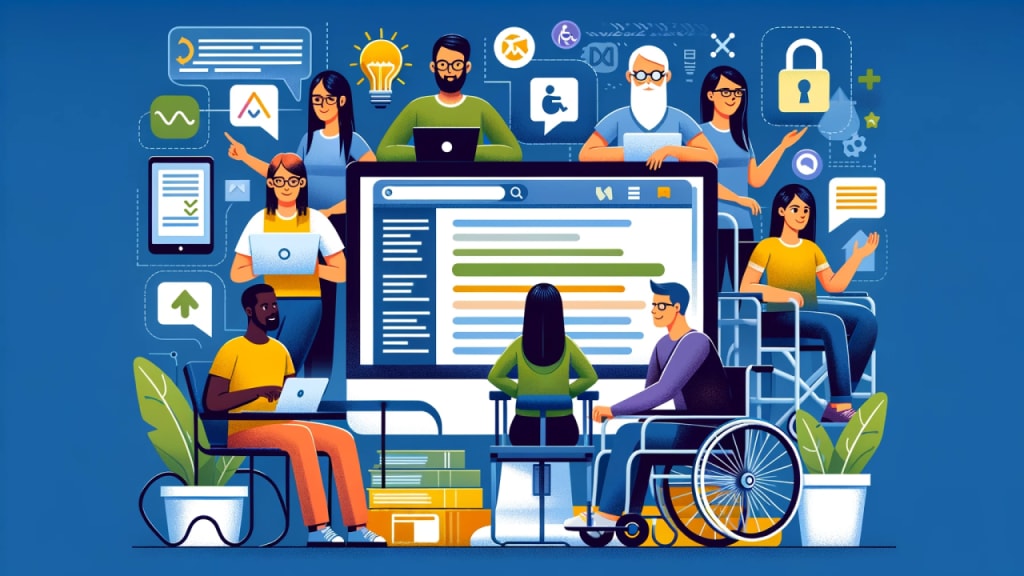
In today’s digital-first world, having a website that caters to everyone is not just a nice-to-have—it’s a necessity. Accessibility in web design ensures that your site is usable for people with disabilities, including those with visual, auditory, motor, or cognitive impairments. It’s about creating an inclusive digital experience that benefits everyone, and it’s an essential part of a successful web design strategy. Affordable web design services can play a crucial role in ensuring that your website remains accessible to a wider audience. Here’s why accessibility should be at the heart of your web design efforts.
1. Legal and Ethical Responsibilities
Governments worldwide are enacting laws and regulations to ensure digital accessibility. For example, the Americans with Disabilities Act (ADA) in the United States and the Web Content Accessibility Guidelines (WCAG) globally set the standards for web accessibility. Businesses that fail to comply with these standards risk legal consequences, including lawsuits and fines.
But beyond legal compliance, ensuring accessibility is simply the right thing to do. The internet should be a place where everyone has equal access to information, services, and opportunities. By prioritizing accessibility, you demonstrate a commitment to inclusivity and social responsibility.
2. Reaching a Wider Audience
According to the World Health Organization (WHO), over 1 billion people—about 15% of the global population—experience some form of disability. By making your website accessible, you open your digital doors to this vast audience. Ignoring accessibility means excluding a significant portion of potential users, which can directly impact your brand’s growth and reputation.
Accessible websites are also easier to navigate for everyone, not just people with disabilities. Features like keyboard navigation, clear headings, and readable fonts enhance usability for all users, including those accessing your site on mobile devices or in challenging environments like bright sunlight.
3. Improved SEO Performance
Accessibility and search engine optimization (SEO) often go hand in hand. Many accessibility practices, such as providing alt text for images, using semantic HTML, and structuring content with proper headings, also boost your site’s search engine rankings. Search engines prioritize websites that are easy to navigate and understand, which aligns with the principles of accessibility.
For example, screen readers rely on descriptive alt text to convey the meaning of images to visually impaired users. Search engines, too, use this information to understand the content of your images, improving your site’s visibility in search results. By optimizing for accessibility, you’re also enhancing your SEO efforts, driving more organic traffic to your site.
4. Enhanced User Experience (UX)
An accessible website is inherently user-friendly. When you design with accessibility in mind, you’re focusing on clear navigation, intuitive layouts, and readable content—all of which contribute to a positive user experience. For instance:
Readable Text: High-contrast text and scalable fonts make content easier to read for users with visual impairments and for those viewing your site on small screens.
Keyboard Navigation: Ensuring all interactive elements are accessible via keyboard benefits users who cannot use a mouse.
Captions and Transcripts: Providing captions for videos and transcripts for audio content helps users with hearing impairments and those in noisy environments.
These improvements don’t just help people with disabilities; they create a better experience for everyone.
5. Building Brand Loyalty and Trust
When users feel valued and included, they’re more likely to engage with your brand and become loyal customers. Demonstrating a commitment to accessibility can enhance your brand’s reputation, making it clear that you care about all your users. This inclusivity can set you apart from competitors who overlook the importance of accessibility.
6. Future-Proofing Your Website
Technology evolves rapidly, and accessibility standards continue to improve. Designing with accessibility in mind ensures your website remains relevant and functional as new devices, browsers, and assistive technologies emerge. For example, voice-controlled devices and screen readers are becoming increasingly common, and accessible websites are better equipped to support these technologies.
By prioritizing accessibility now, you’re preparing your website for future advancements and reducing the need for costly redesigns or retrofits later.
7. Boosting Conversion Rates
An accessible website removes barriers that might prevent users from completing desired actions, such as making a purchase, signing up for a newsletter, or contacting your team. When users can navigate your site effortlessly, they’re more likely to convert. Accessibility features like clear call-to-action buttons, simple forms, and consistent navigation can significantly improve your conversion rates.
Getting Started with Web Accessibility
Integrating accessibility into your web design strategy doesn’t have to be daunting. Start with these steps:
Follow WCAG Guidelines: Familiarize yourself with the Web Content Accessibility Guidelines (WCAG) and aim for at least Level AA compliance.
Conduct Accessibility Audits: Regularly test your website using tools like WAVE or Axe to identify and fix accessibility issues.
Include Accessibility in the Design Process: Work with designers and developers to ensure accessibility is a priority from the beginning.
Gather Feedback: Engage with users who have disabilities to gain insights into how your site can better meet their needs.
Train Your Team: Educate your team about the importance of accessibility and how to implement best practices.
Conclusion
Accessibility is not just a checkbox; it’s a cornerstone of effective web design. By prioritizing accessibility, you’re creating a more inclusive, user-friendly, and future-proof website that benefits everyone. From reaching a broader audience to enhancing SEO and boosting conversion rates, the advantages of accessibility are undeniable. Make it the foundation of your web design strategy and watch your online presence thrive.
About the Creator
From Job to Prison: Revenge, Sacrifice, and Ending
The story begins by showing a bald and strong man named Bradley, who is a car mechanic by profession. As usual, Bradley reaches the garage with a broken car, but after arriving there, he sees that the garage owner is anxiously waiting only for him, which makes him a little surprised. Then the garage owner calls him into his office. Hearing this, Bradley understands that he is about to be fired from his job, and exactly that happens. The owner tells him that these days the garage is going through a financial crisis, and that is why he is being forced to fire some workers. But this is only an excuse, because Bradley is a hard-tempered man, and the owner wants to remove him and hire someone who flatters him. Now since Bradley is a tough man, he does not argue with the owner. He goes to the locker room, takes out his belongings, takes his car, and silently leaves for home. And yes, friends, this is where the downfall of Bradley’s life begins, which continues straight until the end of the story and ends there. Anyway, Bradley stops his car in front of his house, and at the same time he sees that his wife Lauren is sitting in her car, talking to someone on the phone. Bradley becomes suspicious of her. To know the truth, he keeps watching her carefully for some time. When he becomes sure, he immediately goes to Lauren and tells her to open the car door. His wife says, “You came back from work very early today.” At the same moment, Bradley notices marks of someone else’s lips on her neck and says to Lauren, “Give me your phone.” But Lauren refuses to give the phone, because of which Bradley forcefully snatches the phone from her, and his suspicion turns out to be correct. She is talking on the phone with another man. In anger, Bradley tells Lauren to go inside the house. Lauren says, “At least listen to me.” Bradley says, “I said go inside the house.” Then Lauren silently goes inside the house. Now, he had already been fired from his job a little while ago, and now his wife’s affair, because of which he had become even more disturbed, so he starts taking out all his anger on Lauren’s car. How? You can see that yourself. Yes, he is so angry that he does not even realize that his hands have been badly injured. After that, he calms himself down and goes inside the house and questions Lauren about how many days she has been with the other man. Lauren tells him everything, that for the past three months she had been having an affair with someone else. Actually, Bradley’s wife had an abortion a few days earlier, because of which she used to remain sad, and Bradley often stayed busy with his work. Because of this, Lauren felt lonely and very depressed at home, and to fill this emptiness, she had to take support from another man. Hearing these things, Bradley realizes that he should have given time to Lauren. He apologizes to Lauren for this and says that from today, from right now, they will both start a new life. Lauren agrees. After that, Bradley tells Lauren that he has been fired from his job and now he will work for a man named Gil, who is a drug lord. As soon as she hears Gil’s name, Lauren clearly refuses and says, “You yourself said that you would never work with Gil.” Bradley says, “Yes, but in such circumstances, we cannot live like a prosperous family. To run a family, money is needed, and at this time I have no other option.” He also assures Lauren that he will do this work very carefully.
By Filmon Ke Raaz | Movie Mysteries Explainedabout 18 hours ago in Education
Beyond Speed: How High-Performance Computing Is Shaping Tomorrow’s Discoveries
High-Performance Computing is changing how people explore ideas, test theories, and solve complex problems. It allows machines to work together at great speed. These systems can handle tasks that are far too large for standard computers. As a result, High-Performance Computing and the future of discovery are closely linked.
By Jason Prueta day ago in Education
Miss Persephone's Manual to a Seemingly Ordinary Life
Miss Persephone was found at the dining table, her blue eyes swollen, her tears arriving and retreating like the tides of the ocean. Earlier that day, her family had visited her in the retirement home where she had lived for eight years. It was her eightieth birthday.
By Imola Tóth5 days ago in Fiction


Comments
There are no comments for this story
Be the first to respond and start the conversation.