
Which Job Roles are Most at Risk?
Mark Zuckerberg, Meta's chief executive officer, announced on the company's earnings call on Wednesday that the company will be eliminating some layers of management. He also dubbed 2023 the "Year of Efficiency."
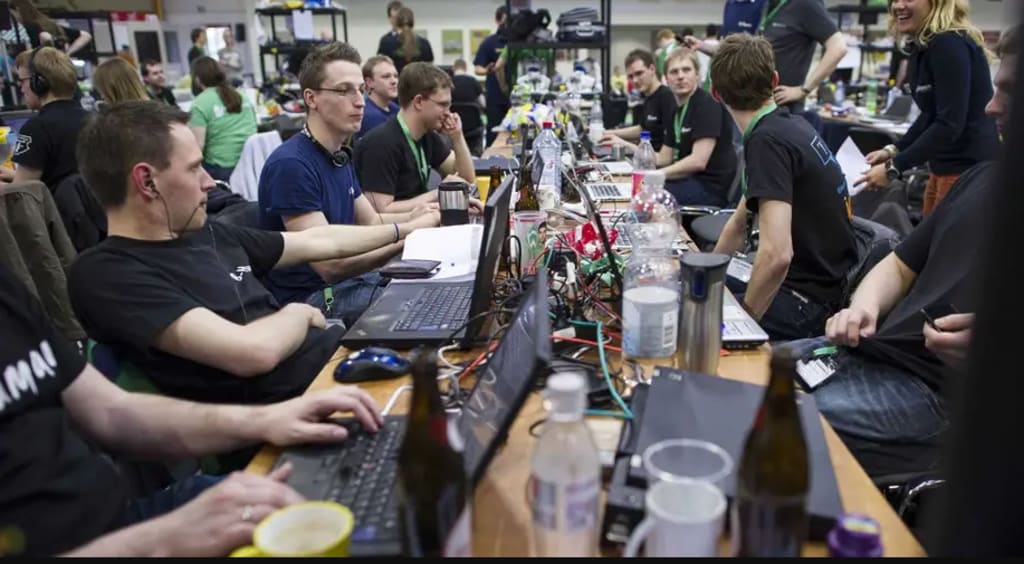
Mark Zuckerberg, Meta's chief executive officer, announced on the company's earnings call on Wednesday that the company will be eliminating some layers of management. He also dubbed 2023 the "Year of Efficiency."
A clear target has emerged as Silicon Valley behemoths Meta Platforms Inc., Alphabet Inc., and others attempt to reduce payroll after years of rapid hiring: the middle boss.
Mark Zuckerberg, Meta's chief executive officer, announced on the company's earnings call on Wednesday that the company will be eliminating some layers of management. He also dubbed 2023 the "Year of Efficiency." In its first major layoff, the company fired over 11,000 workers last year, or 13% of its workforce. Susan Li, the chief financial officer of the company, stated that this is "just the beginning." After reporting revenue that exceeded expectations, the stock experienced its largest single-day rebound in nearly a decade.
Meanwhile, a startling statistic was revealed by recent Alphabet layoffs: According to remarks that Fiona Cicconi, Google's chief people officer, gave to employees, the company employs more than 30,000 managers. This month, the business cut 12,000 jobs, or 6% of its workforce.
In an effort to save money, Intel Corp. will reduce the pay of managers and top executives in the face of growing competition and a decline in demand for personal computers. Even though experts in human resources agree that executives should take a pay cut when times are tough for the economy, from the perspective of shareholders and employees, it usually doesn't spread down the ranks.
Similar reductions are appearing outside of the tech sector. In a memo to employees, FedEx Corp.'s CEO Raj Subramaniam stated that the company will be "more efficient, agile" by cutting global officer and director positions by more than 10%.
The moves come at a time when middle managers all over the world are under more and more pressure from above, who are being told by their bosses to do more with less, and below, who are trying to enforce return-to-office policies and figure out how to work in hybrid ways. Middle managers, according to a recent survey conducted by Slack Technologies Inc.'s Future Forum, are the most worn out of all organizational levels. About 43% stated that they are exhausted.
Management is under particular siege in techland. Elon Musk's "hardcore" Twitter 2.0 perhaps best exemplifies the conviction that the world's leading technology companies require nothing more than core engineering teams. Musk has eliminated 7,000 employees from the company since taking over. "Elon, what is the one aspect of Twitter that is currently causing the most chaos? In October, Musk was questioned on the platform. His reply was, " There appear to be ten "managing" individuals for every coder.
Since General Electric Co.'s CEO Jack Welch and other business titans adopted downsizing and restructuring in the 1980s in order to remain competitive in the face of globalization and technological change, this narrative of the inefficient bureaucracy and the "lean and mean" organization has existed. However, research has shown that this force reduction was only temporary for many businesses. In the 1980s and 1990s, middle managers' salaries and ranks increased, rendering many American businesses "fat and mean," according to one economist.
Management used to be a bad word at Google. According to Keval Desai, a former product management director who joined in 2003, the rule of thumb in the company's early days was that product and engineering teams would be overseen by directors with 25 to 30 reports. According to him, Google aimed to hire self-starters with an entrepreneurial spirit who could thrive in the company's flat organizational structure.
Desai described Google's reasoning as follows: "We can't afford for a group of people to do nothing but be human routers of information in a fast-moving industry where technology is evolving rapidly, where we have to be scrappy."
According to Desai, who is currently the founder and managing director of SHAKTI, a venture capital firm based in San Francisco, the model served Google well, albeit at a cost. Google fell behind in the cloud computing market, where customers require greater organization and predictability, as some teams at the company developed similar products with few managers on board.
Desai, who left Google in 2009, stated, "The next decade of Google was, I think, a reaction to some of those side effects." Google was on the opposite end of the spectrum in some ways."
A request for comment was not immediately answered by a Google representative.
Peter Cappelli, a management professor at the Wharton School of the University of Pennsylvania, claims that the current round of layoffs in Silicon Valley are primarily intended to appease investors who believe that tech employees are pampered.
Cappelli stated, "People announce layoffs because it sounds good and is what investors like to hear."
According to him, numerous businesses are announcing job cuts as a result of numerous others. They'll have to explain why they made that decision if they don't. Despite the fact that he pointed out that big job cut numbers contain elements of political theater: More layoffs are telegraphed by businesses than actually occur.
He stated, "it doesn't necessarily lead to efficiencies, and there's no evidence, really, of productivity bumps" when managers are fired.
Going one step further, Wayne Cascio, a professor at the University of Colorado Denver Business School, found in his research that businesses that wait the longest to lay off employees during economic downturns experience higher stock returns two years later than their rivals who cut staff quickly.
According to Cappelli, increasing a company's workflow efficiency necessitates a great deal of effort, research, and preparation. In the short term, chaos reigns when leadership issues pink slips without this level of preparation.
He stated, "You've cut people before you've discovered what they do and how to get the work done." A lot of people are working two jobs at once in the next phase. You could say that's kind of efficient, but it comes at a price: things don't get done right or at all.
About the Creator
Keep reading
More stories from billi wihte and writers in Education and other communities.
The Science of Curiosity
Sophia had always been curious about the world. Even as a child, she would spend hours asking questions about everything she saw—the stars in the sky, the plants in the garden, and even the strange noises her cat made at night. But as she grew older, she noticed that most people around her seemed to prefer answers over questions. They wanted certainty, not curiosity.
By Sudais Zakwan3 days ago in Education




Comments
There are no comments for this story
Be the first to respond and start the conversation.