
"When Kindness Feels Overwhelming: Living with PTSD and Social Anxiety"
"Why even well-meaning gestures can be difficult — and what I wish others understood about invisible struggles."

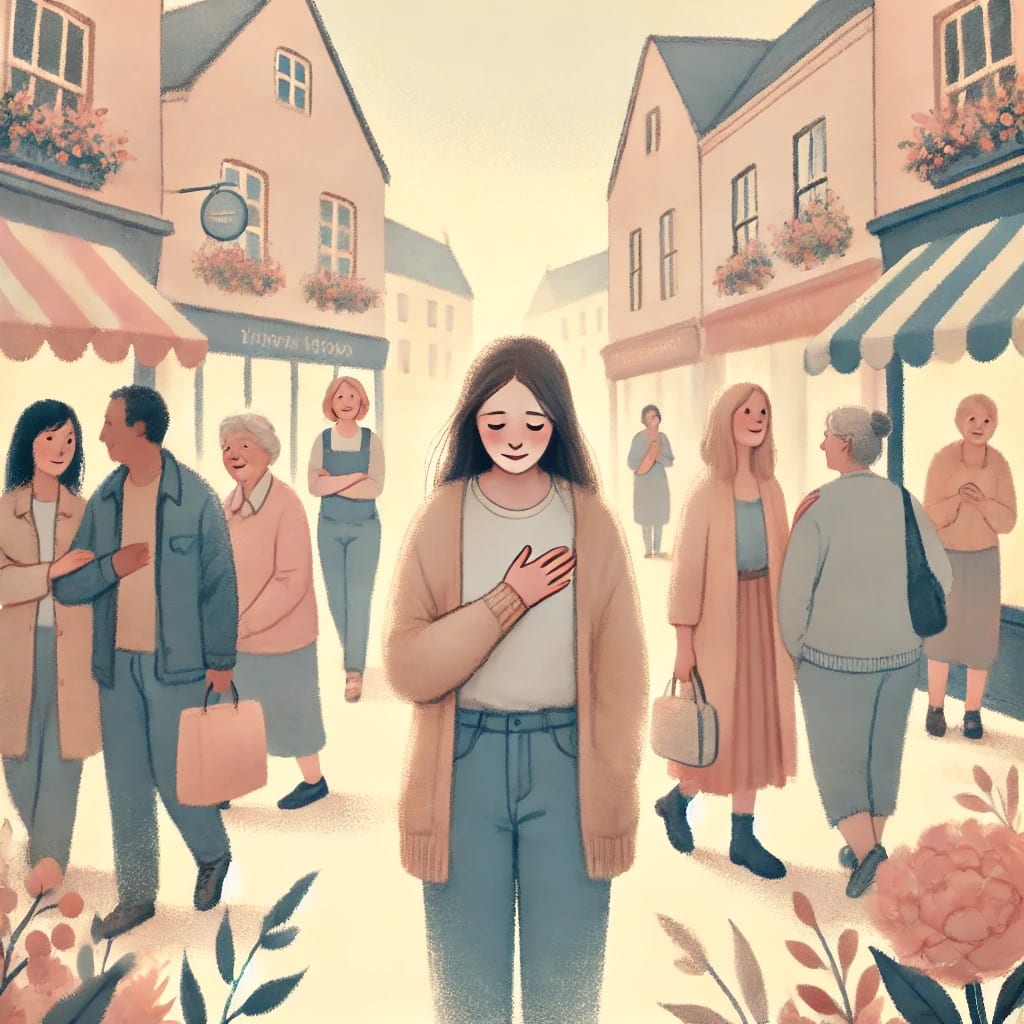
In my town, I’m surrounded by some of the kindest, most well-meaning people. Many are deeply supportive of those who struggle with mental health. They don’t hesitate to check in, even if they barely know you — sometimes even if they don’t know you at all.
And honestly, that’s beautiful. I appreciate their kindness, and I recognize the good intentions behind their actions. For someone like me, who shares my experiences through writing, I know my words reach people. I know my struggles have a face in the community. And that visibility has drawn compassion.
But here’s the part people often don’t see:
Sometimes, even kindness can be overwhelming.
You see, I live with two serious mental health conditions: Post-Traumatic Stress Disorder (PTSD) and Social Anxiety. These are not simply passing feelings or general nervousness. They are powerful, deeply rooted responses to past trauma — and they shape the way I experience the world every single day.
The Weight of Unseen Triggers
For me, one of the biggest PTSD triggers is being approached by strangers. My mind doesn’t calmly register “friendly face” or “harmless conversation.” Instead, it flashes red: danger, vulnerability, fear.
Social anxiety compounds that. It can take something as small as a tap on the shoulder or a sudden question to send me into a spiral of panic. My heart races, my thoughts blur, and I feel the overwhelming need to get away — fast.
There are days when I can manage brief interactions. Days when I’m grounded enough to smile, chat, and even enjoy the company of someone new. But there are also days when simply walking down the street takes everything I have. On those days, any approach — no matter how kind — can feel like too much.
People can’t see what’s happening inside my head. They might notice me stammering, or walking away quickly, or avoiding eye contact. But they don’t see the flashbacks. They don’t feel the anxiety that tightens in my chest or the fear that comes roaring back from events long past.
What Trauma Leaves Behind
My past is filled with repeated experiences of violence and fear — both in my home and outside of it. These aren’t distant memories that fade over time. They’re etched into my nervous system. They live in the reactions I can’t control, even when I wish I could.
PTSD isn’t about the event itself anymore — it’s about what lingers long after. The triggers. The panic. The inability to feel safe, even when logic says I should.
And it’s not just the past that causes problems — it’s the constant mental tug-of-war in the present. If I stay inside to avoid triggers, I feel isolated and imprisoned by my fear. But when I do go out, I risk being triggered by well-intentioned strangers, which can lead to full-blown panic attacks.
It’s a painful balancing act, and one that many people simply don’t understand.
When Kindness Collides with Anxiety
People often think they’ve done something wrong when I don’t respond warmly. They might ask if I’m okay, and I’ll smile politely, walk away, and say nothing more. To them, it might seem cold. Dismissive. But I’m not trying to be rude — I’m trying to survive the moment.
The truth is, I don’t dislike people. I enjoy connecting with others. In fact, on my good days, I can be a total social butterfly. I love deep conversations, shared laughter, and feeling seen. But my good days don’t happen every day. And when a bad day hits, being approached — even with the best of intentions — can feel terrifying.
I want people to know: It’s not your fault. My panic and fear are not because of anything you did. It’s what my brain and body do when trauma is triggered. It’s how I protect myself from a danger that isn’t even there anymore — but still feels real.
Understanding Instead of Assuming
Mental health isn’t always visible. You can’t always see the fear in someone’s eyes, or the trembling in their hands, or the way their heart pounds. You might not understand why someone goes from calm to anxious in seconds, or why they walk away without saying much.
But please, resist the urge to assume. Don’t take it personally if someone like me needs space. Don’t push us to open up when we’re clearly trying to escape. Just offering a smile and respecting our boundaries is often the greatest kindness you can give.
Living with Compassion — for Ourselves and Others
If you’ve ever seen me smile and walk away, I hope you know I’m not brushing you off. I’m just doing my best with what I have in that moment. Some days I’ll talk. Some days I’ll hide. But I never stop appreciating the warmth and support of the community around me.
And to anyone reading this who feels the same — overwhelmed by kindness, afraid of crowds, navigating your own version of anxiety or PTSD — I see you.
You’re not broken. You’re not alone.
We’re doing the best we can, and that’s more than enough.
About the Creator
Muhammad Hamza Safi
Hi, I'm Muhammad Hamza Safi — a writer exploring education, youth culture, and the impact of tech and social media on our lives. I share real stories, digital trends, and thought-provoking takes on the world we’re shaping.
Keep reading
More stories from Muhammad Hamza Safi and writers in Education and other communities.
"Earnestly: Becoming Myself Beyond the Binary"
2004 In high school, I was a powerlifter. I loved the strength it gave me, the feeling of power in my body. But peers—crude and immature—joked that my "tits would get hard." I knew what they meant: my chest was small, flat, shaped more like pecs than breasts. Defined. Muscular. Masculine. In their eyes, that was something unfitting. Disgusting. Unwomanly.
By Muhammad Hamza Safi10 months ago in Education
Understanding Scaling with Quality Control
Business growth is often seen as a positive milestone that reflects increasing demand, improved market presence, and stronger financial performance. However, growth also introduces operational complexity. When companies expand production, services, or geographic reach, maintaining consistent standards becomes more challenging. For this reason, organizations must focus on effective scaling with quality control measures to ensure that expansion does not reduce reliability or customer satisfaction.
By Devin Doyle of Newport Beach2 days ago in Education
The Digital Nomad Blueprint
In a not-so-distant future, where technology thrived and the world became increasingly connected, many people chose to break free from traditional lifestyles. Among them was a young woman named Mia. Mia was a digital nomad, traveling the globe with her laptop, working remotely while exploring new cultures. Her heart was set on living life to the fullest, but she was also searching for something greater—a sense of purpose.
By Hamad Afridi 5 days ago in Education



Comments
There are no comments for this story
Be the first to respond and start the conversation.