
What the Teacher Didn’t Say
One Student. One Teacher. A Lifetime of Unspoken Truths

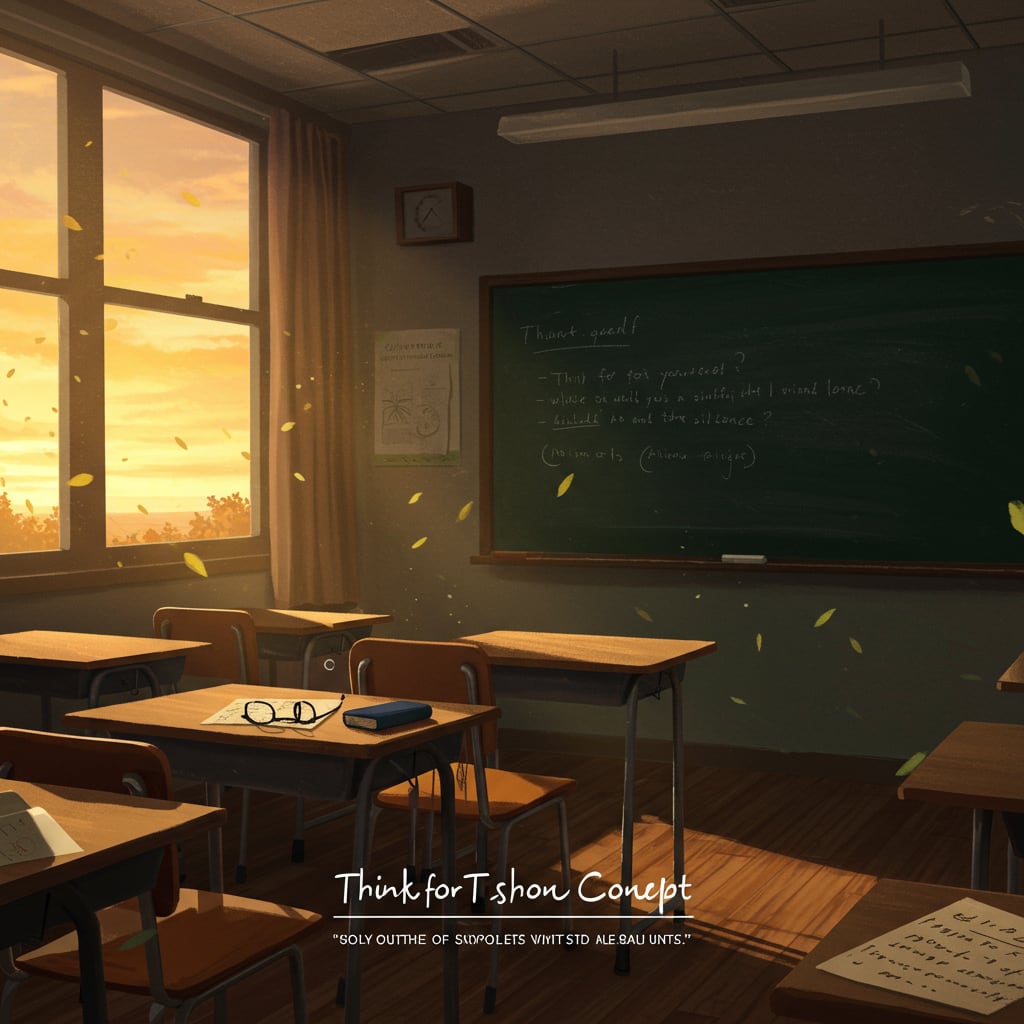
In the final row of Class 9B, Armaan sat slouched behind a dog-eared English textbook, chewing the end of his pen, eyes fixed not on the board, but on the grey clouds gathering beyond the classroom window. It had rained that morning. He wished it would again. Rain had a way of making everything feel quieter, as if the world was pausing for a moment.
Mr. Dev, the English teacher, walked into the room with his usual quiet authority. He didn’t slam books or raise his voice. He simply existed with a kind of calmness that demanded attention. Students respected him—not because they feared him, but because he spoke like he meant every word.
"Today," Mr. Dev said, brushing chalk dust from the board, "we talk about unsaid things—the words between words."
Some students perked up. Armaan didn’t. He was too wrapped in his own silence.
At home, silence was a familiar guest. His father had left three years ago, and his mother worked two jobs, barely speaking during dinner. Armaan had learned early that not everything needed to be said. Sometimes, things were just understood.
But in class, he felt invisible. He rarely raised his hand. He turned in essays he never got feedback on. He was neither failing nor excelling—just… there.
Then came the assignment.
“Write a letter,” Mr. Dev instructed, “to someone you’ve never spoken your truth to. It doesn’t have to be sent. But it has to be honest.”
Armaan rolled his eyes. Another emotional homework.
That night, he stared at the blank page. Then, without meaning to, he wrote:
Dear Dad,
I stopped being angry a while ago.
I just wish you’d told me why.
Mom still looks at your chair sometimes.
I pretend I don’t notice.
I guess I miss you.
But mostly, I miss who I thought you were.
He didn’t reread it. He folded the paper and slid it into his notebook. The next day, without thinking, he turned it in with the rest of his assignments.
Weeks passed. Mr. Dev didn’t mention the letter. Armaan assumed he hadn’t read it. Just another thing lost in a pile of papers.
But something shifted.
Mr. Dev began calling on Armaan more often. Not to embarrass him—just to hear what he thought. He started leaving handwritten notes on Armaan’s essays: “Strong voice,” “This line sings,” “I see you.”
Those three words—“I see you”—were the ones that stayed.
By the end of the year, Armaan had written five short stories, three poems, and one personal essay that Mr. Dev submitted to a national competition. It didn’t win. But for the first time, Armaan felt like he could say something that mattered.
And then, like that, school ended.
Armaan never said goodbye properly. He assumed he’d visit, write, thank Mr. Dev for noticing him. But college, internships, and life happened. He didn’t go back.
Fifteen years later, while home visiting his mother, Armaan walked past his old school. On a whim, he entered.
The receptionist looked up from her desk. “Mr. Dev? He retired last year. Cancer. He passed away in December.”
The words hit like a sudden rainstorm—sharp, unexpected, and cold.
She added, “He left a box for one student. Said he’d know who it was for.”
Inside was a small journal. On the first page was Armaan’s letter to his father. Below it, in Mr. Dev’s unmistakable handwriting:
I never responded—not because I didn’t care, but because I wanted you to keep writing.
The words you held back carried more truth than most people ever speak.
Your voice matters. Don’t ever let the world quiet it.
– Mr. Dev
Armaan closed the journal and pressed it to his chest. He finally understood.
Mr. Dev had taught him more than grammar and metaphors.
He had taught him how to speak—even when nothing was said.
About the Creator
amir zeb
i am writing stories of my own. i will be publishing a story every week ,make sure you read the exclusive content each week to further understanding the stories. you can find me on Facebook,twitter,Instagram.
Keep reading
More stories from writers in Education and other communities.
The Value of Hard Work
Hard work is one of the most important qualities for success in life. It means putting effort, time, and dedication into our tasks and responsibilities. Many people dream of becoming successful, but success does not come easily. It requires patience, determination, and continuous effort. Hard work helps people achieve their goals and build a better future. It also teaches discipline and responsibility, which are necessary for personal and professional growth.
By aadam khan3 days ago in Education
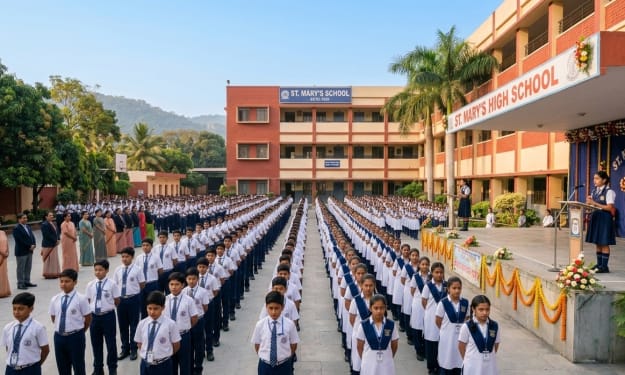
A School Morning Assembly
Morning assembly is an important activity in many schools. It is a daily gathering of students and teachers before the start of classes. Usually, the assembly takes place in the school ground or in a large hall. All the students stand in lines according to their classes while teachers supervise them. Morning assembly helps students begin their day in a disciplined and organized way. It also creates a positive environment for learning. The morning assembly usually begins with a prayer. The prayer helps students feel calm and focused. It gives them a peaceful start to the day. In many schools, the national anthem is also sung during the assembly. Singing the national anthem together creates a feeling of respect and love for the country. It also helps students feel united as members of the same school community.
By aadam khan3 days ago in Education
Guard Your Battery
Why are some people so attractive just by standing there? It’s not because they are "likable," but because they don’t need everyone to like them. I realized later that truly charismatic people allow themselves to be criticized, but they never criticize themselves. They never try to please the world; instead, the world stops to watch them.
By Emily Chan - Life and love sharing5 days ago in Poets



Comments (2)
Oh great 😃 keep it up And support each other
great good job