
What Makes ITIL® Important?
A comprehensive approach to ITSM is offered by ITIL. It enables companies to work with the IT team to provide stakeholders with IT services. The following are some advantages that firms can obtain from using ITIL Practices: lower prices
exceptional IT services
increased productivity at work
greater return on investment (ROI)
increased client satisfaction
improved use of resources ITIL® has a long history.
Let's examine each version in order to understand ITIL's evolution. ITIL v1
To counteract the poor quality of IT services purchased by the British government, the CCTA introduced the initial iteration of ITIL in the late 1980s. The four main ideas of ITIL v1 were as follows: Manages availability of IT services (infrastructure, procedures, tools, roles, etc.) in accordance with business needs.
Managing on and takes care of any resource and service-related performance-related issues.
Management of contingencies: Aids in spotting weaknesses and aids in averting such situations.
Cost management: Assists in providing and managing IT resources and assets at a reasonable cost.
ITIL v2
All the ITIL-related publications were combined into nine books with the release of ITIL v2, which was in 2001. The two books with the greatest circulation for this version were: Clear procedures are provided for managing service outages as part of the service support.
A set of guidelines, regulations, and restrictions that are utilised in the planning, development, and deployment of services.
In contrast to ITIL v3, this version did not have a structured service lifecycle. Provides strategies for efficiently and effectively designing IT services.
Planning, creating, testing, and delivering services into client environments are all included in the concept of service transition.
Service operations: Reduces the likelihood of service failure and ensures that only authorised users have access to IT services.
Constant service improvement makes ensuring that IT services are consistently in line with evolving business requirements.
ITIL 2011 v3
This edition has a few key revisions that update the ideas of ITIL v3: Service strategy: For those who develop and carry out an IT strategy that complies with business needs, ITIL 2011 V3 recommended a new service called service strategy manager.
Implements technical standards into the service design process and coordinates efforts across all designs.
Transition of services: Implements efficient change management to reduce the failure risk for the service.
Service operations: Upholds procedures for handling service requests effectively and efficiently.
Continuously improving services: introduces the improvement process using a seven-step paradigm that is simple and clear:
Determine your improvement plan.
What will you measure?
assemble the data
Analyze the information and process the data.
Present the data and make use of them.
Execute enhancement
ITIL 4
The most recent version of ITIL was released by AXELOS in February 2019. Incorporating the most recent developments in technology and service management, ITIL 4 serves as a foundation for businesses going through a digital transformation. ITIL4 is made up of two main parts: The four-dimensional model is one. Organizations and people: Employees in an organisation should be aware of their duties in contributing to its success.
Information and technology: This category includes knowledge, information, and techniques needed for service management.
Contracts and other agreements between businesses and their partners should be included. The same goes for suppliers.
Processes and value streams: whereas a clearly defined process might increase productivity, provides a series of processes that a business utilises to generate and deliver products and services to a consumer.
2. ITIL Service Value System: A collection of actions taken by a business to provide end users with a worthwhile result. It contains: guiding principles: Add value for your clients and business.
Governance: Controls and keeps an eye on the organization's performance.
The service value chain describes the series of tasks that a company completes in order to offer its customers a valuable good or service.
Constant improvement: Using an iterative process to make sure the organization's performance matches customers' needs34 different management practises have been identified as being effective at assisting firms in achieving their objectives.
Why use ITIL?
The structure that makes up ITIL is divided into a number of stages, which are further divided into more than two dozen ITIL processes. The summary is as follows:
Framework for ITIL®
The five service lifecycle stages in the ITIL framework are:
Service Approach
Service Transition Service Design
Operation of services
Continuous Service Excellence (CSI)
The following 26 ITIL processes are then divided up into these stages: ITIL® Methods
The 26 ITIL processes are broken down into the five stages of the service lifecycle.
Service Strategy: Management of the following: Demand, Service Portfolio, Financial, and Business Relationship
Service Design: Management of the Service Catalog, Availability, Information Security, and Service Level Management, Continuity of IT Service, Design Management, Supplier Management
Service Transition: Planning and assistance for the transition, Management of releases and deployments, change evaluation, management of service assets and configuration, testing and validation of services, Knowledge administration
Access management, event management, service request fulfilment, service level management, incident management, and problem management are examples of service operations.
Seven-step process for continuous service improvement
What Are the ITIL Benefits for Organizations? Why is that significant?
A comprehensive approach to ITSM is offered by ITIL. It enables companies to work together with their IT team to provide stakeholders with IT services. Let's look at some of the advantages ITIL processes offer to a company: improves readable
enhances decision-making and service quality
enables high-quality IT services while lowering expenses
raises the productivity of businesses
enhances return on investment (ROI) improves consumer satisfaction
increases resource efficiency
What Should I Understand About ITIL® 4 Modules?
A stream of four units makes up the ITIL 4 Management Professional Certification: Specialist in ITIL 4 Design, Execute, and Support
ITIL 4 Specialist: Creating Value for Stakeholders
Specialist in ITIL 4 High-speed IT
Direct, Plan, and Improve ITIL 4 Strategy.
The IT professionals who will use these modules are those who need the technical and practical know-how to manage reliable IT-enabled teams, services, and workflows. You must finish all the modules if you want to become an ITIL 4 Strategic Leader or Managing Professional. Once you have done so, you will understand ITIL much better and be able to use it effectively.
About the Creator
Roshni Chauhan
Hii I am Roshni content writer
Keep reading
More stories from Roshni Chauhan and writers in Education and other communities.
Prince2 Certification
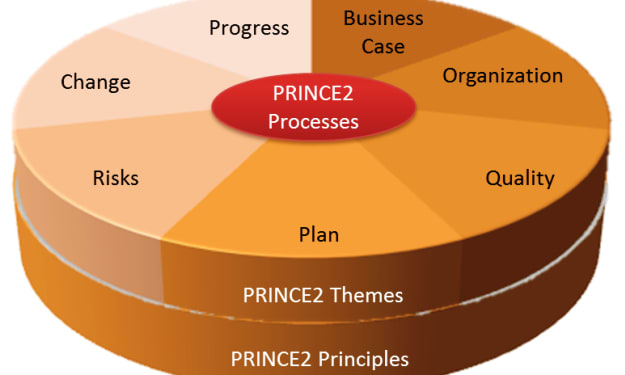
More than 150 countries use the Project Management Methodology known as PRINCE2, or Projects IN Controlled Environments. It's a methodical approach that emphasises control and organization throughout the overall project. Every project begins with a comprehensive project plan, each step of the process is planned, and any loose ends are tied up when the project is complete. But what is PRINCE2 project management in exercise? Keep reading for the underlying ideas and seven-step method of this strategy.
By Roshni Chauhan3 years ago in Education
IQ Tests and the Human Mind: A Deeper Look
The human mind has fascinated scientists, philosophers, and educators for centuries. One of the most widely known tools for exploring human intelligence is the IQ test. Today, with easy access to an iq test free online, millions of people are discovering more about their cognitive abilities. But what do IQ tests really tell us about the human mind, and how should we interpret their results? Taking a deeper look reveals both the strengths and limitations of IQ testing in understanding intelligence.
By Fast Learner4 days ago in Education
Life in the Ranks: The Overlooked Struggles of Military Service
Military life is often admired from a distance. The uniform, the discipline, and the mission all project a powerful image of strength. Yet, behind this image are real people facing real challenges. The structured lifestyle and constant state of readiness can be mentally and emotionally exhausting. Service members don’t just serve during deployments—they live a demanding reality every day, regardless of where they are stationed.
By Trish Schnabel7 days ago in Education
Instructions Included Challenge Winners
For the Instructions Included challenge, we asked writers to tell a story through instructions and to trust the form to carry what could not be said outright. Across the top entries, that trust paid off in many different ways.
By Vocal Curation Team4 days ago in Resources



Comments
There are no comments for this story
Be the first to respond and start the conversation.