
What Is the Effect of Studying Late at Night?
How Late-Night Studying Affects Health, Memory, and Exam Performance

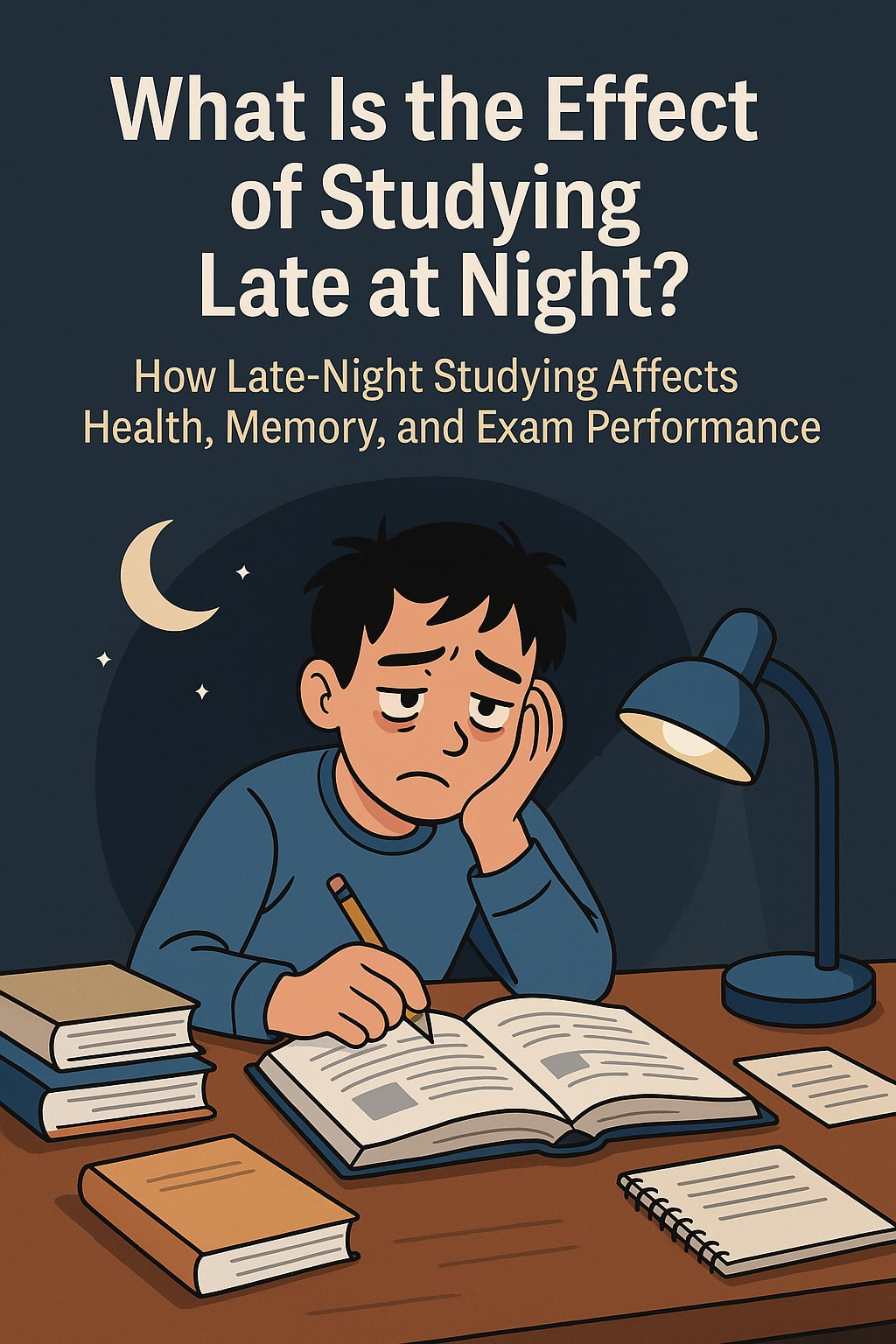
It was a quiet winter evening in the small town of Hillview. The streets were empty, and the lights from the houses flickered like stars. In one of the small houses at the end of Rose Street, a boy named Arjun sat at his desk with a pile of books. He was a 16-year-old student in class 10, and his final exams were just two weeks away.
Arjun was a hardworking student. He always wanted to score good marks and make his parents proud. But he had one big problem—he believed that the best time to study was late at night. While others went to bed by 10 p.m., Arjun would just begin his study session.
"At night, it is so peaceful. No noise, no distractions," he often said to himself.
His parents, Mr. and Mrs. Mehta, were worried. His mother would often say, “Beta, you should sleep early and wake up early. Studying all night is not good for your health.”
But Arjun would smile and reply, “I study better at night, Ma. I can concentrate more. Don’t worry.”
And so, Arjun continued with his late-night routine. Every night, after dinner, he would sit at his desk by 10:30 p.m. and study until 3 or even 4 in the morning. Sometimes, he would take short naps in the afternoon, but many times, he went without proper sleep.
At first, it seemed like everything was going well. Arjun completed many chapters and solved many practice papers. He was confident that he would do well in the exams. But slowly, things began to change.
He started waking up late in the morning. By the time he had breakfast, half the day was gone. He missed his morning walk and didn't get sunlight. His eyes looked tired, and he often had headaches. He started forgetting simple things like where he kept his books or what topic he had just read.
One day, during a mock test in school, Arjun couldn’t focus at all. His eyes felt heavy, and his mind was slow. He tried to remember a formula but just couldn’t. After the test, he sat alone in the classroom, feeling defeated.
His best friend, Rishi, came and sat beside him. “What happened, Arjun? You don’t look well.”
“I don’t know,” Arjun replied. “I studied so much, but I couldn’t recall anything during the test.”
Rishi looked at him and said, “Maybe it’s because you’re not sleeping properly. Our brain needs rest to work well.”
Arjun didn't answer, but he started thinking. Was his night study habit hurting him instead of helping?
That night, when he came home, he looked in the mirror. His eyes had dark circles. His skin looked pale. He remembered how fresh and happy he used to be before he started this habit. He also remembered how his mother told him that proper sleep was important.
Feeling confused, he opened his laptop and searched: “What is the effect of studying late at night?”
He read many articles. They all said the same thing:
Studying at night can reduce memory power.
Lack of sleep can cause stress and anxiety.
The brain does not work well without rest.
Morning study is better for focus and health.
Arjun sat back in his chair, surprised. He always thought he was doing the right thing. But now, he understood why he was feeling so tired and weak.
The next day, he went to his parents and said, “Ma, Papa, you were right. Studying all night is not helping me. I want to change my routine.”
His parents smiled with relief. “That’s good, Arjun. Health is just as important as marks,” his father said.
From that day, Arjun made a new timetable. He started sleeping by 10 p.m. and waking up at 6 a.m. He did light exercises, ate healthy food, and studied in the morning when his mind was fresh. Within a week, he started feeling better. His memory improved, and he felt more confident.
When the final exams came, Arjun was ready. He gave each paper with full focus. And when the results were announced, he was among the top five students in the class.
His teacher said, “Well done, Arjun. You worked smart and hard.”
Arjun smiled and thought, Smart work also means taking care of yourself.
Since then, whenever someone asked him, “What is the effect of studying late at night?” Arjun would say with a laugh, “It makes you sleepy, slow, and forgetful! Trust me, I’ve tried it!”
Moral of the Story:
Studying late at night may seem peaceful, but it can harm your health and memory. A proper sleep routine and a fresh mind are key to learning better and performing well.
About the Creator
Tahir khan
Subscribe for more interesting and motivational stories....LOVE U ALL
Keep reading
More stories from Tahir khan and writers in Education and other communities.
Why Do Some People Fail to Achieve Their Potential?
In a small town called Riverhill, there lived a boy named Arjun. He was smart, curious, and full of big dreams. Everyone in his school said he was one of the brightest students. His teachers believed he would become something great in the future — maybe a scientist, an engineer, or even a leader. His parents were proud of him, and his friends always looked up to him.
By Tahir khan10 months ago in Motivation
The Impact of Aviation on Remote Communities and Global Trade
Many communities around the world are located in places where geography makes transportation difficult. Mountain villages, island territories, remote northern settlements, and rural regions often lack reliable road or rail systems that connect them to major economic centers. Aviation has emerged as one of the most effective solutions for bridging these distances. As explained by Glenn Allyn, an aviation professional associated with White Plains, New York, air transportation enables remote communities to interact with global economies by providing fast, reliable connections for commerce, travel, and essential services.
By Glenn Allynabout 4 hours ago in Education
Bomb Scare
It was 2027, and the world never thought it would happen. A missle hit the United States, but it wasn't where they had anticipated. A little town in the northeast was hit by a missile strike, they didn't know why, and they didn't know exactly where it hit, but they did know it was a coastal community, somewhere between Maine and Delaware.
By Gregory Payton7 days ago in Fiction




Comments
There are no comments for this story
Be the first to respond and start the conversation.