
What Is the Edge of the Universe
The concept of the "edge of the universe" captivates both scientists and the public alike, conjuring images of the final frontier where space and time might meet an abrupt end. Yet, this idea is far more complex than it appears at first glance. To understand what the edge of the universe is—or if it even exists—we must delve into the fundamental principles of cosmology, the structure of the universe, and our current understanding of spacetime.

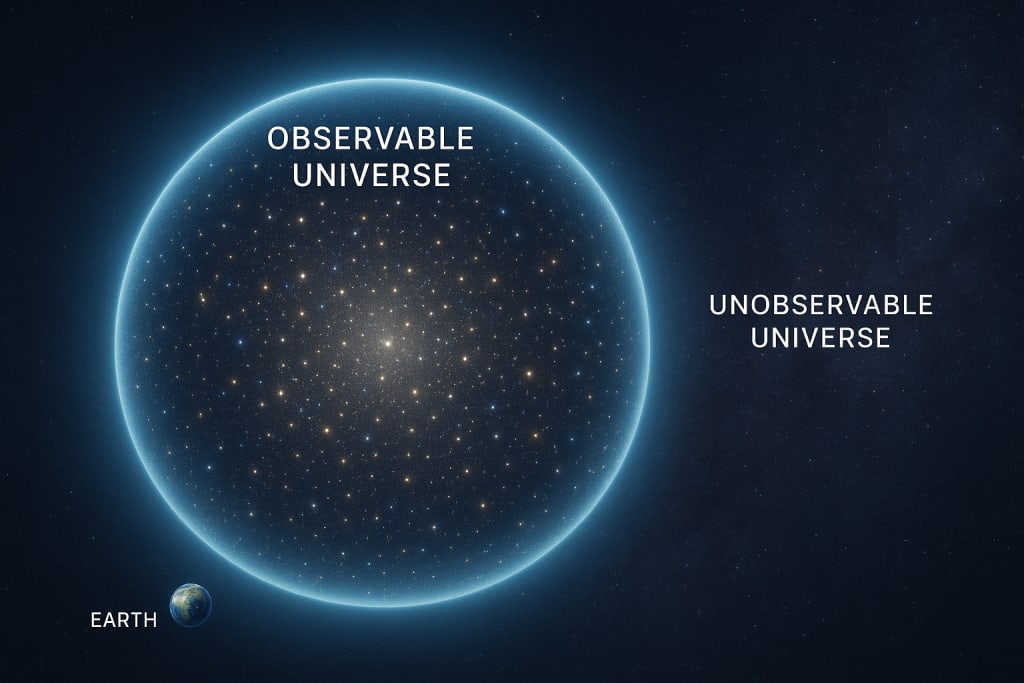
The Observable Universe
First, it’s essential to differentiate between the entire universe and the observable universe. The observable universe refers to the portion of the universe that we can see and study, limited by the finite speed of light and the age of the universe, approximately 13.8 billion years. This means that the farthest we can observe is about 46 billion light-years away, forming a sphere around us.As we look further into space, we see light that has traveled for billions of years, giving us a glimpse into the universe's history. However, this does not mean that we can see the "edge" of the universe; rather, it indicates a limit to our observations. Beyond this limit, the universe continues, potentially infinitely.
The Expanding Universe
One of the key principles of modern cosmology is the idea that the universe is expanding. This expansion was first discovered by Edwin Hubble in the 1920s when he observed that galaxies are moving away from us, with those farther away receding more quickly. This phenomenon is described by Hubble's Law and implies that space itself is stretching.
The expansion leads to the conclusion that the universe does not have a physical edge or boundary. Instead, every point in the universe is moving away from every other point. Imagine the surface of a balloon: as the balloon inflates, every point on its surface moves away from every other point. In this analogy, the surface represents our three-dimensional universe, while the interior and exterior of the balloon represent dimensions beyond our perceptual capabilities.
Is There an Edge?
Given the expanding nature of the universe, the question arises: does the universe have an edge? In the traditional sense, most cosmologists argue that there is no physical edge or boundary. Instead, the universe may be infinite and unbounded. Some models of cosmology even suggest that the universe might be "curved" in such a way that if you travel far enough in one direction, you could end up back where you started, similar to traveling on the surface of a sphere.
This leads us to consider other theories about the universe's structure:
1. Flat Universe: Current observations, particularly those from the Cosmic Microwave Background (CMB) radiation, suggest that the universe is flat on large scales. This means that parallel lines will never meet, and the geometry of space is Euclidean. In a flat universe, there is no edge; it extends infinitely.
2. Closed Universe: In a closed universe, space is positively curved, resembling the surface of a
sphere. In this model, if you travel far enough, you would eventually return to your starting point, indicating that the universe is finite but without an edge.
3. Open Universe: An open universe features negatively curved space, resembling a saddle.
Similar to the closed universe, this model allows for an infinite universe without a definitive edge.
The Concept of the Cosmic Horizon
While there may not be a physical edge, there is a conceptual boundary known as the "cosmic horizon." This horizon marks the limit of what we can observe based on the finite speed of light and the age of the universe. Beyond this horizon lies a region that we cannot see, and thus, we have no information about what exists there. It is crucial to note that the cosmic horizon is not a barrier or edge; rather, it represents our observational limits.
As the universe continues to expand, this horizon will change. Distant galaxies will eventually move beyond our observable limits, becoming forever inaccessible. The universe, thus, will become less and less diverse as time progresses, leading to a scenario known as the "Big Freeze.
"Philosophical Implications
The absence of an edge to the universe raises profound philosophical questions about existence, infinity, and our place within the cosmos. If the universe is infinite, what does that mean for concepts of beginning and end? Are we part of a multiverse, where other universes may exist outside our observable limits? These questions challenge our understanding of reality and invite both scientific inquiry and philosophical reflection.
Conclusion
In summary, the notion of the edge of the universe is a complex topic that intertwines cosmology, physics, and philosophy. The observable universe is bounded by our ability to see and understand, but beyond that, the universe may extend infinitely without an actual edge. Current cosmological models
suggest that the universe is expanding, and depending on its geometry—flat, closed, or open—it may be infinite or finite but unbounded.
While we may never reach the "edge" of the universe in a physical sense, the journey to understand its nature continues to captivate humanity. As our observational technologies advance and our theoretical
frameworks evolve, we may uncover more about the vast, mysterious cosmos we inhabit, further enriching our understanding of the universe and our place within it
About the Creator
Keep reading
More stories from shahkar jalal and writers in Education and other communities.
Was There Time Before the Big Bang?
Understanding the Big Bang The Big Bang theory is the leading explanation for the origin of the universe. It posits that approximately 13.8 billion years ago, the universe began as an incredibly hot, dense point and has been
By shahkar jalal2 months ago in Education
Kiranmala: the legend of the princess who considered magic mountain
Long ago, in a land far away, the queen was panicked, her grasp on reality seemingly slipping. She had given birth to two boys and one girl. But to her horror, before even meeting their father, each child vanished, something else taking their place. She faced accusations of witchcraft and demon sorcery. And though the king loved her, he was easily swayed. He soon grew doubtful and banished his wife, who left the kingdom in anguish. Little did they know, the queen’s jealous sisters were the ones to replace the newborns
By Munesh Yadava day ago in Education
The Human Guide Behind Technical Excellence
Mentorship of skilled technicians plays a decisive role in shaping strong careers and reliable work standards. Technical skill alone does not make a technician capable. Real growth comes from shared experience, steady guidance, and trust built over time. In many industries, mentorship fills the gap between classroom learning and real job demands. It helps technicians move from basic ability to confident performance. This article explores how mentorship supports learning, builds skills, and strengthens the future workforce.
By Michael Gastinelabout 21 hours ago in Education



Comments
There are no comments for this story
Be the first to respond and start the conversation.