
What Is Religion?
What Do You Think If Someone Mention The Word Religion?

What is religion? Sometimes we used the word to define a system or doctrines, or maybe a set of cultural practice shared by a society, and sometimes we use it to refer to a body of myths, or all of these things at the same time.
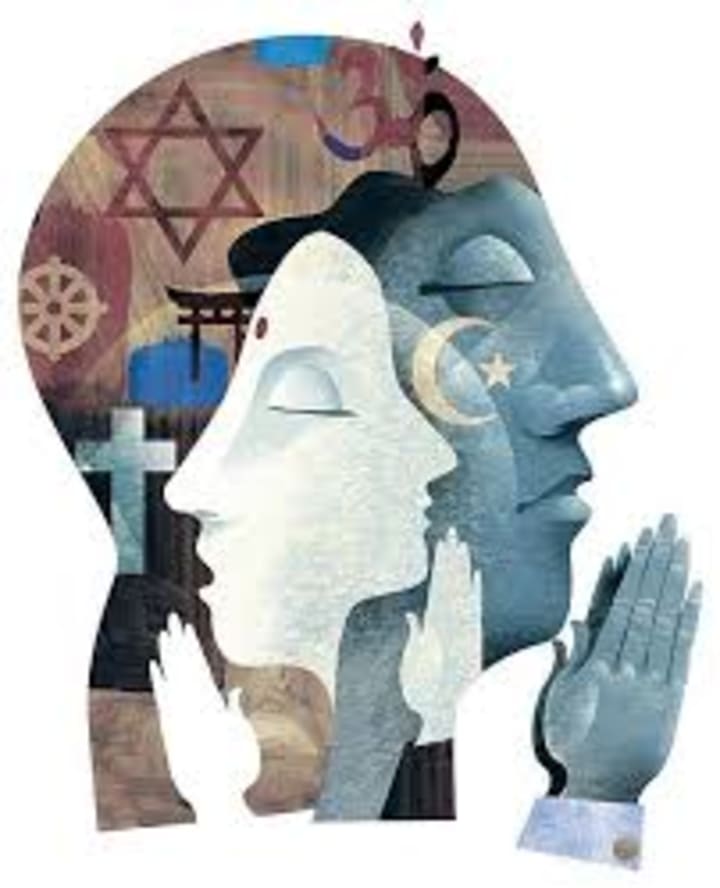
But what constitutes a religion? What makes Buddhism a religion? But Aristotle’s philosophy not? Why do some people say secular humanism is a religion, and other people are like, “No, definitely not”?
Religion is a subjective term with a very blurry definition – depending on who is using the term. My first evidence is that the term religion has shifted meaning over the course of history. The English word “religion” really has little to do with the Latin term “religio” – where we get the modern word.
The Latin word “religio” refers to the socially acceptable cultic duties that people did for the gods, like sacrificing at a state funded temple. “Religio” was in opposition to unsanctioned, suspicious rituals and beliefs which the Romans called “superstisio”.
So for example, Christianity was labeled under “superstisio” at first because the Romans saw it as the wrong way to relate to the gods. But this definition of religion does not match our modern definition of religion, which would encompass both what the Romans thought of as “superstitio” and “religio” under the same concept.
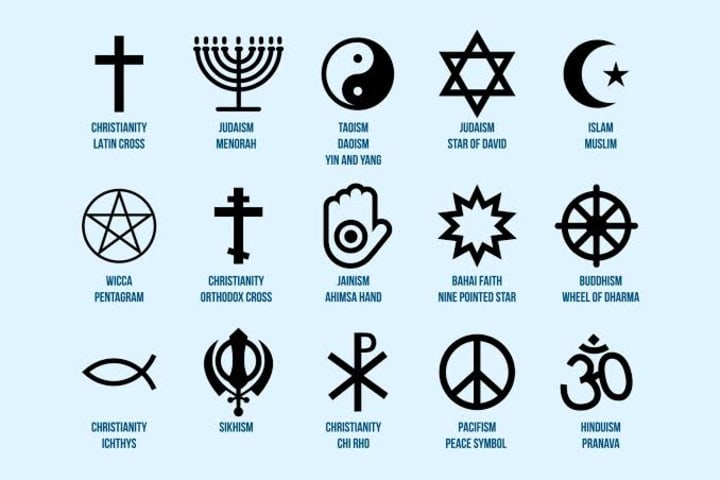
Our category of religion is a modern term strongly shaped by Western scholar in the past 100 years. It really does not exist as a category in other cultures, and especially not in ancient Rome.
So who were this western scholar and what were their definition for religion? The most minimalist definition comes from the anthropologist E.B. Tylor, who defined religion as belief in supernatural beings. Back in the late 19th and early 20th century, anthropologist were obsessed with trying to find the primitive religion, the religion out of which all religions evolved.
Tylor argued that it was this belief in spirits and sacred things that was the foundation of all religion: a vague belief in spirits called animism and dinamism that eventually evolved into polytheism and finally monotheism. Most anthropologists today reject this definition as being too simplistic.The religion evolution theory just does not hold up to scrutiny. And not only that, there is a lot more to religion that just believing in supernatural beings.
What is more popular today is defining religion as fundamentally social phenomenon, something that reflects the needs and concerns of society above everything else.
Emile Durkheim is presumably the most notorious champion of this position. He shortly defines religion as, “a unified system of beliefs and practices relative to sacred things, that is to say, things set apart and forbidden, beliefs and practices which unite into one single moral community called a church, all those who adhere to them.” According to Durkheim, religion is a form of custom that socializes individuals into a larger community, and which provides an obligation to that individual to live by the society’s rules.
For Durkheim, religious beliefs and practices advance an aura of significance to society and the ideology that the society holds as important.
Since religion is so complex, some scholars have given up trying to come up with one unified definition for religion, instead they try to argue for a family resemblances definition.
Ludwig Wittgenstein most famously applied the strategy to games. It might not be possible to find a single characteristic that we can apply to all games, but it is possible to identify similarities.
For example, there is very little similarity between tic-tac-toe and football, but they have family resemblances enough to fall under our category of game. They both have rules, opponents, and are used for leisure.
The philosopher Robert Audi includes on his list characteristics like belief supernatural beings, a distinction between sacred and profane, ritual acts focused on these objects, a moral community believed to be sanctioned by divine beings, worldview concerning the role of humanity in the universe, and a collective organization bound up in this worldview. Not all of these characteristics need to be present to label something as religion, but if it has most of them it probably is a religion.
But what is the one theme, the one unifying concept that will bring all this definitions together? Ironically the one unifying theme is all of this definitions are coming from Western scholars from the past 100 years of history. And here is why that is important: religion as a category may have been invented by modern Western scholars.
We really want a one or two sentence to define religion, something that we can apply to religion no matter what the cultural context or the belief system. But as complex as religion is, that might not be possible. There will always be an exception to your definition.

Jonathan Z. Smith, one of the greatest scholars of religion explains it like this: “Religion is not a native term; it is a term created by scholars for their intellectual purposes and therefore is their to define. It is a second order generic concept that plays the same role in establishing a disciplinary horizon that a concept such as leanguage plays in linguistics or culture plays in anthropology.”
What J.Z. Smith is arguing is that there is no archetypal description of religion that we can apply to all culture and belief. Religion is a very subjective analytical term whose meaning depends on the person using it and on the questions they use to illuminate.
We have people arguing is Scientology a religion? Is Jediism a religion? There is even a famous book that argues Coca-Cola is a religion. Religion is a very subjective concept, and a concept that is very difficult to define.
When someone uses the word religion you can now ask yourself, “Are they using this to define a belief in god or other deities? Are they using it to refer to ritual or philosophical practice? What perspective are they using to the term?”
About the Creator
Keep reading
More stories from Rizqi Rayyan and writers in Education and other communities.
Why Beautiful Things Makes us Happy?
A lot of things can be perceived as beautiful. Landscapes, artwork, stars in the sky, or simply the reflection of the moon in a river. Beauty is nothing tangible, it only exist in our minds as a pleasant feeling. If we have to define it, we perceive something as beautiful if its color, shape, and form are somehow appealing to us.
By Rizqi Rayyan3 years ago in Education
Vertex University Strategy: A Vision for a Better Future for You
Why is the university strategy important to you as a student? It simply puts you at the center, and your future is the focus of its policies and philosophy. Every goal, and every initiative in the strategy is designed to serve your educational journey, support your professional future, and develop your integrated personality. A strategy is not an administrative document that is kept in drawers.
By Vertex University P R E S S5 days ago in Education


Comments
There are no comments for this story
Be the first to respond and start the conversation.