
What is Puppet in DevOps
Puppet's resource abstraction provides a modular and reusable approach to managing system resources, making it easier to define and maintain the desired state of infrastructure components.
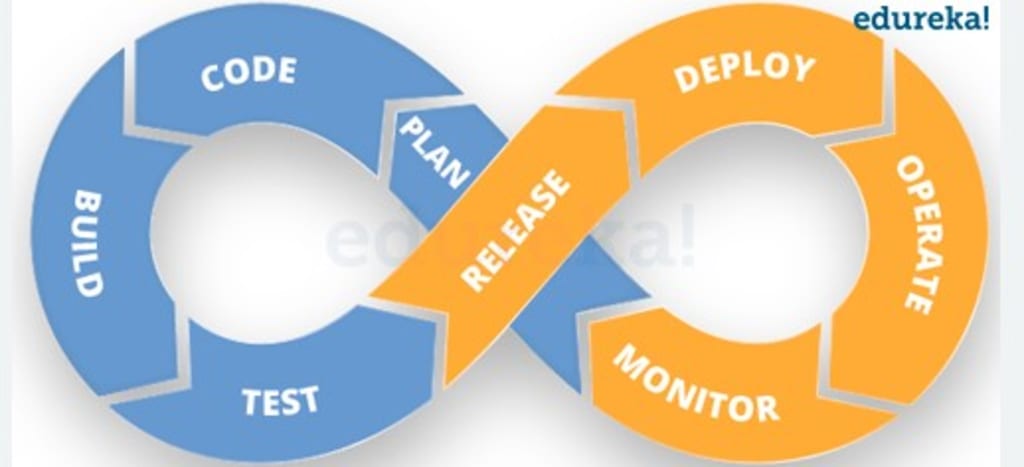
In DevOps, Puppet is an open-source configuration management tool that plays a crucial role in automating the deployment and management of software and system configurations. It provides a powerful framework for defining and enforcing the desired state of infrastructure, servers, and applications. With Puppet, teams can express their infrastructure requirements using a declarative language, known as the Puppet language, which allows them to specify how systems should be configured, including packages, services, files, and settings.
Puppet's automation and orchestration capabilities streamline the process of configuring and managing systems, eliminating the need for manual tasks and reducing the risk of human error. By treating infrastructure configurations as code, Puppet follows the Infrastructure as Code (IaC) principle, allowing for version-controlled management, review, testing, and deployment of infrastructure configurations. Its agent-based architecture empowers organizations with centralized control and management of their infrastructure, as agents installed on managed nodes periodically connect to a Puppet master server to retrieve and apply the desired configurations.
Puppet's resource abstraction provides a modular and reusable approach to managing system resources, making it easier to define and maintain the desired state of infrastructure components. The tool also offers reporting and compliance features that provide insights into configuration status and help ensure adherence to organizational or industry standards.
Puppet can be seamlessly integrated with various tools and technologies commonly used in the DevOps ecosystem, enabling organizations to leverage its capabilities alongside their existing infrastructure, version control, CI/CD pipelines, monitoring systems, and cloud platforms. With Puppet in DevOps, organizations can achieve consistent infrastructure, faster deployments, reduced manual effort, and reliable configuration management, leading to efficient and scalable operations in the DevOps environment.
In DevOps, Puppet is an open-source configuration management tool that automates the deployment and management of software and system configurations. It allows teams to define the desired state of their infrastructure, servers, and applications, and then automatically enforces that state across multiple systems. By obtaining DevOps Certification, you can advance your career in DevOps. With this course, you can demonstrate your expertise in Power BI Desktop, Architecture, DAX, Service, Mobile Apps, Reports, many more fundamental concepts, and many more critical concepts among others.
Here are some key aspects and functionalities of Puppet in DevOps:
1. Configuration Management: Puppet provides a declarative language, known as the Puppet language, to describe the desired configuration of servers, networks, and applications. With Puppet, you define the desired state of your infrastructure, specifying which packages, services, files, and settings should be present on each system.
2. Automation and Orchestration: Puppet automates the process of configuring and managing systems, eliminating the need for manual configuration tasks. It allows you to define the desired configuration once and then apply it consistently across multiple systems, ensuring consistency and reducing human error.
3. Infrastructure as Code: Puppet follows the Infrastructure as Code (IaC) principle, where infrastructure configurations are treated as code. Puppet manifests, which are written in the Puppet language, are version-controlled and can be reviewed, tested, and deployed like any other software code. This brings the benefits of code management practices to infrastructure management.
4. Agent-Based Architecture: Puppet uses an agent-based architecture. Agents, which are installed on the managed nodes, periodically connect to the Puppet master server to retrieve and apply the desired configurations. This architecture allows for centralized control and management of the infrastructure.
5. Resource Abstraction: Puppet abstracts system resources, such as files, services, users, and packages, into reusable and modular units called "resources." Puppet provides a rich set of pre-built resource types, and you can also create custom resource types tailored to your specific needs. Resources enable you to manage the desired state of various components of your infrastructure.
6. Reporting and Compliance: Puppet can generate reports that provide insights into the configuration status of your infrastructure. These reports help track changes, identify inconsistencies, and ensure compliance with organizational or industry standards.
7. Integration and Extensibility: Puppet integrates with various tools and technologies commonly used in the DevOps ecosystem. It can integrate with version control systems, continuous integration/continuous deployment (CI/CD) pipelines, monitoring tools, and cloud platforms. Puppet also provides APIs and extensions that allow you to extend its functionality to meet specific requirements.
By using Puppet in DevOps, organizations can achieve infrastructure consistency, improve deployment speed, reduce manual effort, and ensure repeatable and reliable configurations across their systems. It plays a vital role in managing and automating infrastructure, enabling efficient and scalable operations in the DevOps environment.
About the Creator
Basics on How to Build Good Credit
Your credit score might feel like a mysterious number you only think about when applying for a loan or credit card. But in reality, credit plays a much bigger role in your financial life than most people realize. It can affect everything from the interest rates you pay to whether you’re approved for an apartment or even certain jobs.
By Anthony Bahamondeabout 4 hours ago in Education
How GPS Tracking for Tools and Equipment Can Save Your Business
Tool theft is a growing problem for construction companies, contractors and tradespeople. At kynekt.id we provide best GPS tracking for tools and equipment, Whether it’s a jobsite break-in or equipment walking off during work hours, losing tools can cost thousands of dollars and delay projects. Fortunately, We offer a practical solution that’s becoming more affordable and easier to use every day.
By Kynekt Limited6 days ago in Education
Miss Persephone's Manual to a Seemingly Ordinary Life
Miss Persephone was found at the dining table, her blue eyes swollen, her tears arriving and retreating like the tides of the ocean. Earlier that day, her family had visited her in the retirement home where she had lived for eight years. It was her eightieth birthday.
By Imola Tóth5 days ago in Fiction


Comments
There are no comments for this story
Be the first to respond and start the conversation.