
What is Bitcoin and should we invest
Read this article to learn more

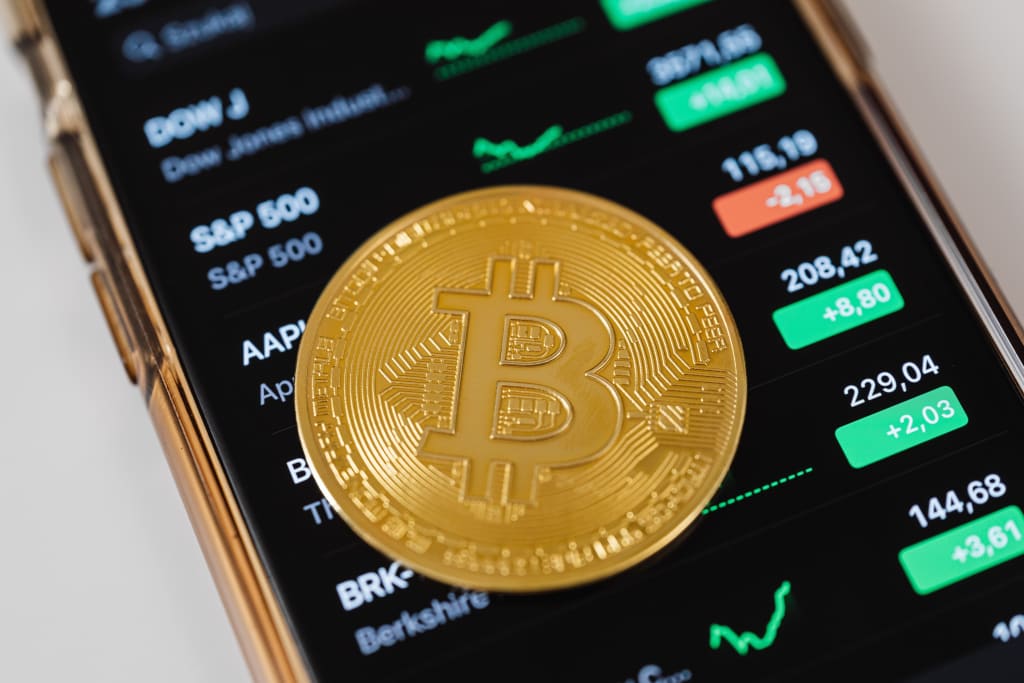
Bitcoin is a digital currency that was created in 2009 by an unknown person or group using the name Satoshi Nakamoto. Unlike traditional currencies, which are issued by governments, Bitcoin is decentralized and operates independently of any central authority. Transactions are recorded on a public ledger called the blockchain, which is maintained by a network of computers around the world. Bitcoin has gained popularity in recent years as a speculative investment, with some people investing in the currency in the hopes of making a profit.
However, the question of whether to invest in Bitcoin is a complex one that requires careful consideration of several factors. In this blog post, we will provide an overview of Bitcoin, including its history, how it works, and the risks and benefits of investing in the currency.
History of Bitcoin
The origins of Bitcoin can be traced back to a white paper published in 2008 by Satoshi Nakamoto, which outlined the concept of a decentralized digital currency. The first Bitcoin transaction occurred on January 3, 2009, when Nakamoto mined the first block of the Bitcoin blockchain, known as the Genesis Block. This transaction included the message "The Times 03/Jan/2009 Chancellor on brink of second bailout for banks," a reference to a headline from The Times newspaper on the same day.
Bitcoin gained early popularity among libertarians and tech enthusiasts who were attracted to the idea of a decentralized currency that operated outside the control of governments and financial institutions. Over time, Bitcoin gained wider acceptance and began to be used for a variety of purposes, including online purchases and international money transfers.
How Bitcoin Works
Bitcoin operates on a decentralized network that is maintained by a global community of users. Transactions are recorded on a public ledger called the blockchain, which is a digital record of every Bitcoin transaction that has ever occurred. The blockchain is maintained by a network of computers around the world, which use a consensus algorithm to ensure that all transactions are valid and that the ledger is accurate.
When someone sends Bitcoin to another person, the transaction is broadcast to the network, where it is verified by a network of computers known as nodes. These nodes use complex algorithms to verify the transaction and ensure that the sender has the necessary funds to complete the transaction. Once the transaction has been verified, it is added to the blockchain, where it is recorded permanently.
Bitcoin mining is the process by which new Bitcoins are created and transactions are validated. Bitcoin mining involves using powerful computers to solve complex mathematical problems, which are used to verify transactions and maintain the blockchain. Miners are rewarded with new Bitcoins for their efforts, which helps to incentivize them to continue validating transactions and maintaining the network.
Risks and Benefits of Investing in Bitcoin
Investing in Bitcoin can be a risky proposition, as the value of the currency can be highly volatile. The price of Bitcoin has fluctuated wildly in recent years, reaching an all-time high of nearly $65,000 in April 2021 before plummeting to around $30,000 just a few months later.
One of the benefits of investing in Bitcoin is that it offers the potential for high returns. In its early years, Bitcoin experienced rapid growth and some early adopters made significant profits from their investments. However, as the currency has become more widely adopted, its growth has slowed and its price has become more volatile.
Another benefit of investing in Bitcoin is that it offers a degree of anonymity and security that is not available with traditional currencies. Transactions are recorded on the blockchain, which is a public ledger that is accessible to anyone with an internet connection. However, because transactions are recorded using pseudonyms rather than real names, Bitcoin offers a degree of anonymity that is not available with traditional currencies.
However, investing in Bitcoin also carries several risks. One of the biggest risks is that the value of the currency can be highly volatile which means that investors can experience significant losses if the price of Bitcoin drops sharply. This volatility is due in part to the fact that Bitcoin is still a relatively new technology and is subject to a range of market forces that can influence its price.
Another risk of investing in Bitcoin is that it is not regulated by any central authority, which means that investors are not protected by the same laws and regulations that apply to traditional investments. This lack of regulation also makes Bitcoin vulnerable to fraud and other illegal activities, which can further increase the risks associated with investing in the currency.
Finally, investing in Bitcoin requires a certain level of technical knowledge and expertise, as the currency operates on a complex digital network that can be difficult for beginners to navigate. Investors who are not familiar with the technology underlying Bitcoin may be more likely to make mistakes or fall victim to scams, which can result in significant losses.
Should We Invest in Bitcoin?
The decision of whether to invest in Bitcoin ultimately depends on several factors, including an investor's risk tolerance, financial goals, and level of knowledge about the currency. While Bitcoin has the potential to generate significant returns, it also carries a high degree of risk and should be approached with caution.
Investors who are interested in Bitcoin should take the time to educate themselves about the currency and its underlying technology, as well as the risks and benefits of investing in digital currencies. They should also carefully consider their financial goals and risk tolerance before investing any money in the currency.
In addition, investors should consider diversifying their portfolios to reduce their exposure to any one asset, including Bitcoin. Diversification can help to minimize risk and ensure that investors have a balanced portfolio that is better able to weather fluctuations in the market.
Conclusion
Bitcoin is a decentralized digital currency that operates independently of any central authority. While the currency has the potential to generate significant returns, it also carries a high degree of risk and should be approached with caution. Investors who are interested in Bitcoin should take the time to educate themselves about the currency and its underlying technology, as well as the risks and benefits of investing in digital currencies. They should also carefully consider their financial goals and risk tolerance before investing any money in the currency. Ultimately, the decision of whether to invest in Bitcoin is a complex one that requires careful consideration of a range of factors, and investors should seek professional advice before making any investment decisions.
About the Creator
The Clockmaker’s Apprentice
In a narrow street tucked between busy markets stood a small clock shop that most people passed without noticing. The wooden sign above the door read “Hassan & Son – Fine Timepieces,” though Hassan had no son, only an apprentice named Idris. At seventeen, Idris was restless, ambitious, and impatient. He had joined the shop hoping to learn a skill quickly and move on to something bigger. What he did not realize was that time itself would become his greatest teacher.
By Sudais Zakwana day ago in Education
The People We Become When No One Is Watching
We live in a world where almost everything is visible. Opinions are posted. Achievements are shared. Moments are documented. Even the most ordinary parts of life can be turned into content if someone angles their phone the right way. Visibility has become a kind of currency — a way to signal who we are, or at least who we want people to believe we are.
By Thomas McCorry6 days ago in Education




Comments
There are no comments for this story
Be the first to respond and start the conversation.