
What is Artificial Intelligence?
With Examples

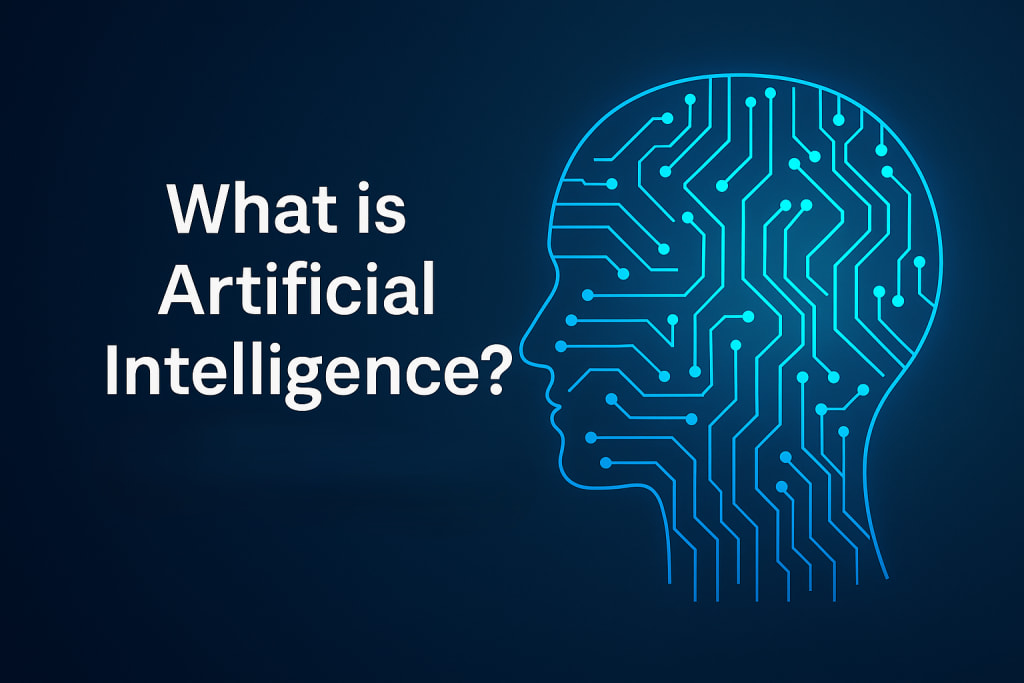
Artificial Intelligence (AI) is one of the most transformative technologies of the 21st century, shaping everything from the way we shop and work to how we drive and even create art. But what exactly is AI, and how does it impact our everyday lives? In this article, we'll explore what artificial intelligence really means, provide clear examples of how it’s used, and take a look at where it’s heading.
What is Artificial Intelligence?
At its core, artificial intelligence refers to machines that can mimic human intelligence. This includes the ability to learn from data, solve problems, understand language, and make decisions. AI systems use algorithms—sets of rules or instructions—to process large amounts of information and perform tasks that typically require human thinking.
Unlike traditional computer programs, which follow a specific sequence of instructions, AI systems can adapt to new inputs and improve over time. This adaptability is what sets AI apart and makes it so powerful.
A Brief History of Artificial Intelligence
The concept of artificial intelligence has been around for decades, with roots in science fiction and philosophy. But AI as a scientific field began to take shape in the 1950s. Here are a few key milestones:
1950: Alan Turing publishes "Computing Machinery and Intelligence" and introduces the Turing Test to determine if a machine can exhibit human-like intelligence.
- 1956: The term “artificial intelligence” is coined at the Dartmouth Conference, marking the formal birth of the field.
- 1997: IBM’s Deep Blue defeats world chess champion Garry Kasparov.
- 2011: IBM Watson wins Jeopardy! against human champions.
- 2012–present: Machine learning and deep learning gain traction, leading to advancements in speech recognition, image processing, and autonomous systems.
Types of Artificial Intelligence
Artificial intelligence can be broadly categorized into three types:
1. Narrow AI (Weak AI)
Narrow AI refers to systems that are designed to perform a specific task. These are the most common forms of AI today and include applications like voice assistants, spam filters, and facial recognition.
Example: Siri and Alexa are narrow AI systems that understand voice commands and perform tasks like setting alarms or playing music.
2. General AI (Strong AI)
General AI is a theoretical form of AI that would be capable of understanding and learning any intellectual task that a human can do. It would possess consciousness and the ability to reason, plan, and adapt like a person.
Example: No current system has achieved general AI, but it's a long-term goal in the field.
3. Superintelligent AI
This is a hypothetical future AI that surpasses human intelligence across all domains. It could outperform humans in science, creativity, general wisdom, and social skills.
Example: While entirely speculative, superintelligent AI is a common theme in science fiction and a focus of ethical debate.
Real-World Examples of Artificial Intelligence
1. Virtual Assistants
AI powers digital assistants like Siri, Google Assistant, and Amazon Alexa, which can interpret voice commands, provide information, and even control smart home devices.
2. Recommendation Systems
Ever wonder how Netflix suggests what to watch next, or how Amazon knows what products you might like? These platforms use AI-based recommendation engines that analyze your behavior to personalize content.
Example: Spotify creates custom playlists based on listening history using AI algorithms.
3. Self-Driving Cars
Companies like Tesla and Waymo are developing autonomous vehicles that use AI to interpret sensory data (like cameras and radar) and make real-time driving decisions.
Example: A self-driving car must detect pedestrians, obey traffic laws, and react to unpredictable conditions—all tasks powered by AI.
4. Healthcare
AI is revolutionizing medicine by helping doctors diagnose diseases, recommend treatments, and even assist in surgeries.
Example: AI algorithms can analyze medical images to detect cancers or spot signs of diabetic retinopathy earlier than human specialists.
5. Creative Arts
AI isn't limited to logic-heavy tasks. Tools like DALL·E, Suno AI, and ChatGPT demonstrate how AI can write poetry, compose music, and generate visual art.
Example: Artists are using AI to generate music tracks or to collaborate with machines in visual storytelling.
How AI Works: A Simplified Breakdown
Most modern AI systems rely on machine learning, where algorithms learn from data rather than being explicitly programmed. A popular subset of this is deep learning, which uses neural networks inspired by the human brain.Here's a simplified example:
1. Data Collection: An AI is fed thousands of images of cats and dogs.
2. Training: It analyzes patterns in these images (like ear shape or fur texture).
3. Prediction: When shown a new image, it predicts whether it’s a cat or a dog based on learned patterns.
Over time, with enough data and feedback, the system improves its accuracy.
Ethical Concerns and Challenges
As AI becomes more integrated into society, several concerns have emerged:
1. Job displacement
Many fear that automation could replace jobs, especially in sectors like manufacturing, retail, and transportation.
2. Bias and Fairness
AI systems can inherit human biases if trained on flawed data. This can lead to unfair outcomes in hiring, lending, or law enforcement.
3. Privacy
AI-powered surveillance and data collection raise questions about personal privacy and data protection.
4. Autonomy and Control
As AI systems become more complex, ensuring we can control and explain their decisions becomes critical.
The Future of AI
AI is still evolving, with exciting developments on the horizon. We can expect:
- More Human-Like Interactions: Voice and chat systems that understand emotion and context.
- AI in Education: Personalized tutoring and curriculum planning.
- Medical Breakthroughs: Early disease detection, robotic surgery, and predictive diagnostics.
- Collaborative Creativity: AI as a partner in storytelling, music, design, and innovation.
But with this progress comes a responsibility to develop AI ethically, ensuring transparency, inclusivity, and safety.
Final Thoughts
Artificial Intelligence is no longer a distant concept from science fiction—it’s here, shaping the present and paving the way for the future. From recommending what to binge-watch to helping doctors save lives, AI is becoming an integral part of modern life.
Understanding what AI is and how it works not only empowers us to use it effectively but also prepares us to participate in important conversations about its future. Whether you're a tech enthusiast or just a curious reader, knowing how AI functions—and where it might go next—is essential in today’s digital world.
About the Creator
How Long Does a Legal Transcription Course Take? (Timeline)
Legal transcription is a specialized area within the transcription field that focuses on converting legal audio recordings into accurate written documents. These recordings may include attorney dictations, court proceedings, depositions, hearings, and other legal communications.
By Mahesh Kumarabout 16 hours ago in Education
K-12 Education Technology Spend Market to Reach USD 253.9 Billion by 2033
K-12 Education Technology Spend Market Summary The K-12 Education Technology (EdTech) Spend market covers the budgets allocated by schools and districts for digital learning software, connected classroom tools, student devices, broadband, cybersecurity, and IT support services. This spend is increasingly treated as core education infrastructure, not an optional add-on, because teaching, assessment, and school operations are now tied to digital systems. The global market size is expected to reach USD 253.9 billion by 2033, up from USD 78.2 billion in 2023, reflecting a forecast CAGR of 12.5% from 2024 to 2033.
By Roberto Crum7 days ago in Education
Bomb Scare
It was 2027, and the world never thought it would happen. A missle hit the United States, but it wasn't where they had anticipated. A little town in the northeast was hit by a missile strike, they didn't know why, and they didn't know exactly where it hit, but they did know it was a coastal community, somewhere between Maine and Delaware.
By Gregory Payton4 days ago in Fiction




Comments
There are no comments for this story
Be the first to respond and start the conversation.