
What is Algo Trading
Algorithmic trading, often referred to as algo trading, has revolutionized financial markets by allowing trades to be executed with speed, precision, and efficiency.
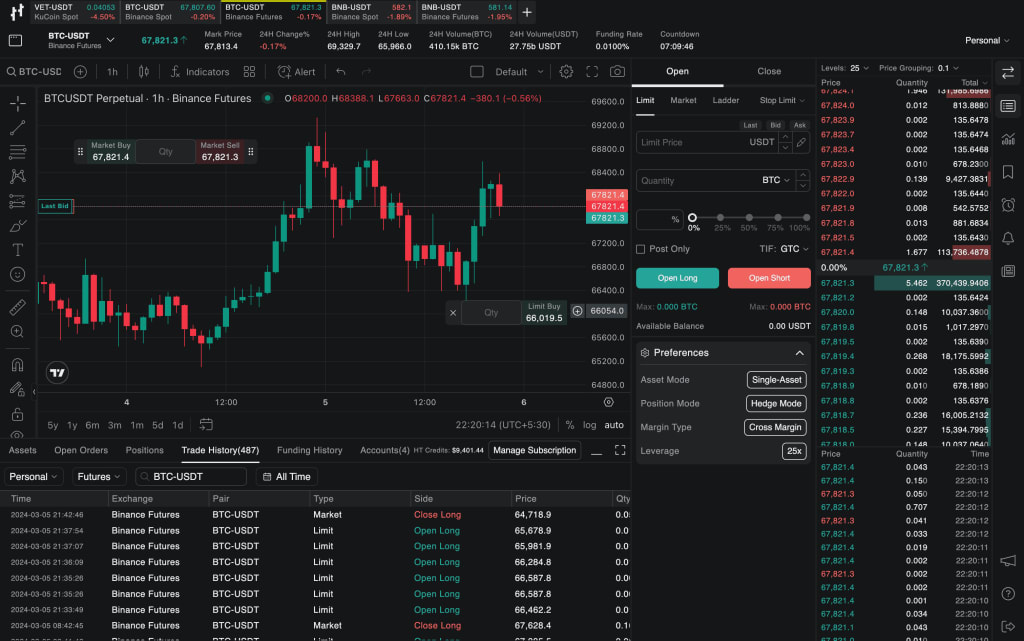
Algorithmic trading, often referred to as algo trading, has revolutionized financial markets by allowing trades to be executed with speed, precision, and efficiency. By leveraging sophisticated algorithms, traders can automate the decision-making process, executing trades at a pace and scale that would be impossible for humans to achieve manually. This blog will explore what algorithmic trading is, how it works, its advantages and disadvantages, and its significance in both traditional finance and the emerging cryptocurrency market.
What is Algorithmic Trading?
Algorithmic trading involves using computer algorithms to execute trades based on predefined criteria such as price, timing, and volume. These algorithms analyze market data and make trading decisions automatically, without the need for human intervention. Algorithmic trading can be used across various financial instruments, including stocks, bonds, derivatives, and cryptocurrencies.
- **Automated Trading:** Algorithmic trading is often synonymous with automated trading, as it involves the execution of trades by computers based on pre-programmed instructions. These instructions are derived from complex mathematical models that consider a wide range of market variables.
- High-Frequency Trading (HFT): A subset of algorithmic trading, HFT involves executing a large number of orders at extremely high speeds, often within milliseconds. HFT strategies aim to capitalize on small price discrepancies in the market, generating profits through rapid, automated trades.
How Does Algorithmic Trading Work?
Algorithmic trading works by using computer algorithms to monitor market conditions and execute trades according to a set of rules. These rules can be based on a variety of factors, such as technical indicators, market trends, or even news events. Here’s a step-by-step overview of how algorithmic trading operates:
1. Developing the Algorithm:
- The first step in algorithmic trading is to develop the trading algorithm itself. This involves creating a set of rules or instructions that dictate when and how trades should be executed. These rules are often based on technical analysis, statistical models, or machine learning techniques.
2. Backtesting the Algorithm:
- Once the algorithm is developed, it is tested using historical market data to evaluate its performance. This process, known as backtesting, helps traders understand how the algorithm would have performed in different market conditions and identify any potential flaws or weaknesses.
3. **Optimizing the Algorithm:**
- After backtesting, the algorithm may need to be optimized to improve its performance. This can involve adjusting parameters, refining the rules, or incorporating additional data sources. The goal is to enhance the algorithm’s ability to generate profits while minimizing risk.
4. Deploying the Algorithm:
- Once the algorithm has been developed and optimized, it is deployed in a live trading environment. The algorithm continuously monitors market data in real-time, executing trades based on the predefined criteria. These trades are executed at high speeds, often without any human intervention.
5. Monitoring and Adjusting:
- Even after deployment, the performance of the algorithm must be closely monitored. Market conditions can change rapidly, and an algorithm that performs well in one environment may not perform as well in another. Continuous monitoring allows traders to make adjustments as needed to maintain profitability.
---
Types of Algorithmic Trading Strategies
There are several types of algorithmic trading strategies, each designed to exploit different market opportunities. Some of the most common strategies include:
1. Trend Following Strategies:
- These strategies are based on the assumption that prices will continue to move in the direction of the current trend. Algorithms monitor moving averages, price levels, and technical indicators to identify and capitalize on trends. Examples include moving average crossover strategies and momentum strategies.
2. Arbitrage Strategies:
- Arbitrage strategies involve taking advantage of price discrepancies between different markets or assets. For example, an algorithm might buy a stock on one exchange where it is undervalued and sell it on another exchange where it is overvalued, profiting from the price difference. Arbitrage strategies require rapid execution and are often used in high-frequency trading.
3. Market Making Strategies:
- Market making involves providing liquidity to the market by placing both buy and sell orders for a particular asset. Algorithms continuously monitor the market, adjusting the bid-ask spread to capture small profits on each trade. This strategy is often used by firms that act as intermediaries in the market, profiting from the spread between the buying and selling prices.
4. Statistical Arbitrage:
- This strategy involves using statistical models to identify price patterns and relationships between assets. Algorithms look for mean-reverting price patterns, where prices deviate from their historical average and are expected to revert back. Trades are executed to exploit these deviations, profiting from the eventual price correction.
5. Scalping:
- Scalping is a strategy that involves making a large number of small trades over very short periods, often seconds or minutes, to capture small price movements. Algorithms are used to identify and exploit tiny price discrepancies, with profits accumulated through a high volume of trades.
6. Event-Driven Strategies:
- Event-driven strategies involve trading based on news events, earnings announcements, or other market-moving events. Algorithms analyze the impact of these events on prices and execute trades accordingly. For example, an algorithm might short a stock after a negative earnings report or buy a currency pair after a favorable economic announcement.
---
Advantages of Algorithmic Trading
Algorithmic trading offers several benefits, making it a popular choice among institutional investors, hedge funds, and individual traders alike:
1. Speed and Efficiency
- Algorithms can execute trades much faster than humans, often within milliseconds. This speed allows traders to capitalize on market opportunities that would be impossible to exploit manually.
2. Reduced Emotion:
- Algorithmic trading eliminates human emotions from the trading process. Decisions are made based on data and predefined rules, reducing the impact of psychological factors such as fear and greed.
3. Backtesting and Optimization:
- Algorithms can be rigorously tested using historical data before being deployed in live markets. This allows traders to optimize their strategies and ensure that they are robust enough to perform well under various market conditions.
4. Increased Accuracy:
- Algorithms can process vast amounts of data and make precise calculations, leading to more accurate trading decisions. This reduces the risk of human error and increases the likelihood of successful trades.
5. Scalability:
- Algorithmic trading allows traders to execute a large number of trades simultaneously across multiple markets and assets. This scalability is particularly beneficial for institutional investors who need to manage large portfolios.
6. Cost Efficiency:
- By automating the trading process, algorithmic trading reduces the need for manual intervention, lowering transaction costs and operational expenses.
---
Disadvantages and Risks of Algorithmic Trading
Despite its advantages, algorithmic trading also comes with certain risks and challenges:
1. Technical Failures:
- Algorithmic trading relies heavily on technology, and any technical failure, such as a server crash or network outage, can result in significant losses. Additionally, bugs or errors in the algorithm’s code can lead to unintended trades or missed opportunities.
2. Over-Optimization:
- While backtesting and optimization are important, there is a risk of over-optimizing an algorithm to fit historical data too closely. This can result in a strategy that performs well in backtesting but fails in live trading due to changing market conditions.
3. Market Impact:
- In markets with low liquidity, large algorithmic trades can have a significant impact on prices, leading to slippage and reduced profitability. This is particularly true for high-frequency trading strategies.
4. Regulatory Risk:
- Algorithmic trading is subject to regulatory oversight, and changes in regulations can impact the viability of certain strategies. For example, some jurisdictions have implemented rules to limit the use of high-frequency trading due to concerns about market stability.
5. Complexity:
- Developing and maintaining an algorithmic trading system requires a high level of technical expertise and resources. This complexity can be a barrier for individual traders or small firms without the necessary infrastructure.
6. Unpredictability:
- Markets can be unpredictable, and no algorithm can account for all possible scenarios. Sudden market events, such as a flash crash, can result in significant losses for algorithmic traders.
---
Algorithmic Trading in the Cryptocurrency Market
Algorithmic trading has become increasingly popular in the cryptocurrency market due to the market’s high volatility, 24/7 trading hours, and rapidly evolving landscape. Here’s how algorithmic trading is applied in the crypto space:
- Arbitrage Opportunities: Cryptocurrencies are traded across numerous exchanges, leading to frequent price discrepancies. Algorithms can exploit these arbitrage opportunities by buying on one exchange and selling on another.
- Volatility Trading: The high volatility of cryptocurrencies makes them ideal for algorithmic trading strategies that seek to profit from rapid price movements. Algorithms can quickly respond to market changes, capturing profits in both rising and falling markets.
- Liquidity Provision: Some algorithmic traders act as market makers in the crypto market, providing liquidity by placing buy and sell orders on both sides of the order book. This helps reduce spreads and improve market efficiency.
- 24/7 Market Monitoring: The crypto market operates 24/7, making it challenging for human traders to monitor it continuously. Algorithmic trading systems can operate around the clock, executing trades based on real-time data.
- Regulatory Considerations: As with traditional markets, algorithmic trading in the crypto space is subject to regulatory scrutiny. Traders must ensure their algorithms comply with relevant regulations, particularly in areas such as market manipulation and anti-money laundering (AML) requirements.
Conclusion
Algorithmic trading has transformed the way financial markets operate, offering unprecedented speed, efficiency, and accuracy in executing trades. While it comes with its own set of risks and challenges, the benefits of algorithmic trading have made it an essential tool for modern traders and investors.
About the Creator
Keep reading
More stories from mayank singh and writers in Education and other communities.
Post-hackathon guide: Key insights when closing an event
The post-hackathon phase is equally important as it helps consolidate the event’s success, strengthens relationships with participants, and sets the stage for future events. Here's a detailed guide on key insights to keep in mind when closing a hackathon.
By mayank singh2 years ago in Education
NCLEX Study Plan: A Step-by-Step Guide for Nursing Students
Preparing for the NCLEX-RN is one of the most important milestones in the nursing students’ career. This is because the NCLEX is the final step before nursing students can become licensed nurses. However, it is not as easy as simply reading nursing textbooks and taking notes from class lectures. This is because the NCLEX is designed to test the nursing students’ clinical judgment and decision-making skills.
By Sulcus Learning5 days ago in Education
How the Sun Influences Climate: The Hidden Force Shaping Earth’s Weather and Environment
Every morning, sunlight spreads across the horizon, warming the land, oceans, and atmosphere. It feels simple and familiar, yet this daily event is driven by one of the most powerful forces shaping our planet: the Sun.
By shahkar jalala day ago in Education




Comments
There are no comments for this story
Be the first to respond and start the conversation.