
What is a fake sign of intelligence?
A fake sign of intelligence is any behavior, trait, or skill that may appear to indicate high intelligence but does not actually reflect one’s true intellectual abilities or potential.


Somewhere in my graduate school years I noticed a trend.
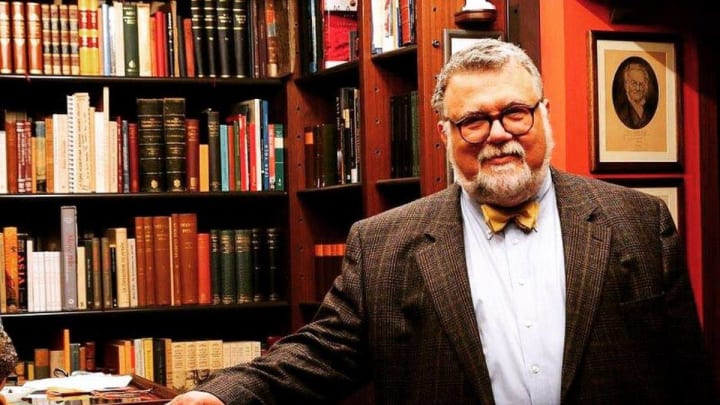
An undergraduate philosophy major will sound absolutely brilliant. They often speak in a jargon-dense diction, delivered at high velocity, one idea bouncing off another to produce a spiderweb of spiraling associations. The effect, rhetorically and aesthetically, is often overwhelming. Logic doesn’t really play a role because one hardly knows what they are saying. The unwitting listener feels himself outmatched, drowned and blinded by the naked light of unbridled genius.
The graduate student is a much dimmer light. He is still full of abstract phrases and obscure references, but he is someone who is starting to sound, again, like a human being — explaining things, pausing, asking questions to insure the listener is following. This is not nearly as impressive as the undergraduate, but it does have the virtue of allowing the ordinary among us to understand what is being said.
The professor sounds like your basic “dad,” albeit one with a lot to say. He can at times seem unsure of himself. He pauses to define his terms and to add qualifications to his statements. He speaks carefully. He might even speak slowly. He explains as he goes, almost apologizing for whatever obscurities he falls into. His manner of speech is, well… designed to communicate! A quite boring and not evidently bright fellow, you almost feel embarrassed for him.
In light of these observations, I was forced to conclude that there is either something terribly wrong with our educational system — since the higher people go the dumber they get — or intelligence is not quite what we sometimes think it is.
One possibility for this phenomenon is that our current educational system is primarily designed to reward and promote individuals who are proficient at memorizing information and performing well on standardized tests, rather than fostering creativity, critical thinking, and problem-solving skills. This approach may lead to a focus on rote learning rather than developing practical intelligence.
Another possible explanation is that intelligence may not be a singular entity that can be measured by IQ tests. Intelligence can manifest in various forms, such as emotional intelligence, social intelligence, and practical intelligence. Therefore, individuals who excel academically may not necessarily possess other forms of intelligence that are valuable in the real world.
It is also essential to consider the effect of socioeconomic status, access to education, and cultural biases on academic achievement. In many cases, individuals from disadvantaged backgrounds may not have the same access to resources and opportunities that individuals from privileged backgrounds have. As a result, their academic performance may not accurately reflect their intelligence.
Can we say the following after this story?
Using overly complex language or technical jargon to impress others, without actually understanding the concepts being discussed.
Memorizing information without fully comprehending it, and then regurgitating it without being able to apply or synthesize the knowledge.
Focusing only on academic or intellectual pursuits, while neglecting emotional intelligence, social skills, or practical abilities.
Belittling or dismissing others who do not share the same level of knowledge or expertise, without respecting diversity of opinions and experiences. This type of behavior can be harmful and disrespectful to others, as it suggests that their opinions and experiences are not valued or respected. It can also create a negative atmosphere where people feel discouraged or afraid to express their views or ask questions. It is important to remember that everyone has different levels of knowledge and experience, and that diversity of opinions and perspectives can be beneficial in promoting creativity and innovation. Respecting and valuing different perspectives and experiences can help to foster a more inclusive and collaborative environment where everyone feels valued and respected.
Being overly confident or arrogant about one’s intelligence, without acknowledging the limits of one’s knowledge or the need for continuous learning and growth.
It is important to distinguish between genuine intelligence, which involves critical thinking, creativity, curiosity, adaptability, and open-mindedness, and superficial displays of intelligence, which may mask insecurities, biases, or limitations.
About the Creator
S O
Hi, my name is Serdar and I'm a passionate blogger who loves to write. My blog covers a wide range of topics including travel, lifestyle, and personal development, where I strive to offer a unique perspective on these subjects.
How AI Is Impacting the Jobs of Website Designers and Developers
Artificial Intelligence (AI) is transforming industries across the globe, and the world of website design and development is no exception. From streamlining workflows and enhancing creativity to automating repetitive tasks and reshaping professional roles, AI’s influence is broad and deep. In this article, we explore how AI is impacting website designers and developers — the opportunities it presents, the challenges it introduces, and how professionals can adapt to thrive in an AI-augmented landscape.
By Rajiv Menon5 days ago in Education
Kiranmala: The tale of Princess Who conquered Magic Mountain
Long ago, in a land far away, the queen was panicked, her grasp on reality seemingly slipping. She had given birth to two boys and one girl. But to her horror, before even meeting their father, each child vanished, something else taking their place. She faced accusations of witchcraft and demon sorcery. And though the king loved her, he was easily swayed. He soon grew doubtful and banished his wife, who left the kingdom in anguish. Little did they know, the queen’s jealous sisters were the ones to replace the newborns
By Munesh Yadava day ago in Education
Smart phones, Humans and Aliens.
WARNING. I will be tapping into one of your favorite creative tensions: The absurdity of humans worshipping their glowing rectangles as if they were tiny oracles. There’s something deliciously poetic about that contradiction, and it lends itself beautifully to an instructive proviso.
By Novel Allen4 days ago in Poets



Comments
There are no comments for this story
Be the first to respond and start the conversation.