
What is 40 TRIZ Inventive Principles?
How to Use Them to Solve Problems?

1. What is 40 TRIZ Inventive Principles and How to Use Them to Solve Problems?
The "40 TRIZ inventive principles" refer to a set of principles formulated within the Theory of Inventive Problem Solving (TRIZ), developed by Genrich Altshuller. These principles provide a structured approach to solving engineering and technical problems by leveraging patterns of solutions that have been successful across various industries and disciplines. Each principle encapsulates a generic solution strategy that can be applied to overcome specific types of problems or contradictions in innovation and design processes.
Here are the 40 TRIZ inventive principles:
1. Segmentation
2. Taking Out
3. Local Quality
4. Asymmetry
5. Merging
6. Universality
7. Nesting
8. Anti-weight
9. Preliminary Action
10. Preliminary Anti-action
11. Beforehand Cushioning
12. Equipotentiality
13. 'The Other Way Round'
14. Spheroidality
15. Dynamics
16. Partial or Excessive Action
17. Another Dimension
18. Mechanical Vibration
19. Periodic Action
20. Continuity of Useful Action
21. Skipping
22. 'Blessing in Disguise'
23. Feedback
24. Mediator
25. Self-service
26. Copying
27. Cheap Short-lived Objects
28. Mechanics Substitution
29. Pneumatics and Hydraulics
30. Flexible Shells and Thin Films
31. Porous Materials
32. Color Changes
33. Homogeneity
34. Discarding and Recovering
35. Parameter Changes
36. Phase Transitions
37. Thermal Expansion
38. Strong Oxidants
39. Inert Atmosphere
40. Composite Materials
These principles are used to guide engineers and innovators in finding innovative solutions to complex problems by systematically applying them to identify and resolve contradictions in the design and development process. Each principle can be tailored and applied according to the specific needs and challenges of the problem at hand.
To use TRIZ effectively:
- Identify the core problem or contradiction.
- Apply relevant Inventive Principles that best fit the situation.
- Generate innovative solutions by leveraging these principles.
2. Examples to Illustrate the Application of TRIZ.
Example 1:
Problem: Increase the durability of a smartphone battery without increasing its size.
Application of TRIZ: Principle #15 - Dynamics.
Solution: Implement a dynamic voltage regulation system that adjusts power output based on usage patterns, thereby extending battery life without physical enlargement.
Example 2:
Problem: Reduce noise pollution from a manufacturing plant without compromising production efficiency.
Application of TRIZ: Principle #6 - Universality.
Solution: Introduce universal sound-absorbing materials in the factory layout to minimize noise levels while maintaining operational effectiveness.
3. Story to Illustrate TRIZ Methodology
Once in a bustling town, there was a skilled carpenter named Joshua who faced a dilemma. His clients demanded stronger, more durable furniture, yet they wanted it at lower costs. Joshua pondered over this challenge, seeking a solution that would satisfy both demands.
Remembering the teachings of an old sage, Joshua applied the wisdom of TRIZ. He analyzed the contradictions: strength versus cost. Consulting the 40 Inventive Principles, he decided to employ Principle #5 - Merging. By combining traditional woodworking techniques with modern materials, Joshua crafted furniture that was not only stronger but also cost-effective. His innovation earned him praise and prosperity in the town.
4. Product on Amazon Illustrating TRIZ Methodology
Product: Dyson Air Multiplier Fan
Application of TRIZ: Principle #4 - Asymmetry.
Explanation: Principle #4 - Asymmetry encourages the modification of the object's symmetrical shape to enhance its properties or functionality. The Dyson Air Multiplier Fan applies this principle by eliminating traditional fan blades, which are typically symmetrical. Instead, it features an asymmetrical design where air is drawn in through the base and then amplified as it exits through an annular ring. This innovative design not only reduces noise and increases safety (by removing exposed blades) but also creates a smooth and continuous airflow, enhancing user comfort and efficiency.
By rethinking the conventional symmetric fan design and applying asymmetry, Dyson has created a product that stands out in both form and function, exemplifying how TRIZ principles can lead to groundbreaking innovations.
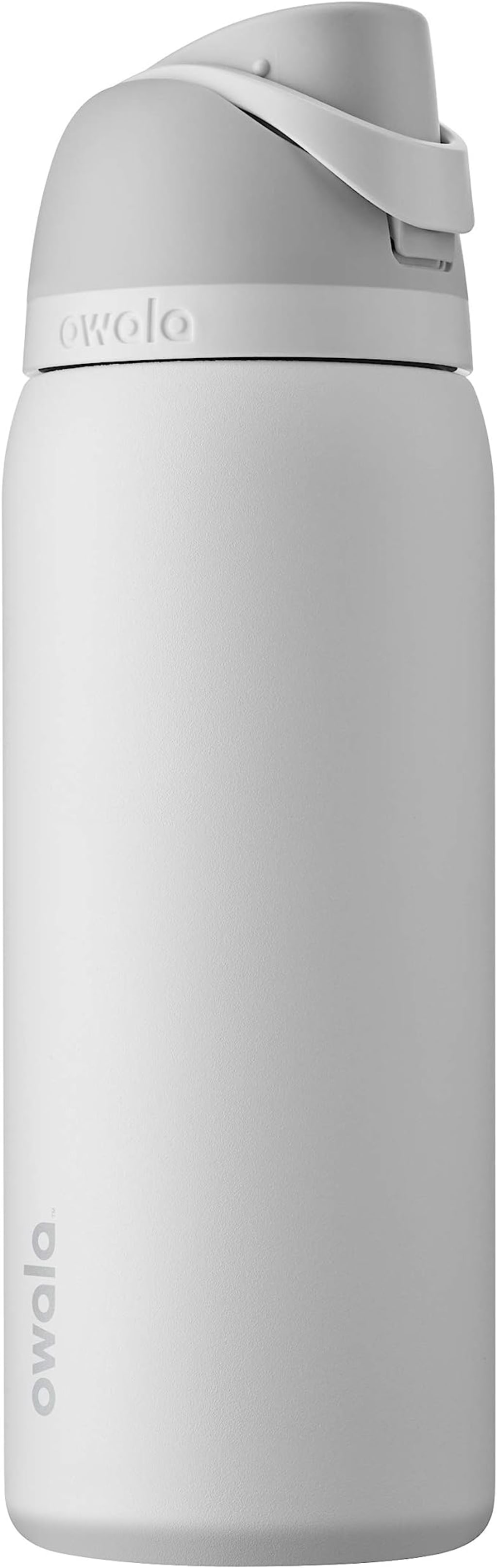
Product: Owala FreeSip Insulated Stainless Steel Water Bottle
Application of TRIZ: Principle #10 - Preliminary Action.
Explanation: Principle #10 - Preliminary Action involves preparing parts of an object to carry out an action in advance. The Owala FreeSip water bottle applies this principle by incorporating a built-in straw and a spout lid that allows users to drink two ways—either by sipping through the straw or tilting to drink from the spout. This dual-drinking feature is designed for convenience and efficiency, providing users with flexible drinking options without needing to change lids or attachments.
The bottle also features double-walled vacuum insulation to keep beverages cold for up to 24 hours or hot for up to 12 hours. This integration of multiple pre-prepared functionalities in one design showcases how TRIZ principles can enhance product usability and customer satisfaction, making it a versatile and innovative hydration solution.
About the Creator
BRIAN LE
As a writer specializing in the integration of technologies and innovative methodologies, my passion lies in leveraging advanced creative thinking strategies to drive significant advancements and create impactful solutions.
The Red Renaissance Uncorking the Future of Russian Wine in 2026
For decades, the global wine map was a predictable atlas of French Chateaus, Italian vineyards, and New World giants. However, as we move through 2026, a new and unexpected frontier has firmly established its presence: Russia. The Russian wine industry is currently undergoing a "Grand Renaissance," fueled by a combination of aggressive state support, massive private investment, and a geopolitical shift that has turned the domestic market inward. What was once seen as a secondary player, primarily known for mass-produced sparkling wines, has transformed into a sophisticated producer of premium, terroir-driven still wines that are winning over a new generation of health-conscious and patriotic consumers.
By Neeraj kumarabout 21 hours ago in Education
One Hard Thing
Stop me if you’ve heard this one before: You have the number, you know your schedule- you’ve even picked out the perfect day and time to make this appointment. Shoot, you’ve even picked out alternative days and times just in case their schedules can’t accommodate you!
By Taylor Rigsby5 days ago in Motivation




Comments
There are no comments for this story
Be the first to respond and start the conversation.