
What Is 3D Printer Metal Powder? Everything You Need to Know in 2025
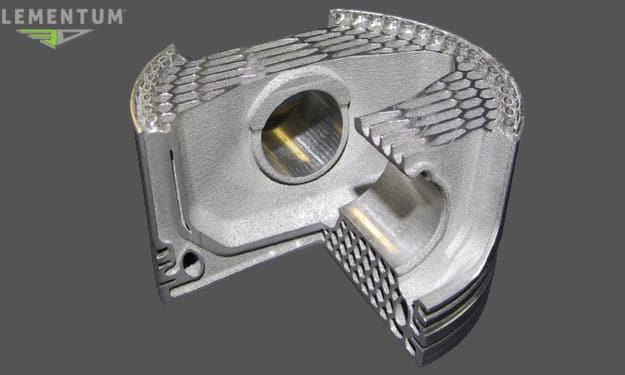
3D printer metal powder is a vital component of metal additive manufacturing, used to create high precision and complex parts across industries such as aerospace, automotive, and healthcare.


Metal 3D printing has revolutionized manufacturing, enabling the creation of complex and high-strength components across industries such as aerospace, automotive, and healthcare. At the heart of this technology lies 3d printer metal powder, a critical material that determines the quality and performance of printed parts. As we navigate through 2025, understanding the intricacies of metal powders is essential for leveraging the full potential of additive manufacturing.
What Is 3D Printer Metal Powder?
3D printer metal powder consists of fine metallic particles used as the raw material in various additive manufacturing (AM) processes. These powders are selectively fused layer by layer to build three-dimensional objects directly from digital models. The properties of the metal powder, including particle size, shape, and composition, significantly influence the mechanical properties and accuracy of the final product.
Production Methods of Metal Powders
The quality of metal powders is largely determined by their production methods. The primary techniques include:
- Gas Atomization: Molten metal is ejected through a nozzle and disintegrated by a high-pressure gas stream, resulting in spherical powder particles ideal for 3D printing due to their excellent flowability and packing density.
- Water Atomization: Similar to gas atomization, but using water as the disintegrating medium. This method produces irregularly shaped particles, which may affect flowability but can be suitable for specific applications.
- Plasma Atomization: Involves feeding a metal wire into a plasma torch, where it's melted and atomized into fine droplets that solidify into spherical powders. This method is known for producing high-purity powders.
- Mechanical Milling: Solid metal is mechanically ground into fine powder. While cost-effective, this method often results in irregular particle shapes and a wider size distribution.
Types of Metal Powders Used in 3D Printing
A variety of metal powders are utilized in additive manufacturing, each offering distinct properties:
- Aluminum Alloys: Lightweight with good thermal and electrical conductivity, commonly used in automotive and aerospace industries.
- Titanium Alloys: Exhibit high strength-to-weight ratios and excellent corrosion resistance, making them ideal for medical implants and aerospace components.
- Stainless Steel: Offers a balance of strength and corrosion resistance, widely used across various industries.
- Nickel Alloys: Known for high-temperature and corrosion resistance, suitable for aerospace and chemical processing applications.
- Copper Alloys: Excellent electrical and thermal conductivity, used in electrical components and heat exchangers.
- Tantalum and Tungsten: High-density metals with exceptional heat resistance, used in specialized applications.
Key Properties of Metal Powders
The performance of metal powders in 3D printing is influenced by several critical properties:
- Particle Size and Distribution: Affects the powder's flowability and packing density, impacting the density and surface finish of the printed part.
- Particle Shape: Spherical particles are preferred for their superior flowability and uniform packing, leading to consistent printing results.
- Purity: Impurities can introduce defects; high-purity powders ensure better mechanical properties and reliability.
- Flowability: Determines how well the powder spreads during the printing process, affecting layer uniformity and density.
Applications of Metal Powder in 3D Printing
Metal 3D printing has found applications across various sectors:
- Aerospace: Production of lightweight, complex components such as turbine blades and structural parts, enhancing performance and fuel efficiency.
- Automotive: Manufacturing of custom parts and prototypes, reducing development time and costs.
- Medical and Dental: Creation of patient-specific implants and prosthetics with complex geometries tailored to individual anatomies.
- Energy Sector: Fabrication of components for oil and gas industries, including heat exchangers and drilling tools.
Challenges and Considerations
While metal 3D printing offers numerous advantages, it also presents challenges:
- Cost: High-quality metal powders are expensive, impacting the overall cost-effectiveness of 3D printing.
- Safety: Fine metal powders can be hazardous, posing risks of inhalation and combustion; proper handling and storage are essential.
- Quality Control: Ensuring consistency in powder properties is crucial for reliable printing outcomes.
Innovations in Metal Powder Technology
Advancements in metal powder technology are driving the evolution of additive manufacturing:
- Reactive Additive Manufacturing (RAM): Developed by Elementum 3D, RAM technology enables the 3D printing of previously unprintable advanced metals, ceramics, and composites by combining reaction synthesis with additive manufacturing.
- Customized Alloy Development: Tailoring alloy compositions to meet specific application requirements, enhancing performance and expanding the range of printable materials.
Future Outlook
The metal powder market is poised for significant growth. According to 5N Plus, the global market for powders used in metal 3D printing applications is predicted to reach $1.2 billion by 2025, with the aerospace, medical, dental, and automotive industries expected to benefit the most from metal additive manufacturing technologies.
About the Creator
Elementum 3D
Elementum 3D is the leader in AM Materials - advanced manufacturing powders for all your 3D printing including Aluminum, Copper, Nickel, Steel, and more.
Keep reading
More stories from Elementum 3D and writers in Education and other communities.
3D Printing and Advanced Manufacturing Materials: A Perfect Match?
The world of manufacturing is evolving rapidly, and 3D printing is at the forefront of this transformation. As industries seek more efficient, cost-effective, and sustainable production methods, advanced manufacturing materials play a crucial role in unlocking the full potential of additive manufacturing (AM). Among these materials, high-performance aluminum alloys from companies like Elementum 3D are revolutionizing the industry. In this blog, we’ll explore how 3D printing and advanced materials complement each other, the advantages of using aluminum alloys in AM, and their applications across industries.
By Elementum 3D12 months ago in Education
Why the Sun Doesn’t Burn Like Fire: How Nuclear Fusion Makes the Sun Shine
Introduction: A Question That Changes Everything As children, many of us imagine the Sun as a giant ball of fire blazing in the sky. It looks like fire. It gives off heat like fire. It even glows like fire.
By shahkar jalala day ago in Education
How Artificial Intelligence Is Transforming Modern Industries
Artificial Intelligence (AI) is no longer a concept limited to science fiction or research laboratories. Today, AI technologies are deeply integrated into everyday life and are transforming how businesses operate, how services are delivered, and how people interact with technology. From healthcare and finance to marketing and transportation, AI is shaping the modern world in ways that were unimaginable just a decade ago.
By Rene Van Acker6 days ago in Education
A Transparent Look at Vocal Challenges and Top Stories
Almost three years ago, we shared a resource article that served as a place for people to suggest new challenge prompts. We thought it would be a good idea to refresh that thread, and take the opportunity to answer a few common questions about top stories, how challenges are judged and how submissions are reviewed.
By Vocal Curation Team3 days ago in Resources



Comments
There are no comments for this story
Be the first to respond and start the conversation.