
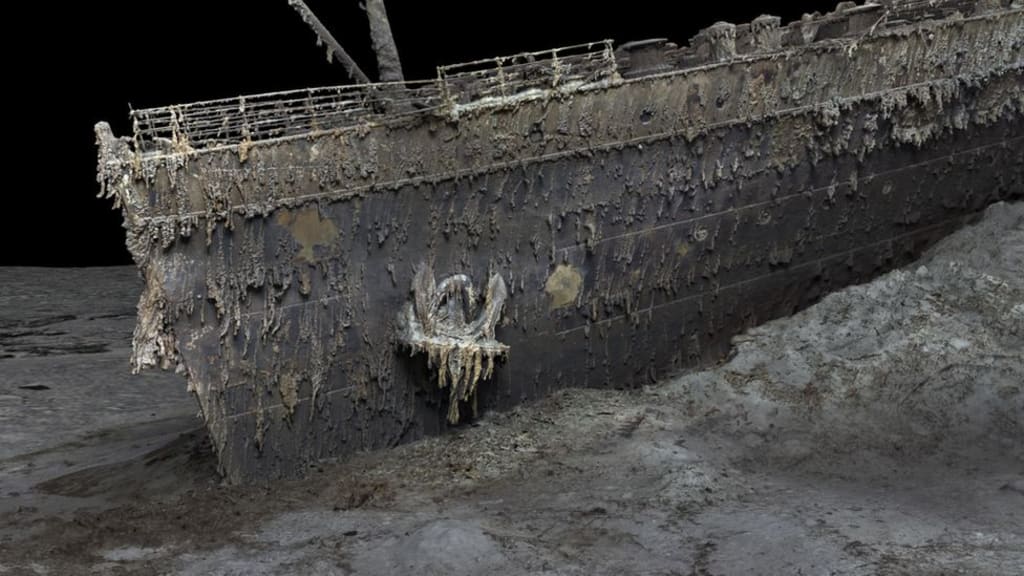
The Titanic is a well-known story, but few people are aware of its two sister ships. On the tragic night of the Titanic's sinking, one of its sister ships was en route to provide assistance, but unfortunately, it couldn't reach in time. These three ships had a mix of misfortune and remarkable moments that remain etched in the memories of those who sailed on them. Join us as we explore a tale of awe-inspiring ingenuity, ill-fate, and resilience. Don't forget to subscribe and enable notifications to join us on the brighter side of life.
The sinking of the Titanic, the heroic band playing till the end, and the unfolding tragedy are well-known. However, before it happened, the thought of such an unsinkable ship meeting such a fate would have seemed impossible. The White Star Line, the company that built the Titanic and its sister ships, the Britannic and the Olympic, had high hopes for these grand vessels.
The Olympic, the first of the trio, set sail on June 11, 1911, bound for New York. Its sheer size dazzled the crowds, and while docked in New York, around 8,000 people had the chance to explore its luxurious accommodations. There were great expectations for this massive ship, but just two months later, the Olympic collided with the HMS Hawk, causing significant damage. The bow of the Hawk bore the brunt of the impact, leaving it flattened like a pancake. The Olympic slowly made its way back to Belfast, where the Titanic was under construction. A rare sight greeted onlookers at the dock as the two enormous ships stood side by side. Some parts of the Titanic were used to restore the Olympic, creating a remarkable sight.
On April 14, 1912, the Titanic struck an iceberg, and within minutes, the crew sent distress signals to nearby ships. That night, as the Olympic was returning from New York, it received the distress call and swiftly turned around, racing at full speed toward the Titanic. However, the distance was too great, and they realized they wouldn't reach in time. During the early hours of April 15, 1912, the crew of the Olympic made the difficult decision to change course. Eventually, the survivors of the Titanic were rescued by the Carpathia. In response, the Olympic was equipped with enough lifeboats for all crew and passengers, increasing the number from 20 to 64. Changes were also made to the watertight bulkheads, and an additional hull was added to create a double hull configuration. It was believed that this modification would have prevented the Titanic from sinking. The Olympic later played a role in World War I, serving in the war effort against Germany. Over the years, it carried over 200,000 passengers, including thousands of Americans fleeing Europe and soldiers fighting in the war. One notable moment for the Olympic was when it rammed and sank a German submarine that was preparing to fire a torpedo at it. This ship, often referred to as the "Old Reliable," sailed the seas for three decades, providing aid to the sinking HMS Audacious and performing feats that its sister ship, the Titanic, couldn't achieve. Eventually, however, bad luck caught up with the Olympic. It collided with the Nantucket Lightship, signaling the beginning of the end. After years of service and being worn down, the Olympic was dismantled and scrapped for parts.
The Britannic's journey was even shorter-lived. When the Titanic sank, the White Star Line faced a dilemma since another enormous ship, the Britannic, was already under construction. The HMHS Britannic's construction began on November 30, 1911, approximately four months before the Titanic's tragic end.
About the Creator
Keep reading
More stories from Tami Jones and writers in Education and other communities.
The Science of Napping: Benefits, Timing, and Optimal Length
The significance of a good night's sleep is widely acknowledged for its myriad benefits, encompassing memory enhancement, mood regulation, and bolstering the immune system. However, as we delve into the realm of slumber, an intriguing question arises: What about the practice of daytime napping? How does it fare in terms of its impact on our well-being? Does the duration of a nap influence its effects? Furthermore, is there an optimal window of time within which to indulge in a midday snooze? In this comprehensive article, we embark on a captivating journey through the extensive body of research surrounding napping. We explore its implications across different age groups and delve into the potential advantages and drawbacks associated with this ubiquitous yet enigmatic practice. By examining the scientific evidence, we aim to shed light on the complex relationship between napping and our overall health and cognitive functioning.
By Tami Jones3 years ago in Humans
From Expertise to Excellence: Advancing Patient Care Through Professional Experience
In the modern healthcare environment, delivering outstanding patient care requires more than academic training or technical qualifications. While medical knowledge is essential, true excellence comes from real-world experience, continuous improvement, and the ability to connect with patients on a human level. The transition from expertise to excellence is shaped by years of practice, compassion, and dedication to better outcomes.
By Yousuf A. Gaffar, M.Da day ago in Education



Comments
There are no comments for this story
Be the first to respond and start the conversation.