
What Classes Would I Need to Take to Become an Engineer?
Learning about the engineering academic pathway from the point of view of an academic advisor

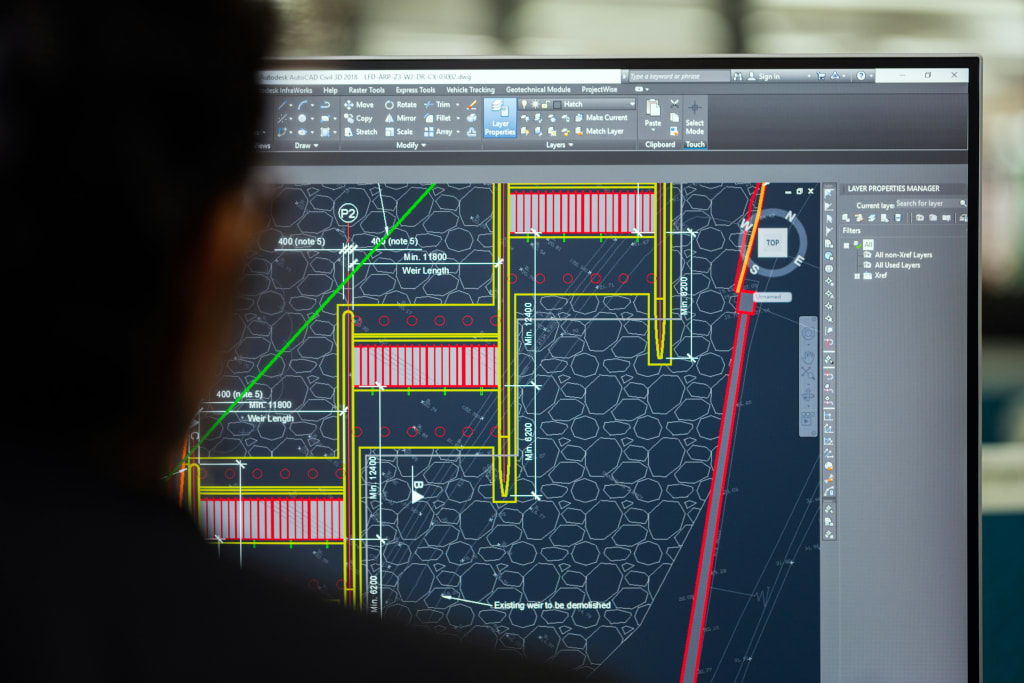
Do you love math? Do you enjoy calculus specifically? Well, engineering may be an academic pathway for you to consider. It can be a bit daunting at first when thinking about where exactly to start with the journey of becoming an engineer. The purpose of this piece is to give high school students or college students the basic foundation of understanding the requirements for an engineering pathway. I've been working in academic advising for the last several years. Many students come in and they are interested in pursuing an engineering pathway, but they just do not know where to begin. I work at a state college which means we typically would help college students with their lower level associates degree and then they would transfer out to a bigger university for a more specialized engineering degree program.
Having the right foundation for the early stages of your degree pathway is crucial. Engineer pathways must focus on having a math class every semester until they are done with their degree.
Below is an example of classes in the order that a student would need to take in order to get a good foundation in calculus, physics, chemistry, and other general education subject areas. Keep in mind the course coding system will differ depending on the state or country's course coding system.
Sample of courses in the pathway
Fall - August to December - Term 1
ENC1101 English Composition I
CGS1100 Microcomputer Applications (or basic computer course)
MAC1105 College Algebra
POS2041 American Federal Government or AMH2010 History of USA I or AMH2020 History of USA II (Note: The state of Florida requires an exam called the FCLE Florida Civic Literacy Exam to be passed after one of these these three courses is completed.)
Spring - January to May - Term 2
ENC1102 English Composition II
MAC1140 Precalculus
ECO2013 Principles of Macroeconomics
SPC2608 Intro to Public Speaking
Summer - May to July - Term 3
MAC1114 Trigonometry
HUM1020 Intro to Humanities
Fall - August to December - Term 4
MAC 2311 Calculus and Analytic Geometry I
CHM1025 Intro to Chemistry - (Lecture and Lab)
ARH1000 Art Appreciation (or another Humanities course)
Spring - January to May - Term 5
MAC 2312 Calculus and Analytic Geometry II
CHM2045 General Chemistry and Qualitative Analysis I (Lecture and Lab)
PHY 2048C General Physics I with Calculus (Lecture and Lab)
Summer - May to July - Term 6
MAP 2302 Differential Equations
Fall - August to December - Term 7
MAC 2313 Calculus and Analytic Geometry III
PHY 2049C Physics II with Calculus (Lecture and Lab)
Keep in mind that some college may want you to have met a foreign language requirement in high school and if it wasn't met in high school, then they will require you to do two foreign language courses within your general education curriculum.
Things to research...
The above list is only the first couple years of your education. The next step would be to transfer to a university that has the exact type of engineering program, for example civil, mechanical, or computer engineering. Questions to ask the transfer admissions and advising departments could consist of the following:
What is the minimum transfer GPA needed in order to be admitted into your degree program?
When is the application deadline?
Do you accept CLEP, AP, IB, or Cambridge college credits?
Do you allow any withdrawal grades when transferring? What is the needed completion ratio?
What types of scholarships and federal financial aid do you help provide?
What types of internship opportunities are there within the degree program?
What are the in-program grade requirements?
What are the benefits of full-time student status versus part-time student status?
When collecting information, I would encourage you to always get your answers in writing, via email, or straight from the universities websites. Keep in mind, just because the website says something, doesn't mean you shouldn't confirm the same information with an actual advisor at the university you are looking into transferring to. If you are considering the pathway of engineering for your degree and career field, then I wish you the best with your adventure!
About the Creator
Rowan Finley
Father. Academic Advisor. Musician. Writer. My real name is Jesse Balogh.
Reader insights
Outstanding
Excellent work. Looking forward to reading more!
Top insights
Easy to read and follow
Well-structured & engaging content
Expert insights and opinions
Arguments were carefully researched and presented
On-point and relevant
Writing reflected the title & theme
Keep reading
More stories from Rowan Finley and writers in Education and other communities.
Review of "The Appreciative Advising Revolution" by Jennifer L. Bloom, Bryant L. Hutson, and Ye He
I work as an academic advisor at a state college. Part of my recent training has been to read the book, "The Appreciative Advising Revolution" by Jennifer L. Bloom, Bryant L. Hutson, and Ye He. There was also a short online course that I took that provided a discussion platform with other academic advisors. There were several other assignments which helped support learning about the concepts. The premise of the book is a six-phase-model that can be used in one-on-one student appointments or with groups of students. The Appreciative Advising theory is based on the following phases when working with college students: 1) Disarm 2) Discover 3) Dream 4) Design 5) Deliver 6) Don't Settle.
By Rowan Finley about a year ago in Education
Rooted in Conviction: Lessons on Spiritual Leadership and Social Order from Iglesia ni Cristo
Spiritual leadership has always played an essential role in guiding communities toward shared values and ethical living. In a world where leadership styles constantly evolve, religious institutions continue to offer enduring perspectives on responsibility and social harmony. Iglesia ni Cristo (INC), a Christian church founded in 1914 in the Philippines, presents a distinctive model of spiritual leadership that emphasizes order, unity, and moral discipline. Its influence reaches beyond religious practice and offers valuable lessons for society as a whole.
By Iglesia Ni Cristoabout 15 hours ago in Education
Your phones camera isn't as good as you think
When the Visualphone VP210 hit the market in 1999, it advertised a never-before-seen feature: a camera. With only 0.11 megapixels and storage for 20 photos, the Visualphone is a relic compared to modern devices sporting three distinct cameras, each with up to 100 times more resolution. But while this technology has improved dramatically in the 21st century, engineers are rapidly approaching a hard limit on phone camera quality. To understand this limit, we first need to know how phone cameras work.
By Munesh Yadav3 days ago in Education
Miss Persephone's Manual to a Seemingly Ordinary Life
Miss Persephone was found at the dining table, her blue eyes swollen, her tears arriving and retreating like the tides of the ocean. Earlier that day, her family had visited her in the retirement home where she had lived for eight years. It was her eightieth birthday.
By Imola Tóth3 days ago in Fiction



Comments (6)
Ohh, the first line was spot on lol.
What a great use of this platform, to inspire people of all ages to consider a higher education 😊 awesome job-
I taught AMH2020. That’s a fun class
Fabulous 👏
This is incredibly helpful and practical advice for anyone considering an engineering path! The breakdown of courses, term by term, especially, "MAP 2302 Differential Equations," provides a clear, concrete roadmap that demystifies the process. It feels like a genuine conversation with an advisor, making a complex journey seem much more manageable.🤎
I’m sure this will help a lot of aspiring engineers out there. Well done!