
What are the recent trends in psychosocial intervention?
The School of Behavioural Sciences at Apeejay Stya University hosts a two-day multidisciplinary international conference

The term Psychosocial comes from the two fields, one from “psychology” and the other from “society”. Psychology is the field of study where the minds of human beings are studied. It examines and analyses the thoughts, behaviours, and feelings of humans and the many cognitive functions. Recent trends in psychosocial intervention include many methods and techniques amongst which are skills training, mindfulness-based interventions, family and internet-based interventions and web based psychosocial intervention.
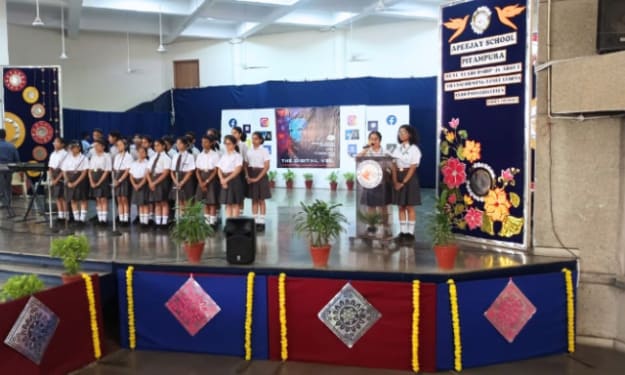
Acknowledging the need to further discuss on this topic, the School of Behavioural Sciences at Apeejay Stya University (ASU), Gurugram, recently hosted “Multidisciplinary International Conference on Recent Trends in Psychosocial Intervention.”
The two-day conference commenced by paying obeisance to the Founder Chancellor Dr Stya Paul, which was followed by a video on his life and journey. Further, Mrs Sushma Paul Berlia, Chairman, Apeejay Stya & Svran Group, Chancellor Apeejay Stya University, and Chairman, Apeejay Education and Dr. Neha Berlia, Co-Promoter, Apeejay Stya and Svran Group and Pro-Chancellor, Apeejay Stya University shared their blessings and heartfelt messages.
Following this Vice Chancellor, Prof. (Dr.) Vijay Vir Singh, inaugurated the programme In his address he emphasised “the need for psychosocial interventions which can help people to overcome many of their distresses, anxieties and conflicts. “ He also mentioned the use of psychometric testing and the purpose for which it is used in countries like the United Kingdom.
The first session following the inaugural address, was by Professor Emeritus, Dr. Allen R Dyer on the topic Democracy, Behavioral Health and Well-being, (Prof. Allen R. Dyer : MD PhD Professor Emeritus, Psychiatry and Behavioral Sciences, George Wahsington University, USA) .
Dr. Dyer’s lecture underscored the intrinsic link between democratic structures, psychosocial support, and mental health, emphasising that societal cohesion, emotional expression, and existential meaning-making are critical in mitigating anxiety and despair. He highlighted how systemic crises—ranging from climate change to misinformation—exacerbate psychological distress, especially when individuals lack agency, clarity, or institutional trust.
Session 2 was led by Prof. Dr Philip Slee, Professor in Human Development in the College of Education, Psychology and Social Work at Flinders University of South Australia, who emphasised the importance of culture and gender-sensitive digital mental health programs for children. Through “Big Talks for Little People,” he highlighted early intervention, emotional learning, and innovative tools like “The Peeps” to foster open dialogue. His work encourages pioneering approaches to support young minds in diverse educational settings.
The next session was led by Ms Shivali Suri, Representative of the Managing Director, GRN Connect Ltd., ; Aman Tavels, who spoke on the topic ‘The importance of Psychosocial Intervention in self-care on the road’. She beautifully explained that travel doesn’t only impact us physically but also has a psychological effect on us. Therefore, preparing our mental state before and during travel is crucial. Mental well-being is just as important as physical readiness when we travel. Some small steps were suggested to manage stress and maintain balance which will help the body and keep it healthy.
The session by Dr Seema Irshad, Professor of Psychology and Coordinator Block: College of Medicine, King Faisal University, Saudi Arabia, was on ‘The Evolution of Psychosocial Intervention from Traditional to Digital Approach’. In this she spoke about how the traditional approaches in psychosocial intervention emphasised human connection, trust, and evidence-based practices. The digital age brought in scalable, flexible, and personalized tools, making support more accessible in real-time. Now, there’s a shift toward blending tradition with technology, emphasising empathy, ethics, and human-centered care. The future lies in creating care that is accessible, inclusive, and responsive to evolving societal needs, rather than choosing one approach over the other.
Day 2
Dr. Tusharika Mukherjee Work & Organizational Psychologist, Idenbrockweg, Münster, Germany spoke on “Bridging the culture gap – Intercultural Communication Competence and its Impact on Mental Health Support”. Her exposition of the topic highlighted insights on the role of intercultural communication competence in enhancing mental health support systems. She emphasised that effective communication across cultures fosters mutual understanding, reduces stigma, and creates inclusive environments for mental health care. By bridging cultural divides, individuals and organizations can better address diverse psychological needs and promote well-being. The session highlighted the significance of global collaboration in mental health practices and adapting strategies to meet the challenges of multicultural contexts.
In the NextG session, Prof. Azizuddin Khan, India Value Chair Professor, Psychophysiology Laboratory, Department of Humanities and Social Sciences, Indian Institute of Technology Bombay, spoke on “psychophysiological research and its implications for mental health.” He highlighted advancements in understanding the interplay between physiological responses and psychological well-being, emphasising the importance of integrating these insights into practical interventions. His talk explored innovative methods to enhance mental health care within academic and professional environments, contributing to a holistic approach toward well-being.
Prof. Jace Pillay, South African Research Chair: Education and Care in Childhood , The University of Johannesburg, South Africa, spoke about “Mental health difficulties experienced by South African adolescents during COVID-19 lockdown.” He shared valuable insights on the mental health challenges faced by South African adolescents during the COVID-19 lockdown. He highlighted how the pandemic exacerbated existing vulnerabilities, including isolation, anxiety, and reduced access to support systems. Focusing on resiliency-based mental health interventions, Prof. Pillay emphasized the importance of fostering psychological resilience among adolescents to mitigate the long-term impact of the pandemic. He discussed practical strategies for educators, caregivers, and mental health professionals to build resilient support structures that cater to the unique needs of adolescents.
The next talk on “Para Sahayam and Para Sahayi”, by Prof. Manickam (Prof. Manickamis internationally renowned professor of psychology; presently Professor and HOD Psychology, Mysore University).He highlighted the community based psychosocial interventions , and explained Para Sahayam concept , as a conscious purposeful support with Para Sahayi, connecting people to the various support systems , and thus he pointed out how one can harness community support to the mental health issues.
Prof. Sibnath Deb, ex director, Rajiv Gandhi Youth Center, GOI and now Professor and HOD Psychology, Pondicherry University, Puducherry, Tamil Nadu, elaborated the importance of rehabilitation of the vulnerable children and spelt out the strategies and steps that could be taken in regard to the same.
Professor Emeritus Dr. Vimala Veeraraghavan, Dean Academics and Dean School of Behavioural Sciences, shared, “This conference was the result of many practitioners and academicians expressing their interest in finding out the latest techniques in psycho social intervention as well as its effectiveness in handling problems including those of persons from the vulnerable group. We decided to give all academicians and professionals as well as practitioners a platform to come together and share their techniques and skills both the ones they are practicing and the one that they feel are the latest skills which should be added to the existing repertoire. Thus with the approval of the proposal to hold this conference by Madam Chancellor, Pro Chancellor and our , Vice Chancellor, we started working towards realising the objectives of the conference.
Experts and professionals, academicians from USA, UK, Australia, South Africa, Saudi Arabia, and many academicians and research scholars from the various universities in India responded positively and sent in their special talks and research works and the innovative techniques they were using with many suggestions.”

Around 80 papers was presented with 9 special talk/workshop on psychosocial intervention and the recent trends in the two-day conference. Each research paper followed the highest standard in both methodology and ethics.
Based on the evaluation of the best paper in each of the 3 sessions, the panel consisting of Prof. Anupama, Prof. Ahirwal and Prof. Vyas, selected the Best paper. The same was announced at the Valedictory session.
The valedictory address was delivered by our distinguished Professor, Dr. Moinuddin, of our university. Lately, the vote of thanks was delivered by Sham Sunder Balli, faculty of School of Biosciences.
For more such coverages, visit: www.apeejay.news
About the Creator
Keep reading
More stories from Apeejay Newsroom and writers in Education and other communities.
Beyond the Screen: Literary Saga 2025 Unmasks the Digital Illusions
A day full of words, wonder, and wisdom Literary Saga 2025, hosted at Apeejay School, Pitampura, once again reaffirmed its legendary status as one of North Delhi’s most awaited and beloved literary extravaganzas. Every year, schools from across the region eagerly await this intellectual celebration — and this year, expectations weren’t just met; they were transcended.
By Apeejay Newsroom11 months ago in Education
Justice Begins With Character
Conscience, Character, and Justice While laws and institutions are necessary to maintain order, they alone cannot create a truly just society. The foundation of justice is built within the hearts and minds of people, long before legal decisions are made or courtroom debates occur.
By A.Petrovski3 days ago in Education
How Financial Advisors Make Millions Behind the Scenes
Many people trust financial advisors to guide their money decisions. Advisors help clients save, invest, and plan for retirement. They often appear helpful and knowledgeable. Yet many people do not know how advisors earn their real income. The truth is simple. Financial advisors are secretly making millions through systems that most clients never notice.
By Keith D'Agostinoabout 12 hours ago in Education
Worth the Wait: Puerto Viejo, Costa Rica
Beach bumming in a small Caribbean beach town sounded like a perfect way to end our 6-month trip through Mexico and Central America. Or so we thought. The foul, fishy stench of rotten seaweed hit our nostrils as we stepped from the cramped bus and looked out at a rather depressing, empty, and underwhelming black sand beach. It was pouring with rain, and we had to quickly fish out our ponchos. We thought, this couldn’t be it, could it?
By Sh*t Happens - Lost Girl Travel6 days ago in Wander


Comments
There are no comments for this story
Be the first to respond and start the conversation.