
Ways to Develop Creativity in Students
Creativity among Children

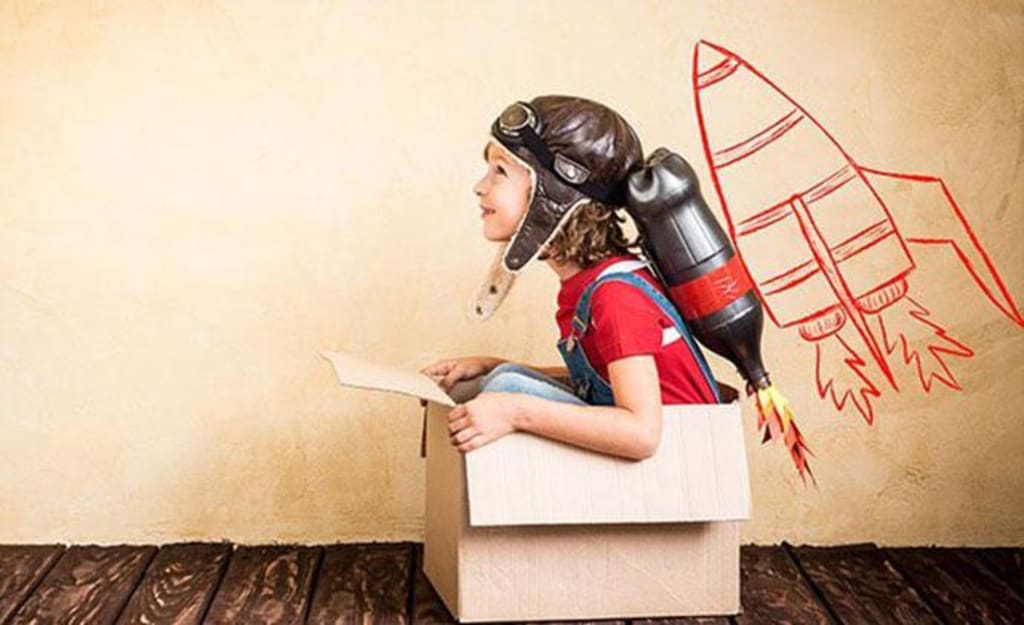
Creativity among the children can be developed by attitudes, activities, habits, and the general way of acting by parents and schools. Creativity in children is just as important as academic. Creativity helps them to gain skills that will serve them throughout their lives.
Children's creativity is the tendency to create or recognize ideas, alternatives, or possibilities that can be useful for solving problems, interacting with others, and entertaining themselves or others. To be creative, a child needs to be able to see different things at multiple times with different viewpoints, than a traditional one.
Creativity involves developing ideas and products that are real, i.e. those that haven't existed before, or improved form the previous version. Also, these ideas and products should have some value. For example, it's not right to write a book that no one has written before but it's just made up of random sentences.
Childhood personality and creativity
Creativity is linked to the individual's personality and his emotional life. It involves more than just "thinking skills." Personality traits, such as self-esteem, ambiguity, curiosity, and the ability to tolerate motivation, facilitate creative expression, just as other traits can inhibit it. Emotional processes, such as tolerating anxiety and getting involved in tasks, also have to do with the development of creativity. The cognitive skills such as diverse thinking, breadth of knowledge, and judgment are also associated with these processes.
To express creativity, children need a combination of all these attributes. While some children have all the necessary ingredients, others will need support, encouragement, and development of certain skills to participate in creative activities. For example, a child doesn't want to indulge in creative thinking because he lacks self-confidence and is convinced that he has no value to offer. You may feel anxious when you are given an open question or task with possible solutions. Through observation and discussion with the child, an adult can know what difficulties the child is experiencing and be encouraged to fix it.
Ways to promote creativity in children
1. Encourage children to solve problems creatively
This involves asking children open questions that cannot be answered with a simple "yes" or "no" and no right or wrong answer. Give them time to explore all possibilities to move from popular ideas to original ideas. With these questions, children are invited to think about different possibilities and imagine situations. For example "What if dogs could talk?" or "What would you do if you could fly?" "
2. Provide children with a variety of experiences.
In this way we can encourage the children to; think multiple options with our experiences. The information base needed to write new ideas will be established.
3. Invite children to create something new.
The use of recyclable materials to create creative crafts, for example, helps children see that new things can be made from things that seemed useless and otherwise went into the trash.
4. Encourage children to read and happily participate in artistic activities
If, even without knowing how to read, it's a good time for children when children's parents read them a story, they'll soon want to learn to read on their own.
5. Allow children to have spontaneous artistic distinctions
Creating an artistic corner at home or in the classroom is useful when the child comes up with new ideas and wants to put them into practice.
Conclusion
Creativity is a very important human trait. The best interpretation of creativity is to think about what requires a mix of components, including personality traits, skills, and abilities. People who are with children in the first years of life can help them develop and develop their skills through play by providing a creative environment, behaving themselves creatively and appreciating children's efforts.
About the Creator
Tahir Ali
I am passionate to spend time with litrature. I am struggling to see, hear and percieve things that aren't really unfolded. I love to work in fields of Social, Psychological, Family, Spiritual, Cultural and Public Health issues.
The Transformative Power of Soft Skills in Modern Success
In today’s fast-paced world, technical knowledge alone is rarely sufficient to achieve long-term success. Soft skills—the interpersonal, emotional, and cognitive abilities that shape how we interact with others—have become equally, if not more, essential. These skills include communication, empathy, adaptability, teamwork, and problem-solving. People who cultivate soft skills are not only better equipped to navigate complex situations but also more capable of influencing others, building strong relationships, and achieving sustainable success.
By Kurt James Wichman a day ago in Education
What Should Be Your Main Focus During an Online Limited Radiology Tech Program
Well, the short answer is that there is not a single module that you should strictly focus on. If you want to become a X-ray technician, you need to develop both technical and soft skills.
By Meaghan Howe2 days ago in Education
Hottest in the Office
Dear Rafi, You’re very distracting to work around. For the first second I saw you the other day, I thought you were some type of executive. It took a moment to realize no, you were just the new guy, dressed up for the job he wants. Be still, my heart.
By Gabriel Shames3 days ago in Pride



Comments
There are no comments for this story
Be the first to respond and start the conversation.