
Warp Drive: Part 1 – Sci-Fi Dream or Scientific Reality?
Space

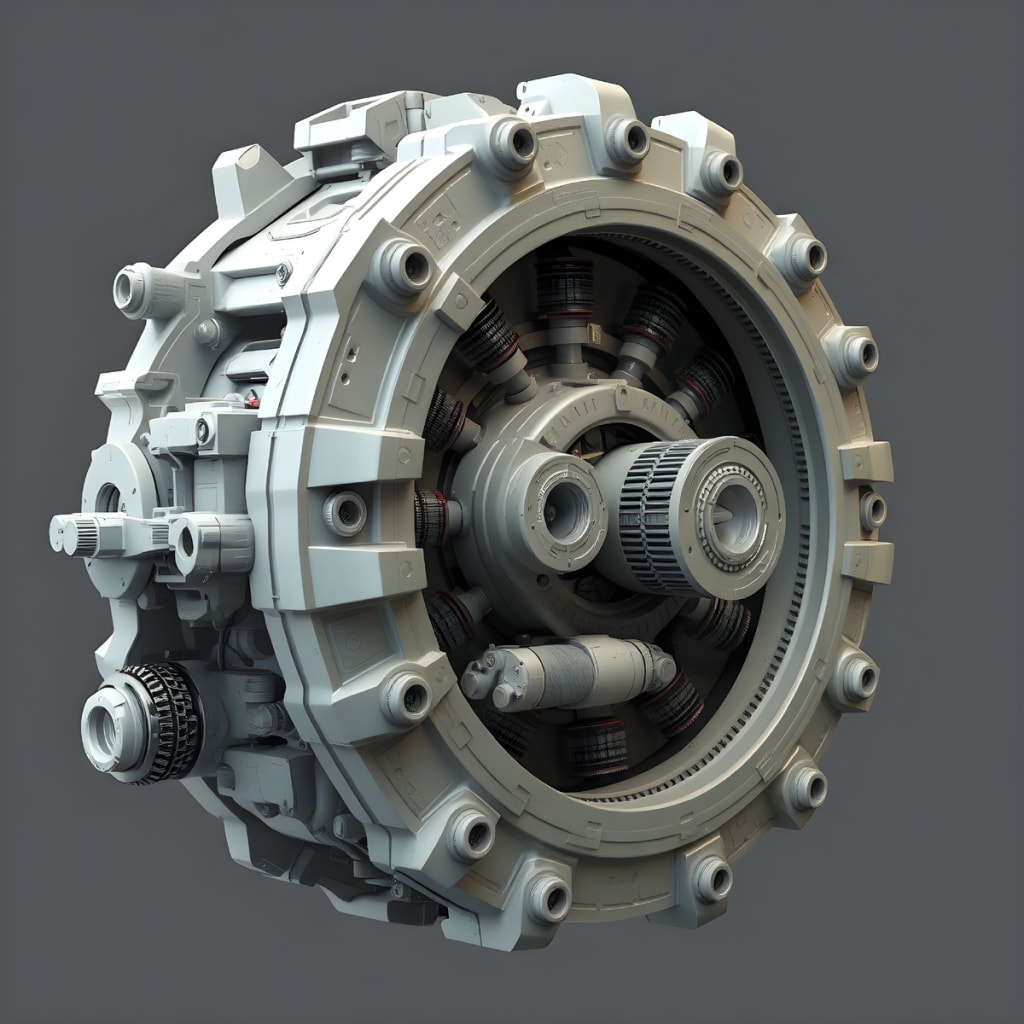
The idea of a warp drive isn’t just a fantasy born from science fiction. It’s a bold, theoretical technology that could completely redefine how we travel through space. If it ever becomes reality, it might allow us to reach distant stars—not by breaking the laws of physics, but by bending space and time themselves.
How Does a Warp Drive Work?
At the heart of the warp drive concept is something called a "warp bubble." Inside this bubble, the fabric of space-time is warped in such a way that a spacecraft doesn’t move in the traditional sense. Instead, it rides a wave of distorted space, effectively moving faster than light without technically breaking the universal speed limit.
Here's a simplified breakdown of the core components of a warp drive:
- Warp field generator – Distorts space-time to create the warp bubble.
- Power reactor – Provides energy, potentially using matter-antimatter annihilation or vacuum (zero-point) energy.
- Negative energy emitters – Hypothetical devices needed to maintain and stabilize the warp bubble.
- Stabilization system – Keeps the warp field from collapsing or becoming unstable.
- Crew compartment – A shielded area where astronauts and navigation systems are located.
Warp Drive Specs (Hypothetically Speaking)
- Maximum speed: Warp Factor 10 (potentially 100x the speed of light)
- Warp bubble size: 500 to 1,000 meters in radius, depending on ship design
- Power source: Annihilation reactor or vacuum energy
- Stability: Maintained by quantum corrections to counteract bubble fluctuations
The Big Challenges
While warp drive theories are making the rounds in serious scientific circles, there are still massive hurdles to overcome.
1. Negative Energy: Still Out of Reach
To bend space-time in the right way, you'd need a form of negative energy. The problem? We haven’t figured out how to produce or control it yet. It’s a theoretical concept with no current way to generate it at scale—or stabilize it.
2. Extreme Conditions = Extreme Materials
Warp fields might generate incredible temperatures, pressures, and stresses. Our current materials just wouldn’t survive. Scientists are hard at work developing futuristic composites and alloys that could someday withstand the extreme environment of a warp bubble.
3. Unknown Effects on Space-Time
Warping space might cause unexpected gravitational distortions or damage nearby systems. What happens if a warp bubble passes near a planet—or worse, through a star system? Until we understand those risks, warp technology remains a theoretical minefield.
What About Ethics?
If warp drives ever become real, they could open up entire galaxies to human exploration. But that also raises serious questions:
- Who gets to travel?
- Could warp travel impact other civilizations or ecosystems?
- How do we avoid turning space into the new frontier of conflict?
Scientists, ethicists, and policymakers will need to collaborate to ensure that warp technology is used responsibly—and not as a tool for conquest or chaos.
Final Thoughts: From Hypothesis to Possibility
For now, warp drives remain a speculative concept. But thanks to advances in quantum physics, energy research, and theoretical models like the Alcubierre Drive, the idea is gaining traction in real scientific discussions.
One day, humanity might sail across the stars—not in science fiction novels, but aboard ships that bend the very fabric of the universe. The dream of faster-than-light travel may not be as far-fetched as it once seemed.
Stay tuned for Part 2, where we dive deeper into the real-life research behind warp drive theories—and how close we might actually be.
About the Creator
Keep reading
More stories from Holianyk Ihor and writers in Education and other communities.
How to Build a Telescope at Home?
Building your own telescope can be a fun and rewarding way to explore the night sky — and learn a lot about optics and astronomy along the way. Whether you're a space enthusiast, a curious student, or just someone who loves hands-on projects, crafting a working telescope from scratch is a great way to dive deeper into the universe.
By Holianyk Ihor8 months ago in Education
From Stove to Strategy: Steve Wolfe’s Take on Scaling Your Food Business from Kitchen to Boardroom
Every food business begins with passion—late nights in the kitchen, handwritten recipes, and the joy of seeing someone love what you’ve made. But when demand grows, passion alone isn’t enough. Scaling your food business from kitchen to boardroom requires a shift in thinking, planning, and leadership.
By Steven Joseph Wolfeabout 3 hours ago in Education
What It Really Takes to Get a Wikipedia Page Approved in 2026
These days, Wikipedia isn't like the one some folks recall. Back then, an okay article often made it through with just small tweaks. Now things feel tighter, more intense. Every day brings thousands of fresh entries. Most vanish fast, blocked before they stick around. Getting turned down used to be rare. Lately, that's just how it goes.
By Hillshire Media4 days ago in Education


Comments (1)
The idea of a warp drive is mind-blowing. It'd be amazing to travel to distant stars like that. But the negative energy problem is huge. We need to figure out how to produce and control it. Also, the materials for extreme conditions are a challenge. How do you think we'll overcome these hurdles? I remember when I first read about warp drives. It seemed like pure sci-fi. Now, seeing the components and challenges, it's clear it's a complex but fascinating concept. I wonder if we'll ever see a working warp drive in our lifetimes.