
Unveiling the Sun's Secrets: How Spectroscopy Reveals the Composition of Our Star
Introduction: Exploring the Sun Without Leaving Earth

### What is the Sun Made Of? Unveiling the Secrets Through Spectroscopy
We can’t travel to the Sun and grab samples like we did with the Moon, but there is a clever way to uncover its composition without having to venture out so far: **spectroscopy**. It works because of light. The rainbow we see after a rainstorm isn't the exact tool we need, but **the spectrum of light** – more precisely, the **Fraunhofer lines** – can reveal a lot.
In 1802, English physicist **William Hyde Wollaston** first noticed these mysterious dark lines in a star's spectrum. However, it was German physicist **Joseph von Fraunhofer** who truly explored and mapped over 500 lines, even assigning letters (A to G) to the brightest ones. These lines still carry Fraunhofer's name today.
The Sun's spectrum contains over 25,000 such lines. These dark lines occur because various gas elements in the Sun's atmosphere absorb specific wavelengths of light. The pattern created by these absorption lines provides essential clues about the Sun's composition.
### Spectra: The Three Types
Before we dive deeper, it’s important to understand three types of spectra:
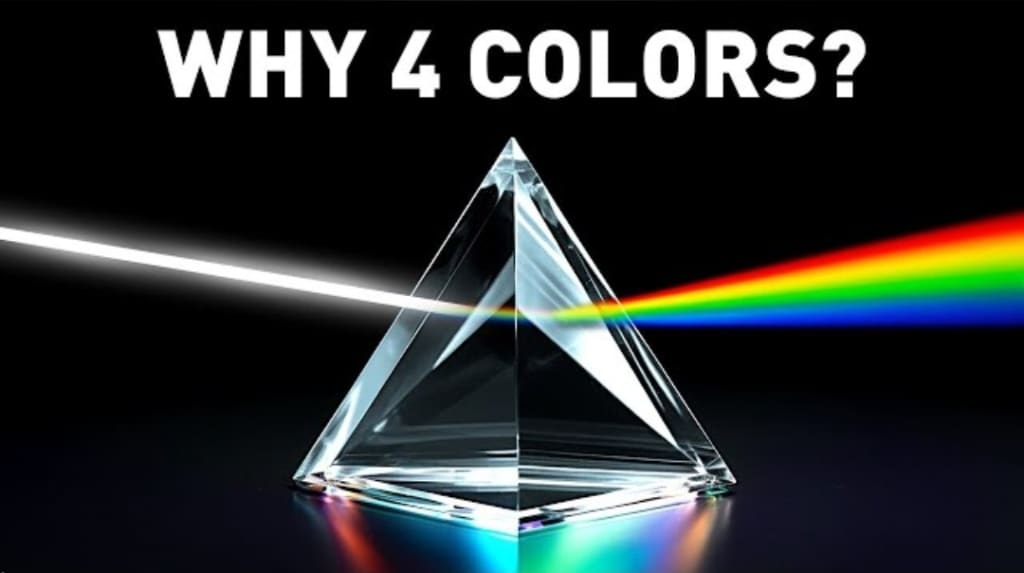
1. **Continuous Spectrum**: This spectrum includes all the colors of the visible light rainbow. If you spread white light through a prism, you get a smooth spectrum with no gaps.
2. **Emission Spectrum**: This occurs when atoms are excited and emit light. Each element has a unique "signature" color – like sodium glowing yellow, neon showing red and orange, or mercury emitting blue-green.
3. **Absorption Spectrum**: If light passes through a gas, some of the colors are absorbed by the gas. The result is a continuous spectrum but with dark lines where certain colors have been removed. These absorption lines correspond to the wavelengths absorbed by atoms in the gas, which is the key to identifying what those gases are.
### How Spectroscopy Unlocks the Sun's Secrets
By using spectroscopy, scientists can gather information about distant objects, including stars, planets, and other celestial bodies, by analyzing their light. **Spectroscopic tools** like **spectroscopes** and **spectrographs** measure the intensity and wavelength of light, helping us understand a vast range of characteristics. The intensity of the absorption lines in the Sun’s spectrum indicates the abundance of different elements, while the specific wavelengths point to which elements are present.
In 1870, scientist **Norman Lockyer** noticed a mysterious bright yellow line in the Sun's spectrum that didn’t match any known element. He proposed that it might be a new element, naming it **helium**, after the Sun god Helios. In 1895, helium was discovered on Earth, proving that spectroscopy can reveal elements beyond what we see in our daily environment.
### How Light and Matter Interact
Light behaves as both a **wave** and a **particle**, which is essential for understanding how spectroscopy works. Unlike mechanical waves, such as water or sound waves, light waves consist of fluctuating **electric** and **magnetic fields** that move perpendicular to each other. These waves don’t need a medium to travel through, so they can pass through a vacuum, like outer space.
**Wavelength** refers to the distance between the peaks of a light wave. The **color** of light is determined by its wavelength: shorter wavelengths appear blue, while longer wavelengths are redder. When light interacts with matter, like the gases in the Sun's atmosphere, certain wavelengths are absorbed, leaving absorption lines.
### Continuous, Emission, and Absorption Spectra Explained
1. **Continuous Spectrum**: When an object like the Sun emits light, it emits across a range of wavelengths. A **black body curve** shows this, revealing the range of colors based on the object's temperature. Hotter objects emit more blue light, and cooler ones emit redder light. The continuous spectrum is a good starting point for the other two types of spectra.
2. **Emission Spectrum**: When atoms in a hot gas emit light, they produce bright lines at specific wavelengths. These emission lines are like a fingerprint for each element. By analyzing these lines, we can identify the elements present in the gas. For example, sodium glows yellow, and neon emits red-orange light.
3. **Absorption Spectrum**: This happens when light from a star or the Sun passes through a cooler gas. The gas absorbs certain wavelengths of light, creating dark lines in the spectrum. These lines tell us what elements are present in the gas and give us insight into the temperature and density of the gas.
### Understanding the Sun’s Composition
The Sun is made of many elements, primarily **hydrogen** and **helium**. The absorption spectrum we observe helps us figure out the abundance of these elements. The **Fraunhofer lines** in the Sun’s spectrum are the result of atoms in the outer layers of the Sun absorbing light at specific wavelengths. By examining these lines, we can learn about the gases present in the Sun’s atmosphere.
Scientists measure the wavelengths of these absorption lines and compare them with known wavelengths from elements on Earth. This process is like assembling a cosmic puzzle, where each piece reveals a different part of the Sun's composition.
### The Power of Spectroscopy in Astronomy
Thanks to **spectroscopy**, scientists can measure properties of objects that are light-years away without ever needing to touch them. Light emitted by stars and other celestial objects tells us about their temperature, chemical composition, and even their motion through space.
Not only does this technique reveal the composition of the Sun, but it also allows scientists to analyze distant stars, galaxies, and even exoplanets. Spectroscopy is a powerful tool that connects us to the far reaches of the universe, helping us explore the stars and uncover their secrets.
### The Role of the Electromagnetic Spectrum
The electromagnetic spectrum is a range of all the different wavelengths of light. It includes:
- **Gamma rays**
- **X-rays**
- **Ultraviolet light**
- **Visible light**
- **Infrared light**
- **Microwaves**
- **Radio waves**
These waves have various properties, but they all help in spectroscopic analysis. For example, **x-rays** reveal high-energy environments, while **radio waves** help us study cooler objects in space.
By observing how light interacts with matter, we can study everything from the Sun’s composition to the farthest galaxies in the universe. **Spectroscopy** remains one of the most essential tools in astronomy, providing insights into the universe that we would otherwise never know.
About the Creator
Nora Ariana
Empowering through stories and sound igniting purpose, sparking growth, and awakening the power within.
Keep reading
More stories from Nora Ariana and writers in Education and other communities.
A goal is a dream with a deadline
A goal is a dream with a deadline. This powerful quote reminds us that without action, dreams remain just that wishes floating in our imagination. But when we set a timeline and commit to achieving them, they evolve into goals, bringing clarity, direction, and purpose. Many people go through life holding on to dreams, hoping they will come true someday. But someday is not a day on the calendar. Dreams without structure often fade with time or get buried under the weight of daily responsibilities. Turning a dream into a goal is what separates those who achieve from those who continue to wish.
By Nora ArianaExclusive • 9 months ago
Rewiring Wellness: How Neuroscience Is Redefining the Mind-Body Connection in Therapy
In recent years, neuroscience has reshaped the understanding of how emotional and physical processes interact, offering therapists new insight into healing. The mind-body connection, once viewed as more philosophical than scientific, now has clear biological explanations. Studies show that thoughts, emotions, and physical sensations are deeply intertwined, influencing everything from stress responses to overall wellbeing. This knowledge is transforming modern therapeutic practices by providing clinicians with evidence-based tools that support integrated healing.
By Debra Bailey PHDabout 6 hours ago in Education
Was Alexander the great really that great?
Order, order! Who do we have on the stand today? Alexander... the Great, eh? Well, what’s so great about him? Your honor, the better question is, what's not great about him? He was the King of Macedon and considered a living demigod by Egyptians and Greeks alike. He conquered Persia when it was one of Earth's largest empires. And he was a thoughtful student of Aristotle, creative enough to untie the impossibly tight Gordian knot by cutting it in half. The Gordian knot is a myth— just like the countless other stories invented to enhance Alexander’s legend!
By Munesh Yadav4 days ago in Education


Comments
There are no comments for this story
Be the first to respond and start the conversation.