
Unveiling the Matryoshka of Gene Expression
A Journey into Efficient Data Analysis

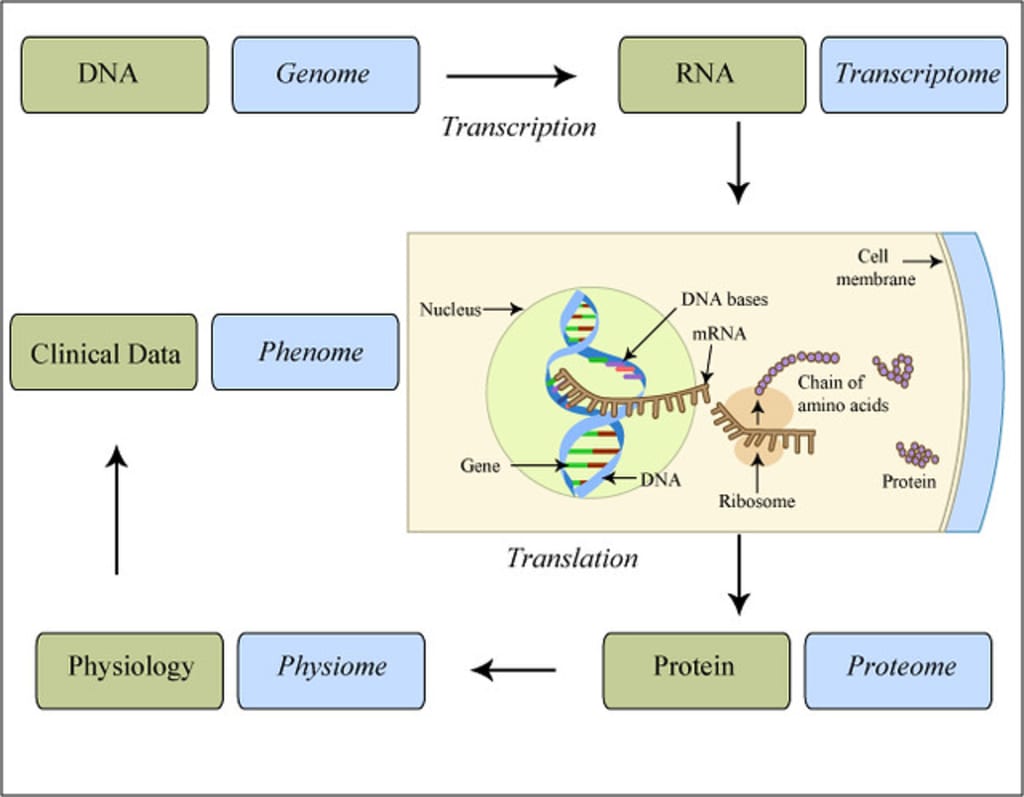
Imagine trying to understand the intricate workings of a complex machine, like a car engine, by examining each individual component in isolation. It would be a daunting task, likely leading to confusion and an incomplete picture. This is akin to the challenge researchers face when analyzing gene expression data, where thousands of genes interact in a complex network to orchestrate biological processes.
Traditional methods often fall short, overwhelmed by the sheer volume of data and the intricate interplay of genes. Here, we embark on a journey into the realm of efficient data analysis, guided by the innovative concepts of Linear Separable Data (LSD), RIP (Optimal-linear discriminant function), and the intriguing Matryoshka methods.
Navigating the Labyrinth of Gene Expression: A Tale of Three Theories
Our journey begins with Theory 1, which introduces the concept of LSD. Imagine data points scattered across a map, belonging to different categories. LSD methods seek to draw boundaries, like fences, separating these categories with the utmost clarity. In the context of gene expression, these data points represent individual samples (e.g., patients with different disease states), and the categories signify the different conditions we aim to distinguish.
Theory 2 delves deeper, venturing into the world of microarrays – powerful tools that simultaneously measure the expression levels of thousands of genes. However, this wealth of information comes with a challenge: the "curse of dimensionality." Analyzing such vast datasets can be like searching for a needle in a haystack. This is where the concept of Small Matryoshkas (SMs) emerges, inspired by the Russian nesting dolls. SMs are essentially subsets of genes, like smaller dolls nestled within the larger one, that retain the discriminative power of the entire dataset but with a reduced number of features.
Theory 3 acts as the maestro, orchestrating the strengths of both previous theories. It integrates the clarity of LSD with the dimensionality reduction of SMs, creating a symphony of efficient and accurate data analysis.
RIP: The Master Key to Unlocking Gene Expression Secrets
At the heart of this analytical symphony lies RIP, a powerful algorithm developed decades ago. RIP stands for Optimal-linear discriminant function finding the combinatorial optimal solution. In simpler terms, it acts like a master key, searching for the best way to separate data points (e.g., patients with different conditions) with the least number of misclassifications.
Imagine a scatterplot with red and blue dots representing healthy and diseased individuals, respectively. RIP would find the optimal line (or hyperplane in higher dimensions) that separates these groups with the highest accuracy, ensuring that as few blue dots as possible end up on the red side and vice versa.
RIP's prowess is evident in its past achievements:
• Swiss Banknote data: Out of 63 potential models, RIP identified the basic gene set (BGS), the minimum set of genes needed to accurately distinguish genuine banknotes from counterfeits.
• Shipp Microarray data: In this complex dataset with thousands of genes, RIP identified an LSD with only 32 non-zero coefficients (SM1), demonstrating its ability to extract the essential features from a sea of information.
Unveiling the Layers: The Matryoshka Methods
While RIP excels at finding the optimal solution, the Matryoshka methods take the analysis a step further. Program 3 (Matryoshka feature selection Method 2) dissects the microarray data, like opening a set of nesting dolls, revealing multiple SMs within. This allows researchers to explore different layers of discriminative power, potentially uncovering hidden relationships and biological insights.
Program 4 takes a different approach, splitting the microarray data into multiple BGSs. This offers a complementary perspective, revealing alternative ways to classify the data with minimal features, each potentially highlighting different biological pathways or mechanisms.
Imagine having multiple maps of a city, each highlighting different features like parks, restaurants, or historical landmarks. Similarly, the Matryoshka methods provide multiple "maps" of the gene expression landscape, each emphasizing different aspects of the data and offering valuable insights.
Revolution-0: Navigating the Wide Data Landscape
The world of gene expression analysis often presents a unique challenge: wide data, where the number of features (genes) far exceeds the number of samples (patients). This is where Revolution-0 comes into play, specifically designed for analyzing wide column-LSD.
Revolution-0 recognizes that even within this vast data landscape, there are multiple layers of discriminative power – the Matryoshka dolls. By skillfully navigating these layers, researchers can extract meaningful insights even from the most complex datasets.
The Impact: Advancing Medical Diagnostics and Beyond
The combination of RIP and the Matryoshka methods offers a powerful toolkit for researchers and clinicians. In the realm of medical diagnostics, these tools can:
• Improve diagnostic accuracy: By identifying the most discriminative genes, these methods can help develop tests that more accurately distinguish between healthy and diseased individuals.
• Personalize treatment: By uncovering the unique gene expression patterns associated with different disease subtypes, these methods can pave the way for personalized treatment plans tailored to individual patients.
• Advance drug discovery: Understanding the key genes involved in disease development can guide the development of more targeted and effective therapies.
The applications extend beyond medical diagnostics. These methods can be applied to various fields, including:
• Image recognition: Identifying key features to distinguish objects in images.
• Financial fraud detection: Analyzing transaction data to identify fraudulent activities.
• Environmental monitoring: Classifying different types of environmental data to detect pollution or track climate change.
The Future: A Symphony of Data and Insight
The journey into the world of efficient data analysis is far from over. As technology advances and our understanding of biological systems deepens, the methods discussed here will continue to evolve. Here are some potential future directions:
• Integration with artificial intelligence (AI): AI algorithms can be used to further refine the feature selection process and identify complex, non-linear relationships within data. Imagine an AI system that learns from the successes of RIP and the Matryoshka methods, continuously improving its ability to extract meaningful information from gene expression data.
• Single-cell analysis: While microarrays provide a snapshot of average gene expression across a population of cells, single-cell technologies are revolutionizing our ability to study individual cells. Adapting these analytical methods to single-cell data could unlock a deeper understanding of cellular heterogeneity and its role in disease.
• Multi-omics integration: Combining gene expression data with other "omics" data, such as proteomics and metabolomics, can provide a more holistic view of biological systems. Imagine a comprehensive map of cellular activity, incorporating information from multiple layers of biological regulation.
• Real-time diagnostics: As technology advances, these methods could be integrated into point-of-care devices, allowing for rapid and accurate diagnoses at the bedside or even in remote locations.
The potential of these methods is vast, offering a glimpse into a future where data analysis is no longer a bottleneck but a powerful tool for discovery and progress.
A Call to Action: Collaboration and Exploration
The journey of scientific discovery is rarely a solo endeavor. It requires collaboration, open-mindedness, and a willingness to explore uncharted territories. As we delve deeper into the complexities of gene expression and other biological data, let us remember the lessons learned from the Matryoshka:
• Look beyond the surface: Just as the Matryoshka dolls hold hidden layers within, complex data often contains deeper levels of information waiting to be discovered.
• Embrace different perspectives: The Matryoshka methods provide multiple "maps" of the data landscape, each offering valuable insights. Similarly, we should welcome diverse approaches and viewpoints to enrich our understanding.
• Seek simplicity within complexity: The success of RIP and the Matryoshka methods lies in their ability to extract simplicity from complex data, revealing the essential features that drive biological processes.
By embracing these principles, we can unlock the secrets hidden within our data, paving the way for a future of personalized medicine, improved diagnostics, and a deeper understanding of the intricate dance of life. The journey is just beginning, and the possibilities are endless.
About the Creator
James Moody
Follow me and you will find great benefit from the stories that enrich your professional life. I will transfer to you my accumulated practical and life experiences.
Keep reading
More stories from James Moody and writers in Education and other communities.
Acupuncture: Ancient Wisdom Meets Modern Wellness
The human body is a marvel of interconnected systems, a delicate dance of energy and balance. For millennia, Eastern medicine has recognized the flow of this vital energy, known as Qi (pronounced “chee”), as the foundation of health and well-being. Acupuncture, a cornerstone of Traditional Chinese Medicine (TCM), aims to restore and maintain this energetic balance through the insertion of fine needles at specific points on the body.
By James Moody2 years ago in Education
How Powerful Can AI Be? Understanding the Limits and Possibilities of Machine Intelligence
Shant Khayalian — Balian’s Deep Tech The Question of Power We live in a time of extraordinary change. Machines are writing our emails, designing proteins, driving cars, creating art, and even passing legal and medical exams. In just a few years, artificial intelligence has gone from an obscure branch of computer science to a central force shaping the world around us.
By Chant Khialian7 days ago in Education
How AI Is Impacting the Jobs of Website Designers and Developers
Artificial Intelligence (AI) is transforming industries across the globe, and the world of website design and development is no exception. From streamlining workflows and enhancing creativity to automating repetitive tasks and reshaping professional roles, AI’s influence is broad and deep. In this article, we explore how AI is impacting website designers and developers — the opportunities it presents, the challenges it introduces, and how professionals can adapt to thrive in an AI-augmented landscape.
By Rajiv Menona day ago in Education




Comments
There are no comments for this story
Be the first to respond and start the conversation.