
Unveiling the Cosmos: The Oldest Black Hole Yet Found by the Webb Telescope
Examining the Past: The Significant Finding of the Webb Telescope Rewrites the History of Cosmic Origins

The oldest black hole ever found has been discovered by the James Webb Space Telescope, unlocking cosmic mysteries in a discovery that breaks through time and space. This incredible accomplishment represents a critical turning point in our understanding of the universe's beginnings and the celestial bodies that have influenced its development.
The James Webb Space Telescope, which was launched into space on December 18, 2021, is the height of technological achievement since it can see into the darkest corners of the universe like never before. Its potent infrared sensors provide astronomers with unmatched clarity while observing celestial objects, making it an invaluable instrument for delving into the secrets of the cosmos.
The capabilities of the Webb telescope were demonstrated with the recent finding of the oldest black hole. This ancient cosmic entity, only 690 million years after the Big Bang, offers a unique view into the early stages of the universe from its astounding distance of 13.5 billion light-years. This astounding discovery casts doubt on what we previously knew about the development of black holes and illuminates the cosmic processes that sculpted the galaxies that we see today.
Black holes are mysterious objects in space that eat everything in their path, even light. They are distinguished by their strong gravitational attraction. The finding of this old black hole acts as a cosmic time capsule, giving scientists a window into the early stages of the universe and information on the circumstances that led to the formation of such enormous objects.
Given its age, this black hole raises fascinating concerns regarding the processes that enabled its quick creation. According to current conceptions of black hole formation, these enormous cosmic objects are created when huge stars collapse under the force of their own gravity. But given the early development of such a massive black hole in the cosmic chronology, the discovery forces scientists to reconsider and improve these models.
The Webb telescope's ability to observe infrared wavelengths is pivotal in this discovery, as it allows astronomers to penetrate cosmic dust clouds that would otherwise obscure their view. By capturing the faint glow emitted by distant objects, the telescope provides a clearer picture of the universe's distant past, unlocking a treasure trove of information about its formation and evolution.
Furthermore, the international astronomical community's cooperative efforts are demonstrated by this ground-breaking finding. The European Space Agency (ESA), the Canadian Space Agency (CSA), and NASA worked together to produce the Webb telescope. The collaborative project represents an international commitment to expanding scientific knowledge beyond national boundaries and deepening our understanding of the universe.
We are inspired to consider the importance of scientific research and its enormous influence on our comprehension of the cosmos as we are astounded by the discovery of the oldest black hole. The goal of the James Webb Space Telescope goes beyond our solar system, offering a means of peering into far-off galaxies, solving cosmic riddles, and deepening our understanding of the universe.
In summary, the James Webb Space Telescope's finding of the oldest black hole is a testament to human intellect and technological prowess. The discoveries made by this incredible telescope promise to change our understanding of the universe as we approach a new chapter in space exploration history by providing an insight into the grandeur of the cosmos and the celestial phenomena that have impacted its unfolding story.
About the Creator
Keep reading
More stories from writers in Education and other communities.
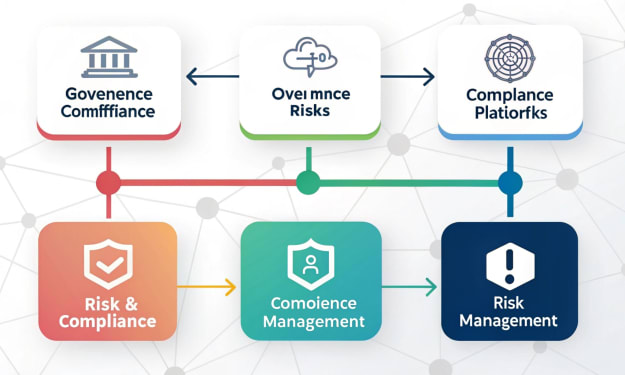
Governance Risk and Compliance Platforms Supporting Secure and Compliant Operations
Governance, risk and compliance platforms have become essential tools for organizations navigating complex operational, regulatory, and digital environments. These platforms help businesses establish clear governance structures, identify and manage risks, and ensure compliance with evolving regulations. As organizations face increasing pressure to protect sensitive data, maintain transparency, and meet regulatory obligations, governance, risk and compliance platforms provide a structured and integrated approach to managing these challenges.
By Bobby Yadavabout an hour ago in Education
Trouble at the Tea Leafing Café
The rain had started right around the time that Annie was buttering her second thick slice of homemade toast for breakfast, and hadn’t paused since. Not that anyone could tell. The windows of the café were fogged over, and with every seat filled with happy customers munching on fresh baked pastries or steaming bowls of the delicious soup of the day, it was hardly surprising. Annie looked around the room, finally taking a moment to breathe after the lunch time rush. Her old life already felt like a bad memory, a part of her history, always, but just that. History.
By Hannah Moore4 days ago in Fiction


Comments
There are no comments for this story
Be the first to respond and start the conversation.