
Unmasking the Silent Struggle: The Dark Truth Behind Smiling Faces
Exploring the Hidden Battles of Mental Health Behind the Masks


Introduction
In this article, we will explore the topic of mental illness, including eating disorders and post-traumatic stress disorder (PTSD).
So, what exactly is mental illness? The National Alliance on Mental Illness defines it as a condition that has a lasting negative impact on a person's thinking, feeling, or mood over an extended period of time.
Mental illness encompasses a wide range of conditions that affect individuals' mental well-being and functioning.
You may be curious about whether depression and anxiety are classified as mental illnesses. The answer is yes, they are indeed considered mental illnesses.
In fact, they are among the most prevalent types of mental disorders.
Throughout this article, we will delve into the discussion of 10 of the most commonly encountered mental illnesses, shedding light on their nature and impact.
1. Anxiety disorders
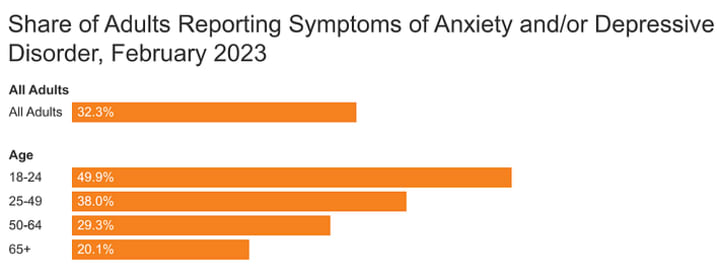
In February 2021, approximately 39.3% of adults experienced symptoms of anxiety or depression, which decreased to 32.3% in 2023.
A survey conducted by KFF/CNN in October 2022 revealed that an overwhelming 90% of the public perceives a mental health crisis in the United States.
These statistics highlight the significant prevalence and growing recognition of mental health challenges within the population.
It is common for anxiety disorders to occur alongside other co-existing conditions.
2. Depression
According to the World Health Organization, depression affects a significant portion of the population, with an estimated 3.8% of individuals experiencing this mental health condition.
Among adults, approximately 5% are affected by depression, with a slightly higher prevalence among women (6%) compared to men (4%).
Additionally, around 5.7% of adults aged 60 and above also experience depression.
It's alarming to note that depression is a global issue, impacting over 280 million people worldwide (1).
Women are more likely to be affected by depression, with rates approximately 50% higher than those among men.
Furthermore, depression is prevalent among pregnant women and those who have recently given birth, affecting more than 10% of this population (2).
Tragically, suicide claims the lives of over 700,000 people annually, making it the fourth leading cause of death among individuals aged 15 to 29.
These statistics highlight the urgent need for mental health support and intervention.
While experiencing occasional low moods is considered normal, depression goes beyond that, involving intense and prolonged feelings of sadness that persist for more than six weeks.
The symptoms of depression can vary between women and men.
When it comes to treating depression, there are several options available, including cognitive-behavioral therapy (CBT), interpersonal therapy (IPT), psychodynamic therapy, psycho-educational groups, antidepressant medications, and different forms of brain stimulation therapies.
3. Personality disorders
When we say someone's personality is disordered, we are referring to behavioral, emotional, and thought patterns that deviate significantly from cultural expectations.
These patterns are characterized as personality disorders.
According to the National Institute of Mental Health, approximately 9.1% of the population exhibits traits associated with a personality disorder.
However, a formal diagnosis of a personality disorder requires that these differences in behavior, emotions, and thoughts cause significant distress in how individuals perceive themselves, others, and situations.
Treatment for personality disorders usually involves a comprehensive approach.
This includes addressing any underlying mental health issues through medication, along with engaging in talk therapy or psychotherapy.
By combining medication and therapy, individuals with personality disorders can work towards managing their symptoms and improving their overall well-being.
4. Attention deficit hyperactivity disorder (ADHD)

Attention deficit hyperactivity disorder (ADHD) is a condition that can impact individuals of all ages.
It is estimated that between 7.8% and 11% of children aged 4 to 17 are diagnosed with ADHD each year.
The symptoms of ADHD commonly include difficulty concentrating, forgetfulness, hyperactivity, restlessness, and impulsivity.
ADHD is categorized into three recognized types: ADHD combined type, ADHD predominantly hyperactive/impulsive type, and ADHD predominantly inattentive type.
Each type presents with its own unique set of symptoms and challenges.
The treatment approach for ADHD often involves a comprehensive strategy.
It typically includes a combination of medication, life coaching, educational support, and talk therapy.
Medication can help manage the symptoms of ADHD, while life coaching and education provide practical strategies and skills to cope with the challenges associated with the disorder.
Talk therapy, such as behavioral therapy or cognitive-behavioral therapy (CBT), can be beneficial in addressing emotional and behavioral aspects of ADHD.
5. Post-traumatic stress disorder (PTSD)
According to the National Center for PTSD, approximately 60% of men and 50% of women have experienced at least one traumatic event in their lives.
Post-traumatic stress disorder (PTSD) can develop as a result of such traumatic experiences, including natural disasters, assaults, childhood abuse, or other distressing events.
It is characterized by a prolonged fight or flight response that persists even after the traumatic event has ended.
Complex PTSD (C-PTSD) is a specific form of PTSD that arises from repeated traumatic experiences.
Individuals with C-PTSD may have additional symptoms such as difficulties with emotional regulation, interpersonal problems, and a negative self-perception.
There are various treatment options available for both PTSD and C-PTSD.
Trauma-focused therapies, such as Eye Movement Desensitization and Reprocessing (EMDR), aim to help individuals process and integrate traumatic memories.
Traditional talk therapies, such as Cognitive-Behavioral Therapy (CBT) or Dialectical Behavior Therapy (DBT), can also be effective in addressing the symptoms of PTSD and providing coping mechanisms for managing distress.
6. Bipolar disorder
Bipolar disorder, affecting approximately 8% of the US population (although this estimate may be conservative), is characterized by significant mood swings.
These mood swings encompass manic episodes, marked by elevated mood, impulsivity, and grandiosity, as well as extreme depressive episodes, with intervals of relative stability in between.
It is important to note that bipolar disorder exists on a spectrum, with varying degrees of severity and symptom presentation.

The treatment of bipolar disorder typically involves a comprehensive approach. Medications are commonly prescribed to help stabilize mood, manage symptoms, and prevent relapses.
These may include mood stabilizers, antipsychotics, and antidepressants, tailored to the individual's specific needs. Additionally, traditional counseling approaches play a crucial role in treatment.
Psychotherapy, such as cognitive-behavioral therapy (CBT), interpersonal therapy (IPT), or dialectical behavior therapy (DBT), can provide support, help individuals understand their condition, develop coping strategies, and improve overall emotional well-being.
It is important for individuals with bipolar disorder to work closely with mental health professionals to develop an individualized treatment plan that suits their unique needs.
With proper treatment, ongoing management, and support, individuals with bipolar disorder can effectively manage their symptoms, experience greater balance in their lives, and enhance their overall quality of life.
7. Eating Disorders
Eating Disorders: It may come as a surprise, but eating disorders impact a significant number of individuals, comparable to the prevalence of bipolar disorder.
In 2018, around 2.7% of individuals seeking treatment were diagnosed with an eating disorder.
While many people wonder about the distinction between dissatisfaction with one's body and an actual eating disorder, the latter is characterized by dysmorphia and a cycle of behavior involving bingeing, purging, and restricting.
This cycle arises from intense distress and disgust towards one's body, leading to an obsessive preoccupation with weight and shape.

In addition to well-known eating disorders like anorexia nervosa and bulimia, there are also lesser-known conditions such as Eating Disorders Not Otherwise Specified (EDNOS) and Avoidant Restrictive Food Intake Disorder (ARFID).
These disorders may not fit neatly into specific diagnostic categories but still pose significant challenges to those affected.
It's important to shed light on these lesser-known conditions as well.
Recovery from an eating disorder is entirely possible with the right approach.
A combination of talk therapy, residential treatment, and medications targeting underlying mental health conditions can contribute to a successful recovery journey.
Talk therapy provides a supportive space for individuals to explore the factors contributing to their eating disorder and develop healthier coping mechanisms.
Residential treatment offers a structured environment with specialized care to address the unique needs of individuals with eating disorders.
Medications can help manage symptoms and address any underlying mental health conditions that may be present.
8. Obsessive-Compulsive Disorder (OCD)
Obsessive-Compulsive Disorder (OCD) is an anxiety disorder that affects approximately 2.3% of individuals over the course of their lives.
While the common stereotype of OCD often revolves around obsessions with cleanliness or counting, the reality is far more nuanced.
People with OCD experience recurring thoughts, known as obsessions, that are beyond their control.
These obsessions can take on various themes, including fears of punishment, the need for symmetry, or hoarding tendencies.
The anxiety provoked by these obsessions leads to compulsive behaviors, such as cleaning, organizing, or engaging in repetitive actions, which are performed as a means to alleviate the anxiety and rigid thought patterns associated with OCD.
It is important to recognize that OCD is a complex disorder that goes beyond surface-level stereotypes.
The distress caused by obsessions and the resulting compulsions can significantly impact an individual's daily life.
While there is no known cure for OCD, a combination of medical interventions and talk therapy can help individuals effectively manage their symptoms and improve their quality of life.
Medications prescribed by healthcare professionals can help alleviate anxiety and regulate brain chemistry, while talk therapy provides a supportive environment for individuals to explore their thoughts, emotions, and behaviors associated with OCD.
Cognitive-Behavioral Therapy (CBT) is often employed to challenge irrational thoughts and develop healthier coping strategies.
9. Autism Spectrum Disorder (ASD)
Autism Spectrum Disorder (ASD) affects approximately 1.2% of children, with a prevalence of 1 in 59 children.
Although ASD typically begins in childhood, it is not uncommon for individuals to receive a diagnosis later in life.
This neurodevelopmental disorder is characterized by significant impairments in social interactions, learning, and communication.
People with ASD may exhibit various behaviors, including being deeply engaged in their own world, engaging in repetitive thoughts and actions, having restricted interests, experiencing challenges with eye contact, and facing difficulties in communicating with others.
When it comes to the treatment of ASD, a comprehensive and individualized approach is essential.
Special education classes tailored to the unique needs of individuals with ASD can provide valuable support and opportunities for learning and growth.
Applied Behavioral Analysis (ABA) therapy is another widely used intervention that focuses on teaching adaptive behaviors and reducing problematic behaviors.
Occupational therapy can help individuals develop skills for daily living and improve sensory processing.
Speech therapy aims to enhance communication abilities, while behavioral management therapy assists in addressing challenging behaviors.
In some cases, medication management may be considered to address specific symptoms or co-occurring conditions.
It is important to remember that each person with ASD is unique, and their treatment plan should be tailored to their specific strengths, challenges, and individual goals.
Early intervention and ongoing support can greatly contribute to the development and well-being of individuals with ASD, enabling them to lead fulfilling lives and reach their full potential.
10. Schizophrenia and Psychotic Disorders

Schizophrenia and Psychotic Disorders: Psychosis, a mental state characterized by symptoms such as delusions, hallucinations, paranoia, and disordered thinking, affects approximately 1% of the population.
It is estimated that three out of 100 individuals will experience psychotic symptoms at some point in their lives.
While some cases of psychosis may be temporary and linked to medical or environmental factors, individuals with persistent symptoms require specialized treatment.
Psychotic disorders, including schizophrenia, are characterized by symptoms that endure for more than six months. Schizophrenia, in particular, is recognized as the most prevalent psychotic disorder.
However, there are other well-documented disorders falling under the category of psychotic disorders.
The treatment approach for psychotic disorders typically involves a comprehensive strategy.
It commonly includes a combination of medications, therapy, and case management.
Medications, prescribed by healthcare professionals, can help manage symptoms and promote stability.
Therapeutic interventions, such as psychotherapy, aim to improve coping skills, enhance communication, and provide support for individuals with psychotic disorders.
Case management involves coordinating various aspects of care, such as accessing resources, ensuring medication compliance, and facilitating community support.
It is important to emphasize that early intervention and ongoing management are crucial in effectively addressing psychotic disorders.
With the right treatment and support, individuals living with these conditions can achieve stability, manage their symptoms, and lead fulfilling lives.
Conclusion
Please remember that the information presented here is intended for educational purposes only.
If you or someone you know is experiencing any of the mental illnesses discussed, it is essential to seek professional assistance from a qualified mental health provider.
They can provide accurate diagnosis, personalized treatment plans, and the necessary support to address specific needs.
Seeking professional help is a crucial stride towards comprehending, handling, and enhancing mental health.
Remember that reaching out for expert assistance is an essential part of the journey.
About the Creator
Bervely Thabethe
My name is Bervely and I'm a content writer.
Keep reading
More stories from Bervely Thabethe and writers in Education and other communities.




Comments
There are no comments for this story
Be the first to respond and start the conversation.