
Unlocking Peak Performance The Science Behind Athletic Success
From Brain to Muscle – How Modern Science is Redefining the Limits of Human Potential in Sports

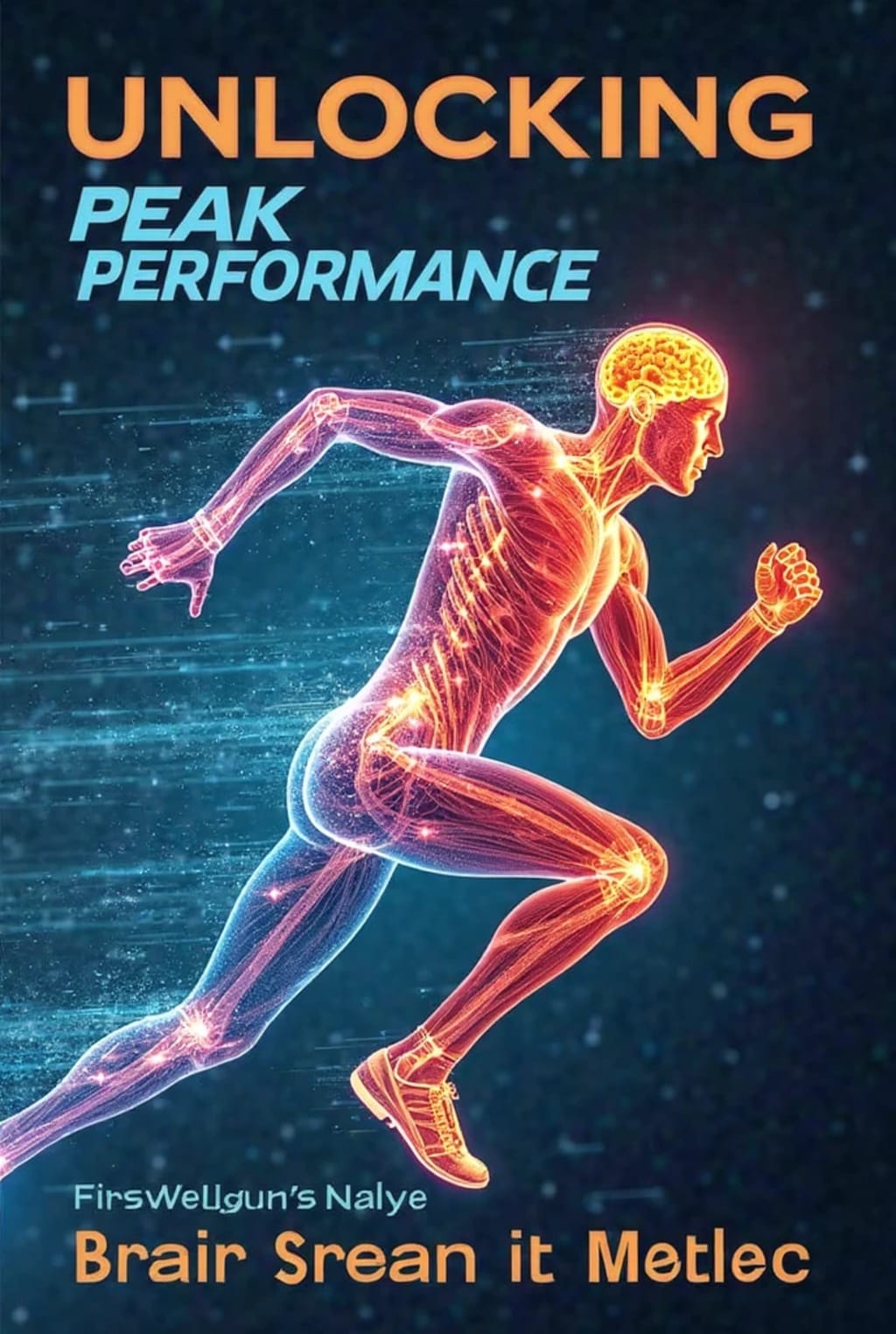
It was 3.7 seconds.
That was all that stood between Ayaan Malik and the national track team.
Three point seven — a number that whispered at night and screamed every morning.
Ayaan had trained like a soldier. He had given up friendships, sleep, junk food, and even love. But every time he reached the 400-meter finish line, he was still too slow. For four years straight.
The officials didn’t care how hard he tried. “He’s talented,” they said. “But he doesn’t have it.”
Now 23, Ayaan stood on the edge of quitting. Until he met someone who didn’t train athletes — he built them. Dr. Mehran Faiz wasn’t a typical coach. He wore glasses, didn’t shout, and spent more time with computers than with cones.
He was a sports neurophysiologist, known in whispers as “The Human Codebreaker.”
Dr. Mehran had once worked with elite athletes in Europe but left the scene after a scandal involving performance-enhancing accusations — none proven, but enough to damage his name.
When Ayaan approached him, the doctor looked amused.
“I don’t train runners,” he said.
“I’m not a runner,” Ayaan replied. “I’m a project.”
That line got his attention.
Ayaan’s training changed overnight.
There were no sprints. No weights. Not even a track.
The first two weeks were spent in a dark lab with strange sensors glued to his skull and limbs.
Mehran explained, “Your body isn’t the problem. Your brain is choking your muscle output by 12% due to fear and lactic anticipation.”
They analyzed every part of Ayaan’s physiology:
• Heart rate variability
• Blood oxygen levels
• Gait symmetry
• Neuromuscular firing patterns
Then came cognitive reconditioning.
Through neurofeedback headsets, Ayaan was trained to suppress the part of his brain that triggered doubt under pressure. Meditation wasn’t just for peace now — it was a performance tool.
“Athletic greatness,” Mehran said, “isn’t about being fearless. It’s about being aware of fear and outperforming it.”
Three weeks in, they took Ayaan to a motion lab. Infrared cameras tracked every joint as he sprinted on a treadmill.
The verdict?
His left ankle rotated 2.6 degrees outward every time he accelerated — a micro-error that drained energy and slowed his drive phase.
“I’ve run like this my whole life,” Ayaan said.
Mehran didn’t flinch. “And that’s why you’ve lost your whole life.”
Custom shoes were built. Strength imbalances were corrected through isometric resistance training. Even his diet was reprogrammed to match his genetic absorption rate for glucose and proteins.
Three months later, Ayaan returned to the national trial track.
Rumors flew: “He trained with that banned scientist.”
“He probably hacked his body.”
“He’ll crash under pressure.”
They didn’t see what had been unlocked inside him.
As Ayaan lined up for the 400m, his body felt... silent. No jitters. No fear. Just data. Just command. Just clarity.
The gun fired.
Ayaan didn't explode — he unfolded. His strides were mathematically precise, his breaths programmed like code, his heartbeat synced with footfalls.
He didn’t just run the race — he dissected it in motion.
When he crossed the finish line, the clock blinked:
45.18 seconds. National Record.
The stadium was silent.
Then chaos.
Ayaan’s victory was celebrated — briefly. Within hours, questions arose.
“No athlete improves that fast without help.”
“What was Mehran really doing in that lab?”
A drug test came back clean. But rumors didn’t need proof.
Ayaan and Mehran were summoned by the Athletics Federation.
“We didn't cheat,” Ayaan said. “We upgraded.”
Mehran stepped in: “What scares you isn’t our method — it’s that you never believed the human body could be that efficient without drugs.”
They presented data logs, training visuals, biomechanical charts, and medical clearances.
Finally, one old board member said, “What they’ve done… is the future.”
Ayaan’s story spread globally — not just as an athlete, but as the first openly lab-trained runner to reach elite performance through science alone.
Colleges invited Mehran to speak. Corporations offered Ayaan endorsements — not for shoes, but for neural headbands, smartwatches, and virtual training tech.
Other athletes came forward.
“I want to train like Ayaan.”
Suddenly, the stigma around science in sports began to dissolve. And the boundary between biology and performance was officially blurred.
But the journey wasn’t done.
Ayaan collapsed mid-run during a Diamond League event in Berlin.
Medical teams rushed. The diagnosis: over-sensory burnout.
His brain was processing too much — not pain, but data — even while running.
His body wasn’t tired. His mind was.
“You turned yourself into a machine,” Mehran told him later.
“Machines don’t dream.”
Ayaan went silent.
He didn’t speak publicly for 6 months.
When Ayaan returned, it wasn’t to win.
He ran with high school kids. Coached village teams. Gave seminars titled "The Human Behind the Data."
He explained how science helped him unlock potential — but nearly locked away his humanity.
“You can chase greatness,” he told one group,
“Just don’t forget to feel the wind as you run. That’s the part science can’t measure.”
Years later, Ayaan’s story became required reading in elite sports academies.
Not just for his records, but for what he represented:
• That science could unlock a person.
• But only the soul could sustain them.
In the end, peak performance wasn’t just about speed or muscle —
It was about balance.
Between data and instinct.
Between brain and heart.
Between striving — and being.
The Science Behind the Fiction (Optional Sidebar for Article Version)
• Neurofeedback training is used by Olympic shooters and golfers to enhance mental focus.
• Biomechanical mapping is now common in NBA and Premier League teams to reduce injury.
• Customized nutrition based on genetic profiling is an emerging field in elite athletics.
• Cognitive overload is a real issue among tech-assisted athletes — too much data can impair instinctual responses
About the Creator
LLMs in Education Market Forecast to Hit USD 127.9 Bn by 2034: Transforming Digital Learning Worldwide
Introduction The LLMs in Education market refers to the use of large language models within digital learning platforms, academic institutions, and corporate training systems. Large language models such as OpenAI’s GPT systems and Google’s Gemini are designed to process and generate human-like text, enabling tutoring, content creation, assessment support, and personalized feedback. These models are integrated into learning management systems, virtual classrooms, and mobile applications. The market is projected to reach USD 127.9 billion by 2034, reflecting rapid digital transformation across global education systems.
By Roberto Crum4 days ago in Education




Comments (1)
No matter your age, keep your inner child alive—nurture that sense of wonder, curiosity, and play, for it is the key to creating stories and poems that truly shine. Whether you're weaving spells in a fantasy realm, chasing shadows through neon-lit streets in urban fantasy, exploring galaxies in sci-fi, or crafting verses that sing like wind through trees, that childlike spirit is your greatest creative force. Embrace it fully, and you’ll find yourself shaping masterpieces from imagination’s raw magic.