
Unlocking Brighter Futures: The Power of Education
How Lifelong Learning Transforms Lives, Communities, and the World
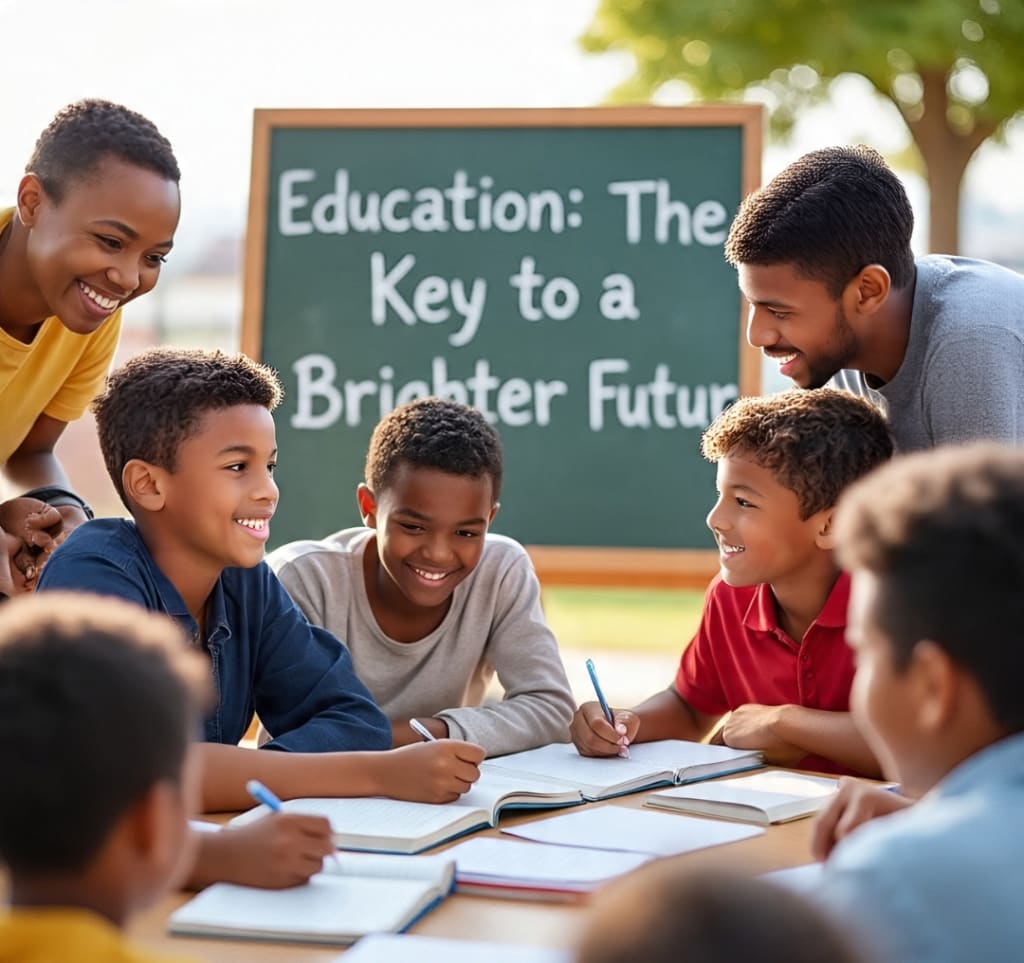
Unlocking Brighter Futures: The Power of Education
How Lifelong Learning Transforms Lives, Communities, and the World
In a small village nestled between green hills and flowing rivers, a young girl named Amina woke up every morning with a single goal: to learn something new. Her classroom was modest — a one-room schoolhouse with wooden benches and a chalkboard — but inside, it was filled with possibility.
Amina’s school was part of a larger movement in her country, a renewed focus on education for all. For years, children in her village didn’t have access to proper schooling. Many families couldn’t afford supplies, and some didn’t see the value in sending their daughters to school. But things had changed.
Thanks to community efforts and international support, the school now had resources, trained teachers, and most importantly, a vision. It wasn’t just about learning to read and write — it was about unlocking potential, expanding dreams, and breaking cycles of poverty. Amina was among the first generation of students to benefit from this transformation.
Around the world, education is more than a basic right. It’s a tool for empowerment. Studies show that access to quality education reduces inequality, boosts economic growth, and improves health outcomes. Children who attend school are more likely to grow into adults who contribute meaningfully to their societies — not just economically, but socially and politically as well.
In a city thousands of miles away from Amina’s village, another story of transformation was unfolding. Jason, a high school dropout, had struggled for years to find steady work. He’d always believed he wasn’t “cut out” for school, but when he discovered a local adult learning center, everything changed.
The center offered GED classes, job training, and mentorship. At first, Jason was hesitant. Walking into that building felt like stepping into a world he didn’t belong to. But his teacher, Ms. Rivera, welcomed him with encouragement and respect. “It’s never too late to learn,” she reminded him. “You’re here now — and that’s what matters.”
Within months, Jason had not only earned his diploma but also developed a love for learning he never knew he had. He went on to enroll in community college and later became a social worker, helping others overcome challenges he once faced himself.
Both Amina and Jason’s stories highlight a core truth: education changes lives. It equips individuals with the knowledge and confidence they need to shape their futures. But the impact doesn’t stop there. Educated individuals uplift their families, strengthen their communities, and help build more inclusive, resilient societies.
In recent decades, global efforts like the United Nations’ Sustainable Development Goal 4 — which aims to ensure inclusive and equitable quality education for all — have driven progress in many regions. Primary school enrollment has risen, gender gaps have narrowed, and literacy rates continue to improve.
But challenges remain. Millions of children still lack access to quality education, especially in conflict zones or remote areas. Digital divides and economic barriers continue to limit opportunities for many. And while the COVID-19 pandemic brought education systems online, it also revealed deep inequalities in access to technology and support.
Despite these hurdles, educators, parents, and communities continue to innovate and adapt. Mobile libraries, online learning platforms, radio classrooms, and community teaching programs have emerged to keep the flame of learning alive in even the toughest circumstances.
What’s clear is that education doesn’t have to look the same everywhere — but it must be available to everyone. Whether it’s a child like Amina learning math under a mango tree, or an adult like Jason discovering the joy of reading in a city classroom, the power of education lies in its ability to reach hearts and open minds.
The future depends on what we teach today. Not just reading, writing, and arithmetic, but also values like empathy, critical thinking, and collaboration. Education that nurtures curiosity, creativity, and compassion prepares young people not just to succeed, but to lead with integrity.
As Amina dreams of becoming a teacher herself, and Jason mentors others in his community, their stories remind us that education is not a destination — it’s a lifelong journey. One that begins with a single step, a curious question, or an open book.
And in every classroom, library, or corner of the world where learning takes place, a brighter future is already being written — one student at a time.
About the Creator
Keep reading
More stories from Muhammad Saad and writers in Education and other communities.
The Hidden Power of Punctuation
Language is a tool everyone uses, but only a few realize how powerful it truly is. Words shape thoughts, express feelings, and build ideas. Yet, there is something even smaller than words that can change the entire message: punctuation. That tiny dot, comma, or colon can transform meaning and, at times, even change someone’s perspective on life. A simple sentence can become respectful, offensive, confusing, or inspiring—all based on how it is punctuated.
By Muhammad Saad 4 months ago in Education
Financially Ready for Retirement: Smart Planning Tips for a Stress-Free Future
Retirement is often viewed as a time to relax, pursue personal passions, and spend more time with family and friends. However, achieving a comfortable retirement requires careful financial planning long before your working years end. Without preparation, many individuals may struggle to maintain their lifestyle or cover essential expenses after leaving the workforce.
By Michael Petruska2 days ago in Education
Understanding Scaling with Quality Control
Business growth is often seen as a positive milestone that reflects increasing demand, improved market presence, and stronger financial performance. However, growth also introduces operational complexity. When companies expand production, services, or geographic reach, maintaining consistent standards becomes more challenging. For this reason, organizations must focus on effective scaling with quality control measures to ensure that expansion does not reduce reliability or customer satisfaction.
By Devin Doyle of Newport Beacha day ago in Education
Thief In The Night
To the thief in the night that took and replicated what once was mine: Honestly, I feel kind of bad for you. It’s funny, because we hardly know each other. I only know of you through the magazines you’ve written and the broadcasts you have televised in the past — as well as through the public mentions of you from your show business connections there.
By Snarky Lisa7 days ago in Humans



Comments
There are no comments for this story
Be the first to respond and start the conversation.