
Universe, Universe is Bigger Than You Think
Earth in the Vastness of the Universe: A Journey of Cosmic Proportions
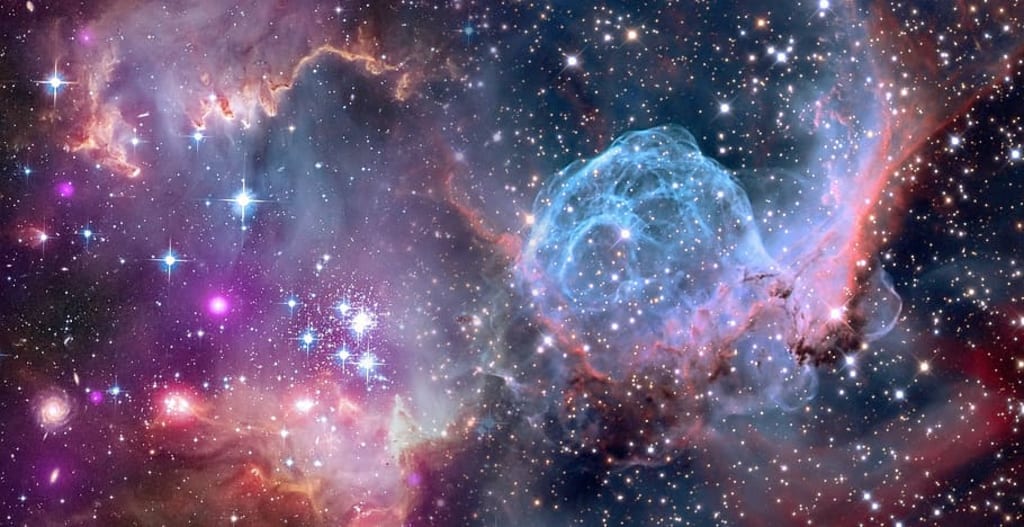
You live here on Earth somewhere, and everything you've ever known is located right here.
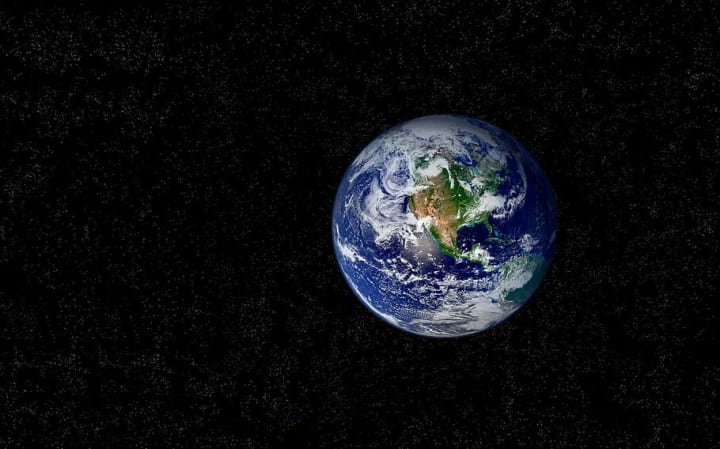
But just how small is Earth compared to the size of the whole universe? Let's begin by zooming out to where we can see our nearest cosmic neighbor, the Moon. Despite appearing close in our night skies, the Moon is actually about 384,400 kilometers away from Earth on average. You could fit 30 entire Earths in between this distance, and if you were to drive a car at a steady 100 km/h speed, it would take you about 160 days to cover the entire distance. Nevertheless, 12 humans have achieved the incredible feat of setting foot on the Moon, representing one of humanity's greatest achievements.
Next, let's look at Earth from the perspective of Mars. On average, Mars is an impressive 225 million kilometers away from Earth, but that distance can be as high as 401 million kilometers. This means that landing a human on Mars would place them 986 times further away from Earth than the astronauts who landed on the Moon. Moreover, the time delay for sending a message from Mars back to Earth is not just two and a half seconds, but rather around 20 minutes each way, making immediate communication in emergencies impossible.
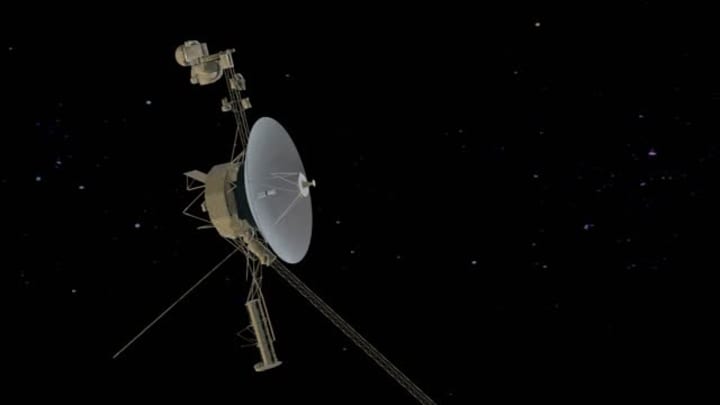
Zooming out further, we find Voyager 1, the farthest man-made object from Earth, currently located 138 astronomical units (AU) away from Earth. An astronomical unit is the distance between Earth and the Sun, making Voyager 1 138 times further from us than the Sun. This spacecraft captured an awe-inspiring image of Earth from its distant location, a mere pale blue dot in the vastness of space.
As we venture beyond our solar system, the nearest star to us, Proxima Centauri, is still 4.24 light-years away. Even traveling at Voyager 1's incredible speed, it would take over 70,000 years to reach it. Zooming out even further, we see the entire Milky Way galaxy. Earth is just a tiny speck within this vast galaxy that spans over 100,000 light-years.
Beyond the Milky Way lies the Virgo Supercluster, which contains numerous galaxies, including our own. This supercluster is just a part of the immense Laniakea Supercluster, which is home to our galaxies and about 100,000 other galaxies. Even Laniakea is but a tiny fraction in the grand scale of the observable universe.
The observable universe encompasses everything we know, with at least 2 trillion individual galaxies. It is home to more stars than there are grains of sand on Earth. The observable universe stretches about 46.5 billion light-years from Earth to any side, with a total width of 93 billion light-years. However, beyond the observable universe, lies the unknown, and we can only imagine what vast wonders lie beyond our current perception.
Galaxies and Galactic Clusters
At a smaller scale, the universe is composed of galaxies, each containing billions to trillions of stars. Our own galaxy, the Milky Way, is home to approximately 100 to 400 billion stars. Beyond our galaxy lie countless others, some of which are even more massive and contain billions of stars, with distances between them spanning millions of light-years.
Galaxies do not exist in isolation; they cluster together due to gravity. These galactic clusters can contain thousands of galaxies and can extend across vast regions of space.
The Cosmic Web
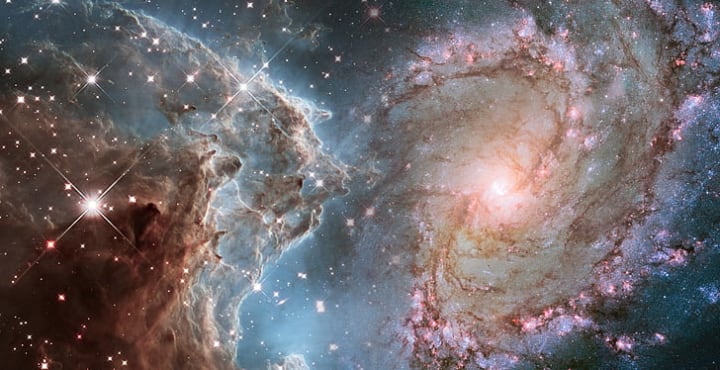
As we delve deeper into the structure of the universe, we encounter a complex network of filaments and voids known as the cosmic web. This intricate web-like structure is composed of dark matter and gas, weaving throughout the universe, shaping the distribution of galaxies and forming colossal structures on a scale that defies comprehension.
Cosmic Inflation and Multiverse Hypotheses
The concept of cosmic inflation proposes that the universe underwent a rapid and exponential expansion shortly after the Big Bang. This inflationary phase may have caused the universe to expand far beyond the limits of our observable universe, leading to the existence of regions we can never access.
Additionally, some theoretical models, such as the multiverse hypothesis, suggest the existence of multiple universes, each with its own set of physical laws and properties. While this remains a highly speculative idea, it adds to the notion that the size of space could extend far beyond what we can ever grasp.
The Humbling Nature of Space
Contemplating the vastness of space can be both humbling and exhilarating. It reminds us of our place in the grand cosmic scheme and underscores the insignificance of our tiny blue planet in the vastness of the universe. Yet, it also ignites our curiosity and thirst for knowledge as we strive to understand the mysteries of the cosmos.
In conclusion, the size of space is an enigmatic and boundless expanse that continues to beckon us to explore its wonders. From the observable universe to the cosmic web and beyond, the mysteries of space inspire us to push the boundaries of human knowledge and deepen our appreciation for the cosmos we call home.
About the Creator
Keep reading
More stories from Majid khan and writers in Education and other communities.
Titanic
The RMS Titanic, a symbol of ambition and opulence, embarked on its maiden voyage in 1912, promising an unprecedented degree of luxurious and technological advancement. From its theory through the White Star Line to its fateful stumble upon with an iceberg, the Titanic's story captivates the creativeness. This weblog explores the grand imaginative and prescient at the back of the Titanic, the events that caused its dying, and the iconic legacy it has left at the back of.
By Majid khan3 years ago in Education
Atlas Aluminum Corp Parts Catalog: Aerospace Manufacturing, Aviation Hardware, and Industrial Aluminum Components
Introduction: My Research Into Atlas Aluminum Corp Parts Catalog While exploring aerospace hardware suppliers and industrial component manufacturers, I came across the Atlas Aluminum Corp Parts Catalog listed on the NSN platform. What fascinated me most was how manufacturers like Atlas contribute to the broader ecosystem of aerospace engineering, aviation structures, and industrial aluminum components.
By Beckett Dowhan6 days ago in Education
Millions Have ADHD — Here's What That Means
ADHD is a neurodevelopmental condition that manifests with symptoms of inattention, hyperactivity, and impulsivity, often interfering with various aspects of daily life. It is most commonly diagnosed in childhood but can persist into adulthood, affecting how people function at work, in school, and in personal relationships.
By Madhuri Janvia day ago in Education



Comments
There are no comments for this story
Be the first to respond and start the conversation.