
Understanding the Challenges Students Face During the Dissertation Writing Process
Identifying Common Struggles and How to Overcome Them for Academic Success

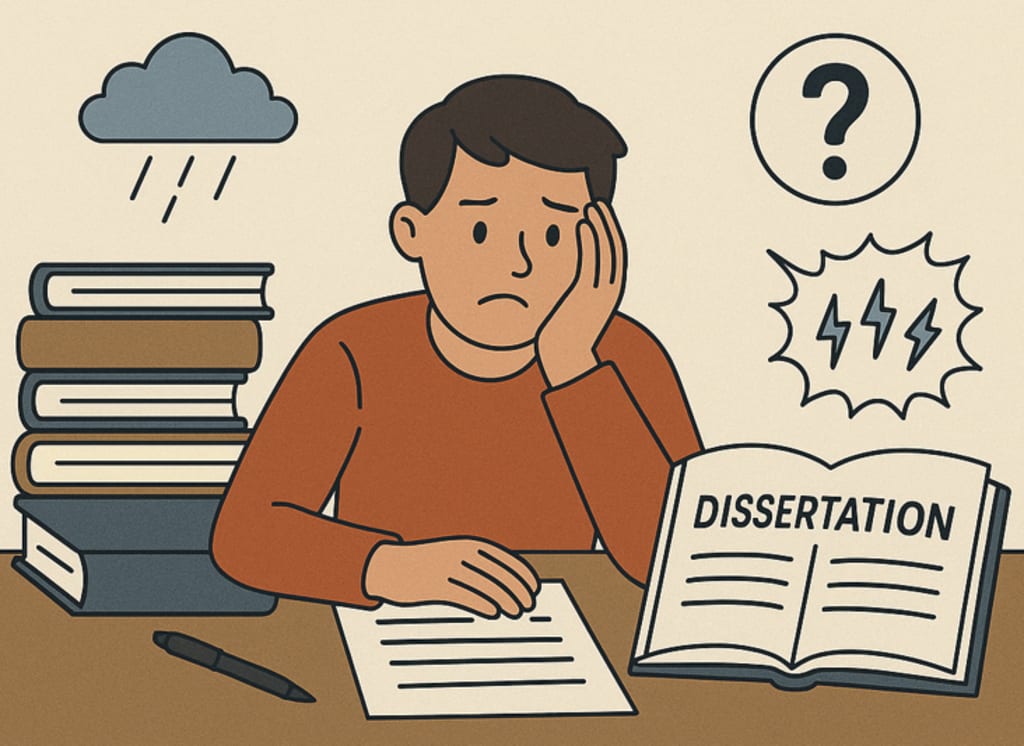
Writing a dissertation is one of the most important tasks for college and university students. It is a long academic paper that requires a lot of time, planning, and hard work. For many students, the dissertation is the final step before getting their degree. However, it is not an easy process. Many students face different challenges during dissertation writing. These problems can affect their motivation, confidence, and even their grades.
In this article, we will talk about the common difficulties students face during the dissertation writing process. We will also try to understand why these problems happen and how students can manage them better.
1. Lack of Clear Understanding
One of the first problems students face is not fully understanding what a dissertation is. Many students are not clear about:
- What is expected from them
- How long the dissertation should be
- What the structure should look like
- How deep the research should go
This lack of understanding leads to confusion and stress. When students do not know what to do, they often delay starting the work or do it the wrong way.
How to solve it:
Students should take time to read the university guidelines carefully. Talking to professors or supervisors early on can also help clear doubts. Looking at past dissertations can give a better idea of what is expected.
2. Poor Time Management
Writing a dissertation takes many weeks or even months. Students often think they have a lot of time, so they delay starting the work. Then, when the deadline gets closer, they feel pressure and try to rush the process. This leads to lower quality work and more stress.
Why it happens:
- Students often have classes, jobs, or family duties.
- Some students feel overwhelmed by the size of the project.
- Others may not be motivated and keep putting it off.
How to manage time better:
Making a proper schedule from the start can really help. Breaking the work into small tasks makes it less scary. For example, students can set goals like writing 500 words per day or finishing the literature review in 10 days.
3. Difficulty in Choosing a Topic
Picking the right topic is one of the hardest parts of writing a dissertation. A good topic should be interesting, researchable, and not too broad or too narrow. Some students spend weeks trying to pick a topic but still feel unsure. This uncertainty can slow down the entire writing process and affect motivation.
Why it matters:
If the topic is too broad, it becomes hard to cover everything. If it is too narrow, there may not be enough sources to use. Also, students must pick something they actually care about, or else they will lose interest. That’s why it's a smart move to explore different dissertation topics before making a final decision—this can help students see what kinds of research have already been done and where there’s room to explore new ideas.
How to choose a good topic:
- Talk to supervisors for ideas.
- Think about topics from previous classes that were interesting.
- Check if there are enough books and studies on the topic.
- Pick something that can lead to meaningful research.
4. Limited Research Skills
Not all students are trained in how to do academic research. They may not know how to search for good sources, how to tell if a source is reliable, or how to collect data properly. Some students rely only on Google, which may not give them quality academic materials.
Why this is a problem:
Dissertations require in-depth research. Poor research leads to weak arguments and low-quality work.
How to improve research skills:
Universities often have research training sessions or writing centers. Libraries also provide help with databases and academic journals. Learning how to use tools like Google Scholar, JSTOR, and others can make a big difference.
5. Writing and Structuring Problems
Even when students have done their research, they often struggle to write the dissertation in a clear and organized way. Some common issues include:
- Writing long, confusing sentences
- Poor grammar or spelling
- No clear flow between paragraphs
Not following the correct structure (e.g., introduction, literature review, methodology, etc.)
Why it matters:
Poor writing makes it hard for readers to understand the points. It also reduces the professional quality of the dissertation.
How to write better:
Students should write simple and clear sentences. It's better to use active voice and avoid complex language. Also, proofreading the work or using tools like Grammarly can help fix basic mistakes.
6. Trouble with Data Collection
For many dissertations, especially in fields like social sciences or education, students must collect their own data. This could be through surveys, interviews, or experiments. But data collection is not easy.
Common challenges include:
- Not enough people respond to surveys
- Interviews get cancelled
- Technical problems with tools
- Data is incomplete or not useful
How to manage this:
Students should plan the data collection stage carefully. They should also have backup plans in case something goes wrong. Getting help from a supervisor can guide students to use better methods.
7. Problems with Citations and Referencing
Academic writing needs proper citations. Students must give credit to authors whose work they use. But many students do not know how to do this the right way. They either forget to add references or use the wrong style, which can hurt the quality of their work.
Why it's important:
Wrong referencing can lead to plagiarism, which is a serious academic offense. Even unintentional plagiarism can cause trouble and result in marks being deducted or the dissertation being rejected.
How to fix it:
Students should learn about the required citation style from the start. Understanding how to use APA, MLA, Harvard, and other citation styles properly can prevent mistakes. Using built-in citation tools in Microsoft Word can help manage references easily and reduce the chances of making errors.
8. Low Motivation and Stress
Because the dissertation is a long and hard task, students often lose motivation in the middle of the process. They may feel:
- Lonely, since it’s an independent project
- Stuck, if they hit a difficult part
- Burned out from doing so much work
- This affects their ability to focus and meet deadlines.
How to stay motivated:
Setting small goals and celebrating progress can help. Talking to friends or classmates about the process can also reduce feelings of isolation. Some universities also offer mental health support for students.
9. Lack of Feedback or Support
Some students don’t get enough help from their supervisors. They may not know if they are doing the work correctly or what changes to make. Without regular feedback, students can go in the wrong direction.
How to get better support:
Students should be active in reaching out. It helps to send regular updates or questions to the supervisor. Joining student writing groups can also give support and useful advice.
10. Technical Issues
Sometimes, students lose their work because they forgot to save it or their computer crashed. Other times, formatting the document, adding tables, or fixing spacing can take hours.
Simple ways to avoid this:
- Always save the work in multiple places (USB, cloud, email)
- Use tools like Google Docs for auto-saving
- Learn how to use formatting tools in Word or ask for help
Writing a dissertation is a big challenge, but it is also a chance for students to show what they have learned. The process helps develop skills like critical thinking, research, writing, and problem-solving. Yes, there are many difficulties, but with the right planning, support, and attitude, students can overcome these challenges. Utilizing dissertation writing services can also be helpful for students who need extra guidance or professional help during the process.
Universities also have a role to play. By offering better training, guidance, and emotional support, they can help students feel more confident and less stressed. Resources like this list of top dissertation services for students provide options that students can explore if needed. Along with guidance from universities, these services can be part of the broader support system that helps students complete their dissertations successfully.
In the end, completing a dissertation is not just about earning a degree—it’s about growing as a student and as a person.
About the Creator
James Daniels
James Daniels is a dedicated scholar currently pursuing a Postdoctorate in English Literature at Harvard University in Cambridge.
Keep reading
More stories from James Daniels and writers in Education and other communities.
Better Writing, Better Grades: What Essay Writing Services Do for Students
College life is often painted as exciting, full of learning and growth. But the reality for many students is a lot more stressful. With deadlines, part-time jobs, family responsibilities, and constant pressure to perform well, even the most hardworking student can feel overwhelmed. One of the biggest challenges students face is writing strong essays for multiple subjects, week after week. This is where professional essay writing services quietly step in to make a real difference.
By James Daniels11 months ago in Education
Clear Paths to Discover Your Purpose in Life
Finding direction in life is a common human search. Many people want their work and daily actions to feel meaningful. When you discover your purpose in life, you gain a sense of direction and inner peace. Purpose does not appear in a single moment for most people. It often grows through reflection, action, and learning. Small steps can lead to deep insight.
By Philip Raymond Baquie7 days ago in Education


Comments
There are no comments for this story
Be the first to respond and start the conversation.