
Understanding Risk Assessment and Management in the Workplace
Risk Assessment and Management in the Workplace
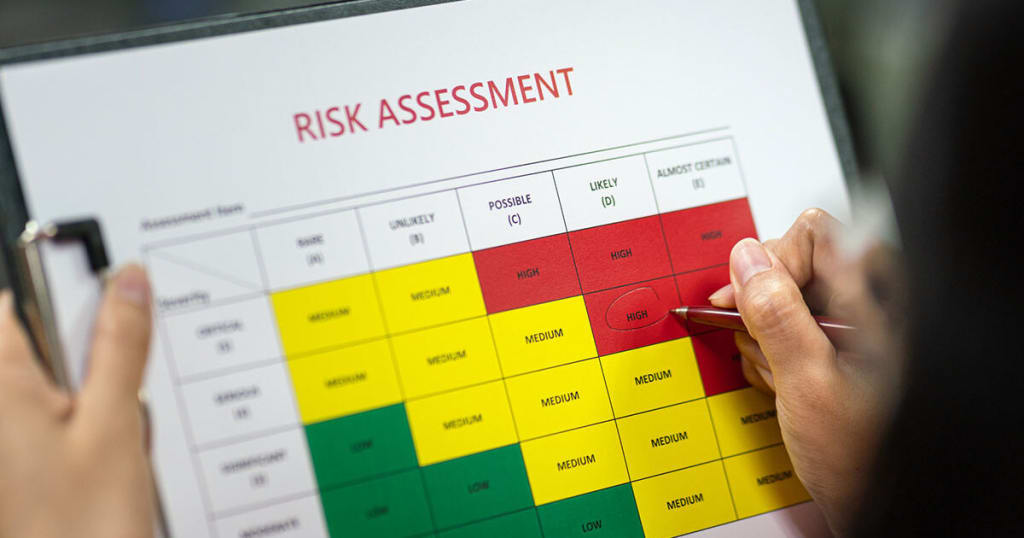
Risk assessment and management are essential components of workplace safety. By identifying potential hazards and taking steps to mitigate them, employers can create a safe work environment for their employees. In this article, we will discuss the importance of risk assessment and management in the workplace, the steps involved in conducting a risk assessment, and strategies for managing risks.
Importance of Risk Assessment and Management in the Workplace
Risk assessment and management are essential to workplace safety because they help employers identify potential hazards and take steps to mitigate them. Workplace hazards can include physical hazards like slips, trips, and falls, as well as chemical and biological hazards like exposure to hazardous chemicals and infectious diseases. By identifying and addressing these hazards, employers can create a safer work environment for their employees and reduce the risk of accidents and injuries.
Conducting a Risk Assessment
A risk assessment is the process of identifying potential hazards and assessing the likelihood and severity of harm that could result from those hazards. The following steps are involved in conducting a risk assessment:
Step 1: Identify Hazards
The first step in conducting a risk assessment is to identify potential hazards in the workplace. This can be done through a combination of observation, consultation with employees, and review of safety data sheets (SDSs) and other relevant documents. Some common workplace hazards include slips, trips, and falls, electrical hazards, hazardous chemicals, and ergonomic hazards.
Step 2: Assess the Likelihood and Severity of Harm
Once potential hazards have been identified, the next step is to assess the likelihood and severity of harm that could result from those hazards. This involves considering factors like the frequency and duration of exposure to the hazard, the likelihood of an accident or incident occurring, and the potential severity of the harm that could result.
Step 3: Evaluate Existing Controls
The next step is to evaluate existing controls that are in place to mitigate the identified hazards. This may include engineering controls like ventilation systems or administrative controls like training and standard operating procedures. The effectiveness of these controls should be assessed, and any gaps or weaknesses identified.
Step 4: Implement Additional Controls
If there are gaps or weaknesses in the existing controls, additional controls should be implemented to mitigate the identified hazards. This may include additional engineering or administrative controls, or the use of personal protective equipment (PPE) like respirators or gloves.
Step 5: Monitor and Review
The final step in conducting a risk assessment is to monitor and review the effectiveness of the controls that have been implemented. This may involve ongoing monitoring of exposure levels or incident reports, as well as periodic review of the risk assessment process itself to ensure that it remains up-to-date and effective.
Managing Risks
Once potential hazards have been identified and assessed, it is important to manage those risks in order to create a safe work environment. This may involve a range of strategies, including:
Eliminating the hazard: The most effective way to manage a hazard is to eliminate it entirely. This may involve redesigning work processes or substituting hazardous materials with less hazardous alternatives.
Implementing engineering controls: Engineering controls are physical modifications to the work environment that can reduce the risk of exposure to hazards. Examples include ventilation systems, machine guards, and noise barriers.
Implementing administrative controls: Administrative controls are procedures and policies that can reduce the risk of exposure to hazards. Examples include training programs, standard operating procedures, and work practices.
Providing personal protective equipment (PPE): PPE is equipment worn by workers to protect them from hazards. Examples include respirators, gloves, and safety glasses.
Monitoring and reviewing: It is important to regularly monitor and review the effectiveness of risk management strategies to ensure that they are working as intended.
Conclusion
In conclusion, understanding risk assessment and management in the workplace is crucial for creating a safe and healthy work environment. By identifying potential hazards, assessing their likelihood and severity, evaluating existing controls, implementing additional controls, and monitoring and reviewing their effectiveness, employers can effectively manage risks and minimize the potential for accidents and injuries. It is important to prioritize the safety and well-being of employees by taking proactive steps to mitigate hazards and ensure compliance with relevant regulations and standards. Remember, risk assessment and management should be an ongoing process, continuously reviewed and updated as workplace conditions evolve. By prioritizing risk assessment and management, employers can create a safer work environment, protect their employees, and reduce the overall risk of incidents and liabilities. Investing in effective risk assessment and management practices is not only the responsible thing to do, but it also makes good business sense, as it helps protect the well-being of employees and the reputation of the organization.
About the Creator
Keep reading
More stories from Nathan Glen Anderson and writers in Education and other communities.
Building Resilience in the Workplace: Strategies for Managing Workplace Stress and Trauma
In today's fast-paced and highly demanding work environment, it's not uncommon for employees to experience stress, burnout, and even trauma. However, it's essential to learn how to manage these challenges effectively to avoid negative outcomes such as decreased productivity, job dissatisfaction, and mental health issues. Building resilience in the workplace is crucial for individuals and teams to overcome stress and trauma and maintain a healthy work-life balance. In this article, we'll discuss strategies for managing workplace stress and trauma and building resilience in the workplace.
By Nathan Glen Anderson3 years ago in Education
✅ Mismatch: Life Skills of Learning to Walk and Mastering Writing, Fight Bullies ✅
✅ How can I become a better writer? ✅ It starts with mindfulness, , , Every year, many people go to the Emergency Room because they have fallen inside their own house, and for some elderly people a broken bone is a very serious matter; however, if you take a grappling art like Judo or Aikido, the first thing you learn is to fall, and the first part of mastering that lesson is to relax.
By SAMURAI SAM AND WILD DRAGONS6 days ago in Education
Why Are Coffee Beans More Than Just a Morning Habit?
Coffee is one of the most widely consumed beverages in the world, enjoyed daily by millions of people across cultures and continents. At the heart of every cup of coffee lies the coffee bean, a small but powerful ingredient that defines flavor, aroma, and quality. Coffee beans are not just agricultural products; they represent culture, lifestyle, and a major economic activity for many countries.
By Rohit Shah4 days ago in Education




Comments
There are no comments for this story
Be the first to respond and start the conversation.