
Understanding Overhead Stirrer Capacity: Why It Matters
Choosing the right overhead stirrer capacity can significantly enhance your lab's efficiency. Discover how this often-overlooked factor can impact your research and experiments, and learn how to make the best decision for your lab.

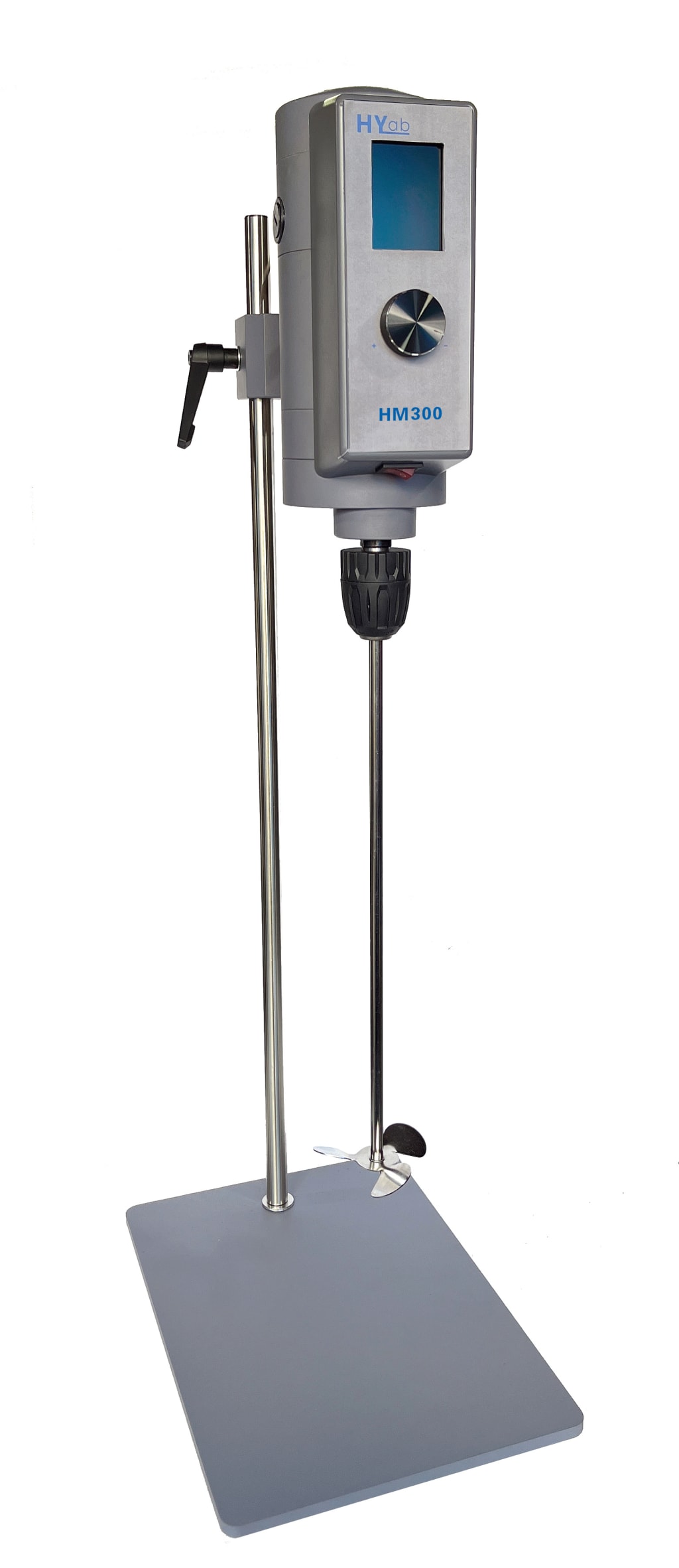
In the world of laboratory research, the effectiveness of your tools can often make the difference between success and failure. One piece of equipment that is central to many types of experiments is the overhead stirrer. While these devices are integral for mixing various materials, the stirrer’s capacity is a crucial factor that is often overlooked.
Overhead stirrer capacity refers to the amount of material—whether in volume or viscosity—that the stirrer can effectively handle. Without a proper understanding of this key feature, your experiments could be compromised by inefficiency or inconsistent results. But don’t worry, we’ll break it down for you.
What to Consider When Choosing Stirrer Capacity
The correct stirrer capacity depends on a few factors that you should carefully consider before making a choice:
Viscosity of Materials:
The viscosity—or thickness—of the material being mixed plays a significant role in choosing stirrer capacity. Highly viscous materials, like gels or slurries, require a stirrer with more torque and power to ensure effective mixing. In contrast, low-viscosity liquids like water or solvents require less force, so a stirrer with lower capacity might suffice.
Volume of Material:
The volume of the material being stirred also affects your choice. If you’re mixing small volumes, a stirrer with a smaller capacity may be sufficient. But for larger volumes, especially in industrial or research settings, you’ll need a stirrer capable of handling the increased load without compromising performance.
Type of Work:
Consider the nature of the work you are doing. Are you conducting chemical reactions, working with biological samples, or mixing high-viscosity industrial substances? Each task has different requirements for the stirrer’s power and capacity. A versatile stirrer like the AKS60-S Overhead Stirrer can adjust to different materials, making it ideal for labs with diverse needs.
The Importance of Choosing the Right Capacity
Selecting the right stirrer capacity isn’t just about the size or power; it’s about matching your stirrer to the specific demands of your experiments. Here’s why it’s important:
Efficiency: A stirrer that is underpowered for your needs will struggle to mix materials properly, leading to inefficient processes and inconsistent results. On the other hand, an overpowered stirrer can consume excess energy and cause wear on both the stirrer and the materials being mixed.
Accuracy: If you’re working with delicate biological samples or sensitive chemical reactions, an incorrectly sized stirrer can either fail to achieve uniform mixing or damage the samples. This is especially true in industries like pharmaceuticals or biotechnology, where precision is paramount.
Time Savings: Using the right stirrer capacity means that you can speed up the mixing process without sacrificing the quality of your results. When a stirrer is well-matched to the material’s viscosity and volume, it operates efficiently, reducing overall time spent on mixing.
The Role of Adjustable Stirrer Capacity
Some stirrers come with adjustable capacities, allowing them to be versatile enough for a wide range of applications. This is particularly useful in research labs where materials and requirements can vary from one experiment to the next. Adjustable stirrers like the AKS60-S Overhead Stirrer can be fine-tuned to handle different viscosities and volumes with ease, offering a high level of flexibility and control over the mixing process.
Watch How It Works: Stirrer in Action
Want to see the difference the right stirrer can make? Check out this demonstration video showcasing the power of the AKS60-S Overhead Stirrer as it handles various materials.
Wrapping Up: Getting the Most from Your Stirrer
When it comes to laboratory work, the right tools are essential for producing reliable, high-quality results. Choosing the correct overhead stirrer capacity is one of the most important decisions you’ll make for your lab’s efficiency. By selecting a stirrer that’s perfectly suited to your materials and experiments, you’ll not only improve the consistency of your work but also save time and energy.
Choosing wisely will make all the difference in optimizing your lab’s processes and ensuring the best outcomes for your research.
About the Creator
equilrxnlab
We specialize in the research and production of efficient chemical instruments,committed to providing exceptional solutions for laboratories worldwide.
URL:equilrxnlab.com
E-mail: [email protected]
ContactUs equilrxnlab.com/contact-us/
Keep reading
More stories from equilrxnlab and writers in Education and other communities.
Why the Oil Bath Heat Collecting Magnetic Stirrer is a Game Changer in Lab Research
In the world of scientific research, precision and reliability are non-negotiable. Whether in chemistry, pharmaceuticals, or material science, the tools we use must help create stable conditions that ensure reproducible and accurate results. One such tool that has gained significant attention in research labs around the world is the Oil Bath Heat Collecting Magnetic Stirrer—an innovative device that integrates two essential laboratory functions: heating and stirring.
By equilrxnlababout a year ago in Education
THE STORY OF LIGHT: A TRIBUTE TO DR. SHIRLEY ANN JACKSON AND THE AGE OF FIBER
Before the world could whisper through glass, before light itself carried our voices across continents, before fiber‑optic lines spread across the nation like glowing nerves of a digital body— there was a girl in Washington, D.C.
By TREYTON SCOTT4 days ago in Education
Luxury Cosmetics Shaping Modern Beauty Preferences Worldwide
Luxury cosmetics represent the highest expression of beauty, combining advanced formulations, refined aesthetics, and a strong emotional connection with consumers. These products go beyond basic personal care, offering an experience rooted in quality, innovation, and self-expression. From high-performance skincare and elegant makeup to exclusive fragrances, luxury cosmetics have become an integral part of modern beauty routines worldwide.
By Bobby Yadava day ago in Education




Comments
There are no comments for this story
Be the first to respond and start the conversation.