
Understanding Narcotics: Knowledge for a Safer Future
Educating Communities on the Risks, Realities, and Responsible Approaches to Drug Use and Prevention
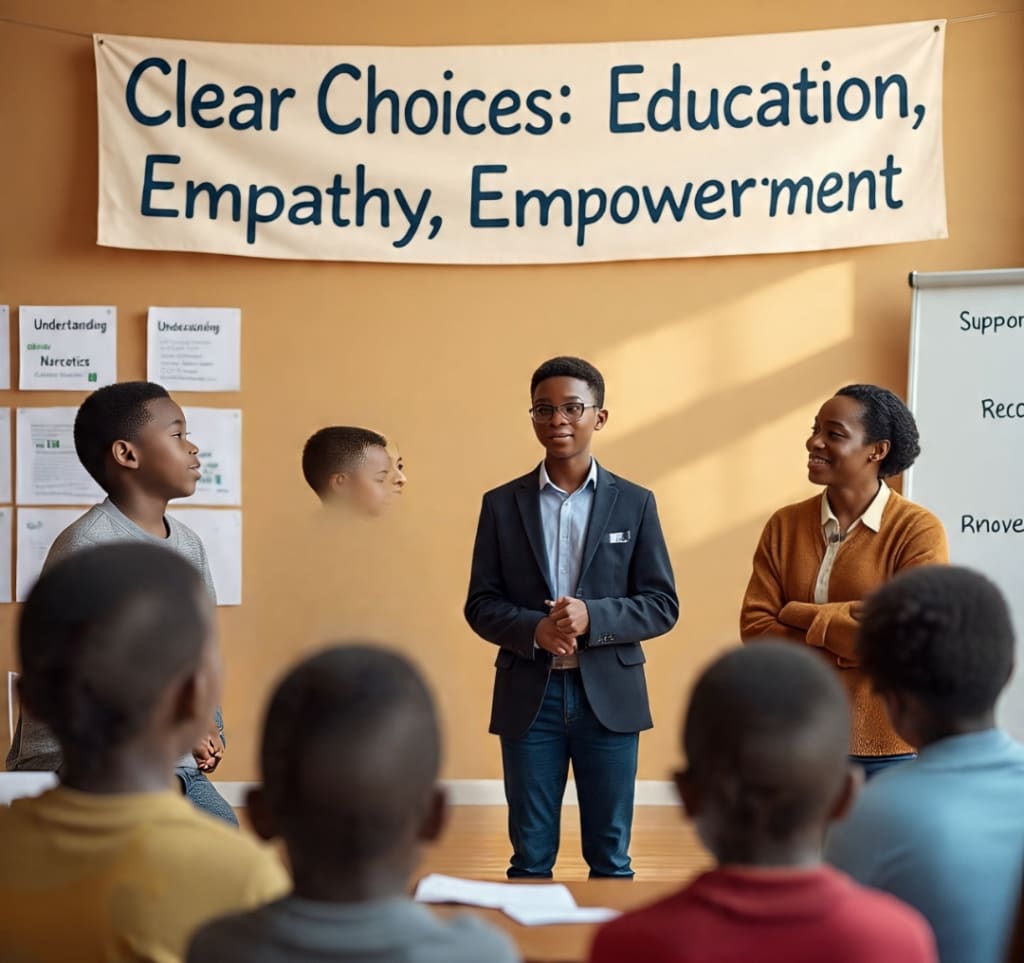
In a small community nestled between rolling hills, something powerful was happening—quietly, steadily, and with purpose. What once was a town struggling with rising drug misuse was becoming a place of understanding, support, and second chances. The change began not with a crackdown, but with a conversation.
It started with a simple idea from a local teacher, Ms. Ana Lopez, who saw that many of her students were asking questions—some out of curiosity, others out of personal experience. She realized they needed more than warnings; they needed honest education.
“I kept hearing the word ‘narcotics’ thrown around, but most of them didn’t really know what it meant,” Ana said. “Some thought it was just a street drug. Others didn’t realize certain pain medications at home were also narcotics. I knew we had to start with knowledge.”
With the help of the school, local health professionals, and community leaders, Ana helped launch a program called Clear Choices—a school and community initiative focused on narcotics education, prevention, and recovery support.
The program was built around three core principles: education, empathy, and empowerment.
First came education. In classrooms and community halls, people learned the truth about narcotics—what they are, how they work, and the difference between medical use and misuse. They learned that narcotics include powerful drugs like morphine, oxycodone, and fentanyl, which are used in hospitals for pain relief, but can be dangerous if misused. Students discussed how addiction can begin, even unintentionally, and how it affects the brain and body.
One of the guest speakers, Dr. Raj Patel, a local physician, made a lasting impression. “Narcotics are not evil,” he told the group. “They are tools. But like all tools, if used the wrong way or without proper care, they can cause harm. That’s why understanding is the first step toward safety.”
The second principle was empathy. Many in the town had friends or family affected by addiction. Rather than shame or blame, Clear Choices promoted compassion. They invited people in recovery to share their stories—not to scare, but to humanize the issue.
One such speaker was Marcus, a 28-year-old who had once struggled with opioid addiction but was now three years sober and working as a peer counselor.
“I used to think addiction was a weakness,” Marcus said to a packed school gym. “But now I know it’s a health issue. What saved me wasn’t judgment. It was someone who believed I could change.”
His words struck a chord. The town started seeing those struggling not as problems, but as people needing help.
Finally, the program focused on empowerment. Teens were trained to become peer educators. Parents attended workshops on how to talk openly with their kids. Doctors reviewed their prescribing practices. Even law enforcement officers received training in harm reduction and crisis response.
The results were encouraging. Within two years, opioid-related incidents in the town dropped. More people sought treatment earlier. A recovery center opened nearby. But perhaps the biggest change was in how people talked—with less fear, and more hope.
One evening, during a Clear Choices community event, a young student named Emily stood up to speak. “I used to think drugs were something that happened to other people,” she said. “But now I know that awareness can protect us. I learned how to help a friend, how to ask questions, and how to say no without shame.”
Her voice, though young, carried wisdom beyond her years.
The journey toward a drug-aware and safe community wasn’t easy, but it showed that positive change doesn’t come from silence or fear—it comes from knowledge, empathy, and unity.
As Ana Lopez watched her students grow into leaders, she smiled. “We’re not just teaching them about narcotics. We’re teaching them how to care for themselves and each other. And that’s the kind of lesson that changes lives.”
---
End Note:
Understanding narcotics is not just about knowing the risks, but also recognizing the importance of medical science, responsible use, and recovery support. Education and compassion can transform not just individuals, but entire communities.
About the Creator
Keep reading
More stories from Muhammad Saad and writers in Education and other communities.
The Day the Results Came In
The Day the Results Came In How One Group of Students Discovered More Than Just Their Grades The morning sun poured over the red-brick walls of St. Alder High School, turning the courtyard into a warm, golden glow. It was results day — the one date circled, highlighted, and whispered about for months. The gates had barely opened when clusters of students began to gather, envelopes clutched in nervous hands, their laughter and chatter hiding the shared thrum of anxiety beneath. Mia stood at the centre of it all, her stomach twisting in knots. She’d been dreaming about this day since the exams ended, running through every possible scenario in her head. She had studied harder than she ever had before — late-night flashcards, group calls, endless practice papers — but the uncertainty still gnawed at her. Around her, her friends—Eli, Zara, and Noah—were trying to look casual, leaning against the wall and joking about who would faint first. “Can’t believe this is it,” Noah said, spinning his envelope between his fingers. “Months of suffering in that library, and it all comes down to this piece of paper.” Zara laughed, though her voice trembled slightly. “If I open this and it says I passed maths, I’m framing it.” Mia smiled faintly, grateful for the light-heartedness. The sound of envelopes tearing open began to ripple through the courtyard. Gasps, squeals, sighs — all blending into a strange symphony of relief and emotion. She took a deep breath, felt her heartbeat in her fingertips, and opened hers. For a moment, all she saw were the numbers, neatly typed in black ink. Then they began to make sense. Her grades were better than she dared hope — not perfect, but enough. Enough to get into the university she wanted. Enough to feel that the long nights and self-doubt had been worth it. She looked up, a wide grin spreading across her face before she could stop it. “I did it!” she said, almost breathless. Zara let out a cheer. “You did? Let me see!” Within seconds, they were all comparing results — some shouting in triumph, some hugging in quiet relief. Eli, who had always been the calm one, smiled as he looked at his paper. “Looks like we’re all going to make it,” he said softly. But not everyone was smiling. A few steps away, another student sat on a bench, staring at her paper, tears welling up. Mia hesitated for a moment, then walked over. It was Sophie — someone she’d worked with on a group project but didn’t know well. “Hey,” Mia said gently. “You okay?” Sophie shook her head, trying to smile through her tears. “I didn’t get the grade I needed. I thought I would. I really thought I would.” Mia sat beside her. “I get it. It feels awful right now. But this isn’t the end. You’re still one of the hardest workers I know. You’ll find another way — you always do.” Sophie gave a small laugh at that. “You sound like a teacher.” “Guess I’ve heard enough pep talks to start giving them,” Mia said with a grin. As they sat together, the rest of the courtyard buzzed with life — laughter, chatter, hugs, and selfies. It was a celebration of more than just numbers on paper. It was a celebration of effort, friendship, resilience. When the group finally left the school grounds, the late-morning sun was shining even brighter. They walked down the familiar street, their envelopes now folded and tucked safely away, but their spirits light. There was something freeing about it — not just knowing their results, but realizing that they were moving forward, together. Later that day, when Mia’s mum asked how it went, she smiled and said, “It was a good day. We all learned something — and not just about grades.” Because in the end, the day the results came in wasn’t just about who scored what. It was about discovering what really mattered: courage, kindness, and the belief that every ending is just the beginning of something new.
By Muhammad Saad 4 months ago in Education
Why the Sun Looks Red at Sunrise and Sunset: The Science Behind Nature’s Most Beautiful Light Show
The Sun Is Actually White Before explaining the red color, it’s important to clarify something surprising: The Sun is not yellow or red by nature—it emits white light.
By shahkar jalal6 days ago in Education



Comments
There are no comments for this story
Be the first to respond and start the conversation.