
Understanding Machine Learning A Comprehensive Guide
Machine Learning
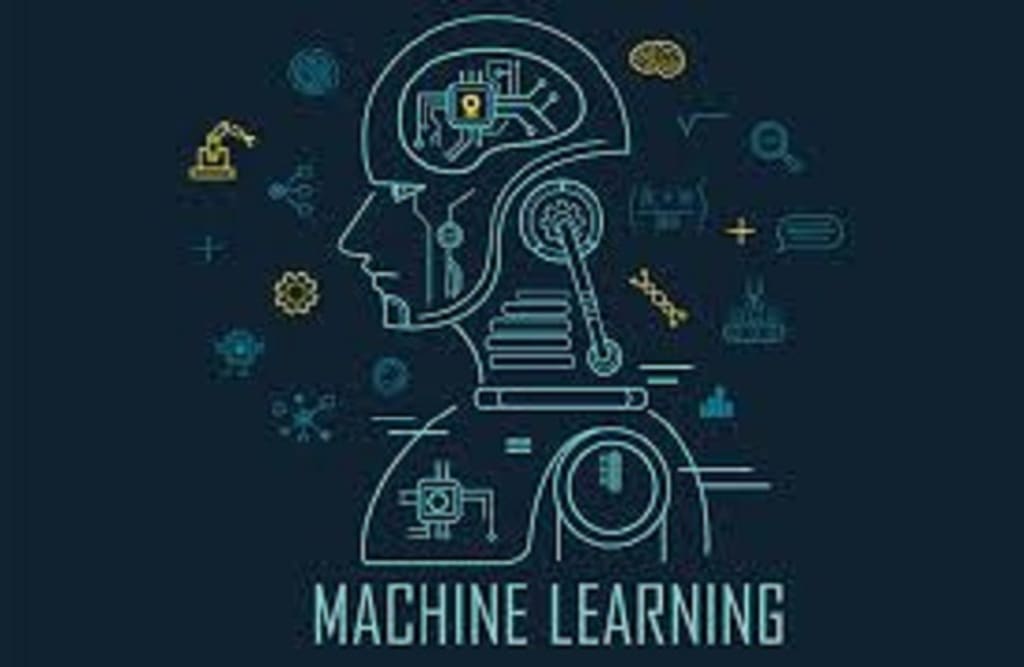
Machine learning (ML) is a subset of artificial intelligence (AI) that enables systems to learn from data, identify patterns, and make decisions without being explicitly programmed. It has transformed various industries, from healthcare to finance, by providing powerful tools for data analysis and prediction. In this article, we will explore the fundamentals of machine learning, its types, common algorithms, and practical code examples to help you get started.Table of Contents
What is Machine Learning?
Types of Machine Learning
Supervised Learning
Unsupervised Learning
Reinforcement Learning
Common Algorithms in Machine Learning
Decision Trees
Support Vector Machines
Neural Networks
Getting Started with Machine Learning: A Code Example
Setting Up the Environment
Example: Predicting House Prices
Conclusion
Further Reading and Resources
1. What is Machine Learning?
Machine learning allows computers to learn from and make predictions based on data. Unlike traditional programming, where a developer writes explicit instructions for the computer to follow, machine learning algorithms use statistical techniques to give computers the ability to learn from past experiences.
Key Terminology
Dataset: A collection of data used for training and testing machine learning models.
Features: The input variables used to make predictions.
Labels: The output variable or the target value that the model aims to predict.
2. Types of Machine Learning
Machine learning can be broadly categorized into three types:Supervised Learning
In supervised learning, the model is trained on labeled data, meaning the input comes with corresponding output labels. The goal is to learn a mapping from inputs to outputs.
Example: Predicting house prices based on features like size, location, and number of bedrooms.
Unsupervised Learning
Unsupervised learning involves training a model on data without labeled outputs. The goal is to find hidden patterns or intrinsic structures in the data.
Example: Grouping customers based on purchasing behavior.
Reinforcement Learning
Reinforcement learning is a type of machine learning where an agent learns to make decisions by taking actions in an environment to maximize cumulative reward.
Example: Training a robot to navigate through a maze.
3. Common Algorithms in Machine Learning
Linear Regression
Linear regression is a basic algorithm used for predicting a continuous target variable based on one or more predictor variables.
Example Code
Codeimport numpy as npimport matplotlib.pyplot as pltfrom sklearn.linear_model import LinearRegression# Sample dataX = np.array([[1], [2], [3], [4], [5]])y = np.array([2, 3, 5, 7, 11])# Create and fit the modelmodel = LinearRegression()model.fit(X, y)# Make predictionspredictions = model.predict(X)# Plottingplt.scatter(X, y, color='blue')plt.plot(X, predictions, color='red')plt.title('Linear Regression Example')plt.xlabel('X')plt.ylabel('y')plt.show()Decision Trees
Decision trees are a non-linear model that splits data into subsets based on feature values. They are intuitive and easy to interpret.Example Code
Codefrom sklearn.tree import DecisionTreeClassifierfrom sklearn.datasets import load_irisfrom sklearn.model_selection import train_test_splitfrom sklearn import metrics# Load datasetiris = load_iris()X = iris.datay = iris.target# Split the datasetX_train, X_test, y_train, y_test = train_test_split(X, y, test_size=0.2)# Create and fit the modelmodel = DecisionTreeClassifier()model.fit(X_train, y_train)# Make predictionspredictions = model.predict(X_test)# Evaluate the modelprint("Accuracy:", metrics.accuracy_score(y_test, predictions))Support Vector Machines
Support Vector Machines (SVM) are powerful classifiers that work well for both linear and non-linear data.Example Code
Codefrom sklearn import datasetsfrom sklearn import svmfrom sklearn.model_selection import train_test_splitfrom sklearn import metrics# Load datasetiris = datasets.load_iris()X = iris.datay = iris.target# Split the datasetX_train, X_test, y_train, y_test = train_test_split(X, y, test_size=0.2)# Create and fit the modelmodel = svm.SVC(kernel='linear')model.fit(X_train, y_train)# Make predictionspredictions = model.predict(X_test)# Evaluate the modelprint("Accuracy:", metrics.accuracy_score(y_test, predictions))Neural Networks
Neural networks are a set of algorithms modeled after the human brain. They are particularly powerful for complex tasks like image and speech recognition.
Example Code
Codeimport numpy as npfrom sklearn.neural_network import MLPClassifierfrom sklearn.datasets import load_irisfrom sklearn.model_selection import train_test_splitfrom sklearn import metrics# Load datasetiris = load_iris()X = iris.datay = iris.target# Split the datasetX_train, X_test, y_train, y_test = train_test_split(X, y, test_size=0.2)# Create and fit the modelmodel = MLPClassifier(hidden_layer_sizes=(10, 10), max_iter=1000)model.fit(X_train, y_train)# Make predictionspredictions = model.predict(X_test)# Evaluate the modelprint("Accuracy:", metrics.accuracy_score(y_test, predictions))4. Getting Started with Machine Learning: A Code Example
Setting Up the Environment
To start working with machine learning, you need Python and some essential libraries:
Python: Make sure you have Python installed. You can download it from python.org.
Libraries: Install necessary libraries using pip:Codepip install numpy pandas scikit-learn matplotlib
Example: Predicting House Prices
Let’s create a simple machine learning model to predict house prices using a dataset. For this example, we'll use the Boston housing dataset.Step 1: Load the Dataset
Codeimport pandas as pdfrom sklearn.datasets import load_boston# Load datasetboston = load_boston()X = pd.DataFrame(boston.data, columns=boston.feature_names)y = boston.targetStep 2: Split the Data
Codefrom sklearn.model_selection import train_test_split# Split the data into training and testing setsX_train, X_test, y_train, y_test = train_test_split(X, y, test_size=0.2, random_state=42)Step 3: Train the Model
Codefrom sklearn.linear_model import LinearRegression# Create and fit the modelmodel = LinearRegression()model.fit(X_train, y_train)Step 4: Make Predictions
Code# Make predictionspredictions = model.predict(X_test)Step 5: Evaluate the Model
Codefrom sklearn import metrics# Evaluate the modelprint("Mean Absolute Error:", metrics.mean_absolute_error(y_test, predictions))print("Mean Squared Error:", metrics.mean_squared_error(y_test, predictions))print("Root Mean Squared Error:", np.sqrt(metrics.mean_squared_error(y_test, predictions)))Visualizing the Results
Codeimport matplotlib.pyplot as pltplt.scatter(y_test, predictions)plt.xlabel('True Prices')plt.ylabel('Predicted Prices')plt.title('True Prices vs Predicted Prices')plt.show()5. Conclusion
Machine learning is a powerful tool that can provide valuable insights and predictions based on data. By understanding the different types of machine learning and common algorithms, you can begin to apply these techniques to real-world problems. The code examples provided demonstrate how to implement basic machine learning models using Python. As you dive deeper into the world of machine learning, consider exploring more advanced topics and techniques, such as deep learning, natural language processing, and reinforcement learning.6. Further Reading and Resources
Books:
"Hands-On Machine Learning with Scikit-Learn, Keras, and TensorFlow" by Aurélien Géron
"Pattern Recognition and Machine Learning" by Christopher M. Bishop
Online Courses:
Coursera: Machine Learning by Andrew Ng
edX: Introduction to Artificial Intelligence (AI)
Feel free to reach out if you have any questions or need further clarification on any topics discussed in this article. Happy learning!
This article provides a comprehensive overview of machine learning, along with practical code examples to help readers understand how to apply these concepts. If you have any specific requirements or modifications you'd like, just let me know!
About the Creator
Muddasar Rasheed
Connect on Facebook: https://www.facebook.com/profile.php?id=61583380902187
Connect on X: https://x.com/simonleighpure
Connect on Instagram: https://www.instagram.com/simonleighpurereputation/
Keep reading
More stories from Muddasar Rasheed and writers in Education and other communities.
The Secret Power of Vibe Coding
We’ve all seen the Hollywood version of a programmer: a hoodie-clad genius in a dark room, fingers flying across a keyboard as lines of green code cascade down multiple monitors. It looks intense, isolating, and frankly, a little soulless. But what if I told you that the most productive and creative programming sessions often feel less like a high-stakes heist and more like a perfectly curated yoga class or a late-night jam session?
By Muddasar Rasheed4 months ago in Education
Inside the Preflight Risk Evaluation Used by Professional Aviators
Every safe flight begins long before the wheels leave the runway, and, as noted by Glenn Allyn in White Plains, New York, professional pilots rely on a disciplined risk-management framework to evaluate whether conditions support a safe departure. Experience strengthens awareness, yet structured assessment ensures that no critical variable is overlooked. Each operation is treated as a fresh scenario shaped by current weather, aircraft status, human performance, and operational complexity rather than familiarity or routine.
By Glenn Allyn5 days ago in Education
The $100M Line in Elite Real Estate: Where Ultra Luxury Becomes a Class of Its Own
In the world of high end property, prices can climb very fast. A $15 million mansion feels extreme to most buyers. A $40 million penthouse sounds even more rare. Yet in the top layer of the market, those numbers do not define the peak. The real shift happens at the $100M mark. This is the point where elite real estate breaks away from homes that are simply expensive.
By Inspirata Group4 days ago in Education


Comments
There are no comments for this story
Be the first to respond and start the conversation.